Auto Tyre Supply Chain Global Layout
Zhongce Rubber has made another move. An announcement in early April revealed the fourth overseas factory of this leading domestic tire manufacturer – a 1.041 billion RMB investment in Ho Chi Minh City, Vietnam, to build a production capacity of 5 million semi-steel radial tires. The project is expected to start construction in July and be operational a year later, contributing 849 million RMB in revenue annually at full capacity.
A simple calculation: 849 million RMB divided by 5 million tires equates to a minimum price of 170 RMB per tire. This price point is not low-end in the semi-steel radial tire market, indicating that Zhongce is not aiming for a price war but rather targeting the mid-to-high-end market. The announcement also mentioned an expected return on investment of 17.51%, a considerable figure in the manufacturing industry, further suggesting that the profit model for the Vietnam base is well-calculated and not a hasty decision.
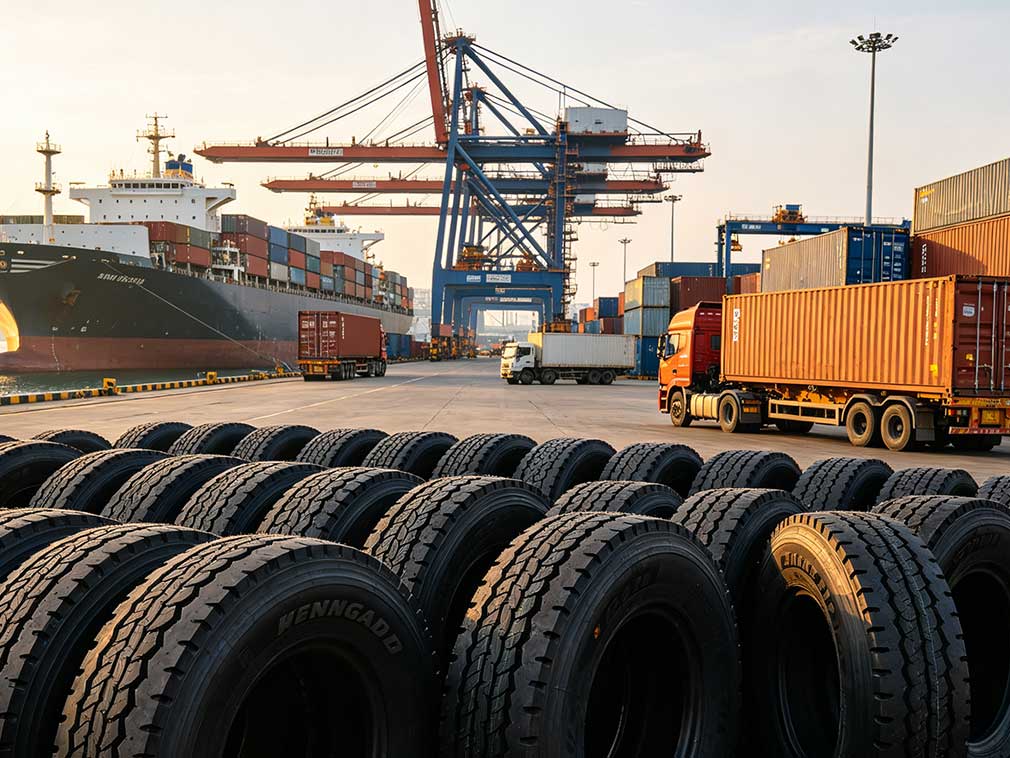
Why Vietnam? It's not just about cost
When discussing Chinese tire companies going global, many people's first reaction is, "They can't keep up with domestic demand, so they're looking for cheap labor overseas." This is true, but not entirely. While labor costs in Vietnam are indeed lower than in China, they've risen rapidly in recent years. Cost advantage alone is no longer sufficient to explain why leading companies are flocking there.
The real core variable is the CPTPP. Vietnam is a CPTPP member, and the tariff reductions brought by this free trade agreement are invaluable for tires, a product category prone to trade friction. Exporting from Vietnam to markets like North America and Australia/New Zealand incurs significantly lower tariffs than direct shipments from China, and also avoids the risks of anti-dumping and countervailing duty investigations. For B2B tire companies, this isn't just icing on the cake; it's a survival necessity.
Looking at its geographical location, Vietnam is situated in the middle of Southeast Asia, connecting to the Chinese supply chain to the north, radiating to the ASEAN market to the south, and reaching the Americas across the Pacific Ocean to the east. With a short logistics radius and fast supply chain response, its location is even more flexible than Thailand for global delivery. It's no wonder that competitors like Haohua, Sailun, and Linglong had already established a presence in Vietnam a couple of years ago. Zhongce has now followed suit, but with a high starting point – a whopping 5 million semi-steel tires, directly targeting the core passenger car tire market.
How to play these four overseas cards?
Including the new project in Vietnam, Zhongce now has four overseas production bases: Thailand, Indonesia, Mexico, and now Vietnam. These four locations weren't randomly chosen; each has its own specific purpose.
Thailand was the earliest, starting production in 2015. After years of operation, it has become Zhongce's most mature and profitable overseas base, essentially its overseas "headquarters." Its products cover both all-steel and semi-steel tires, primarily targeting the Southeast Asian and European markets. Indonesia was added later, further consolidating its Southeast Asian production capacity while leveraging local rubber resources, giving it an advantage in raw materials.
Mexico has a different strategy; it's aimed at the North American market, offering proximity to customers, faster delivery, and the benefit of USMCA tariff policies. Although still under construction, the strategic intent is clear – local supply to shorten the supply chain.
What is the positioning of Vietnam? I think it's "Southeast Asia's second growth pole." The Thai base has been operating for many years, with limited room for capacity expansion. Vietnam can absorb the new semi-steel tire production capacity while leveraging the policy benefits of the CPTPP to explore more diversified export markets. Each of the four bases has its own focus, and they can also form synergies – centralized procurement of raw materials, mutual support among technical personnel, and flexible order allocation. This is the true value of a global layout.
Chinese tires going global: from selling products to building factories
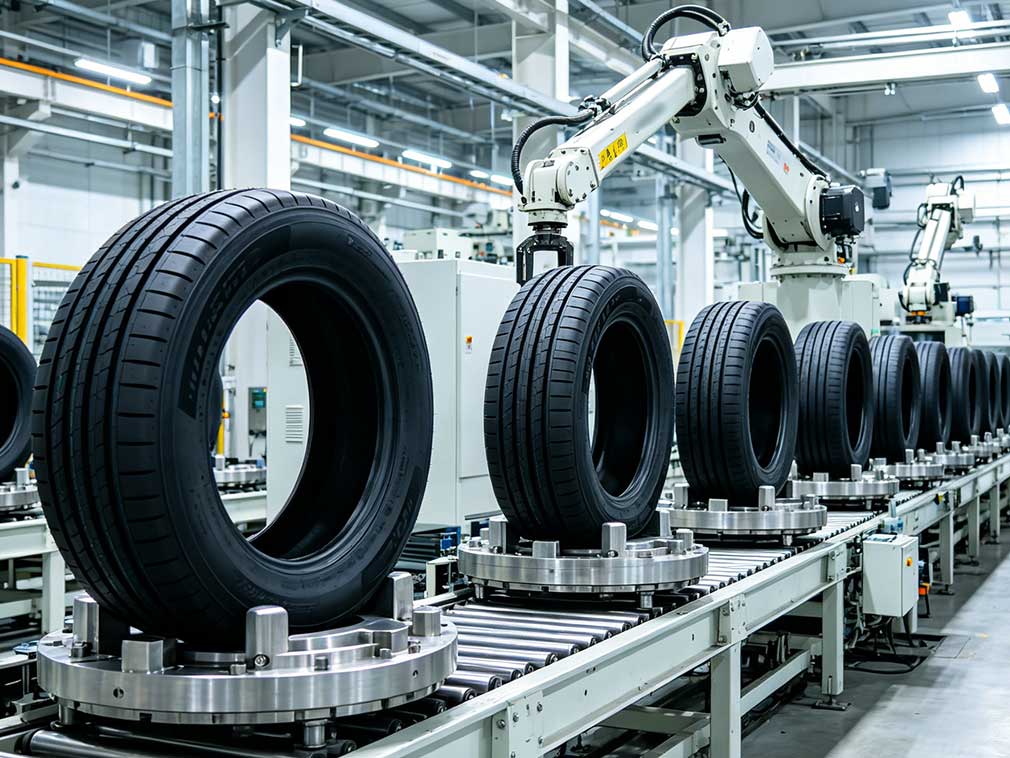
Looking back over the past decade, the globalization path of the Chinese tire industry is actually quite clear. Initially, it was about foreign trade, selling domestically produced tires worldwide; later, it was discovered that simply selling goods wasn't enough, as trade barriers were too high, and tariffs made it uncompetitive. Therefore, factories were built overseas to achieve localized production.
Now, the situation is different. It's not about building one or two factories to test the waters, but a systematic layout – Southeast Asia as a manufacturing base, Mexico as a bridgehead to North America, and Europe and South America as a marketing and service network. In short, it's about shifting from "Made in China, Sold Globally" to "Made Globally, Sold Globally."
Zhongce, a leading player in China's tire industry, is following this path. Established in 1958, it rose to become one of the world's top ten tire manufacturers, relying not only on scale but also on its strategic foresight and early planning. The Vietnam project is not an isolated move but part of its overall globalization strategy. Once the Vietnam factory is operational in 2027, Zhongce's overseas production capacity will further increase, strengthening its resilience.
The 1.041 billion yuan investment in Vietnam is significant for Zhongce, but within the broader industry context, it's well-timed. The global tire industry landscape is being reshaped, and Chinese companies are transforming from participants to drivers, thanks to this step-by-step globalization strategy.
For B2B buyers and distributors, Zhongce's overseas capacity expansion is actually good news—more stable supply, more flexible delivery, and a wider range of product choices. The Vietnamese factory, primarily producing semi-steel tires, perfectly fills the production gap in passenger car tires, and its competitiveness in the global market will only continue to grow.
The globalization story of Chinese tires continues to unfold. Zhongce's contribution adds another significant chapter to this saga.