
China Tires to US: -28%, What Next?(Sep 11)
U.S. Imports of Chinese Tires Drop Another 28%: Where Is the Chinese Tire Business Heading?
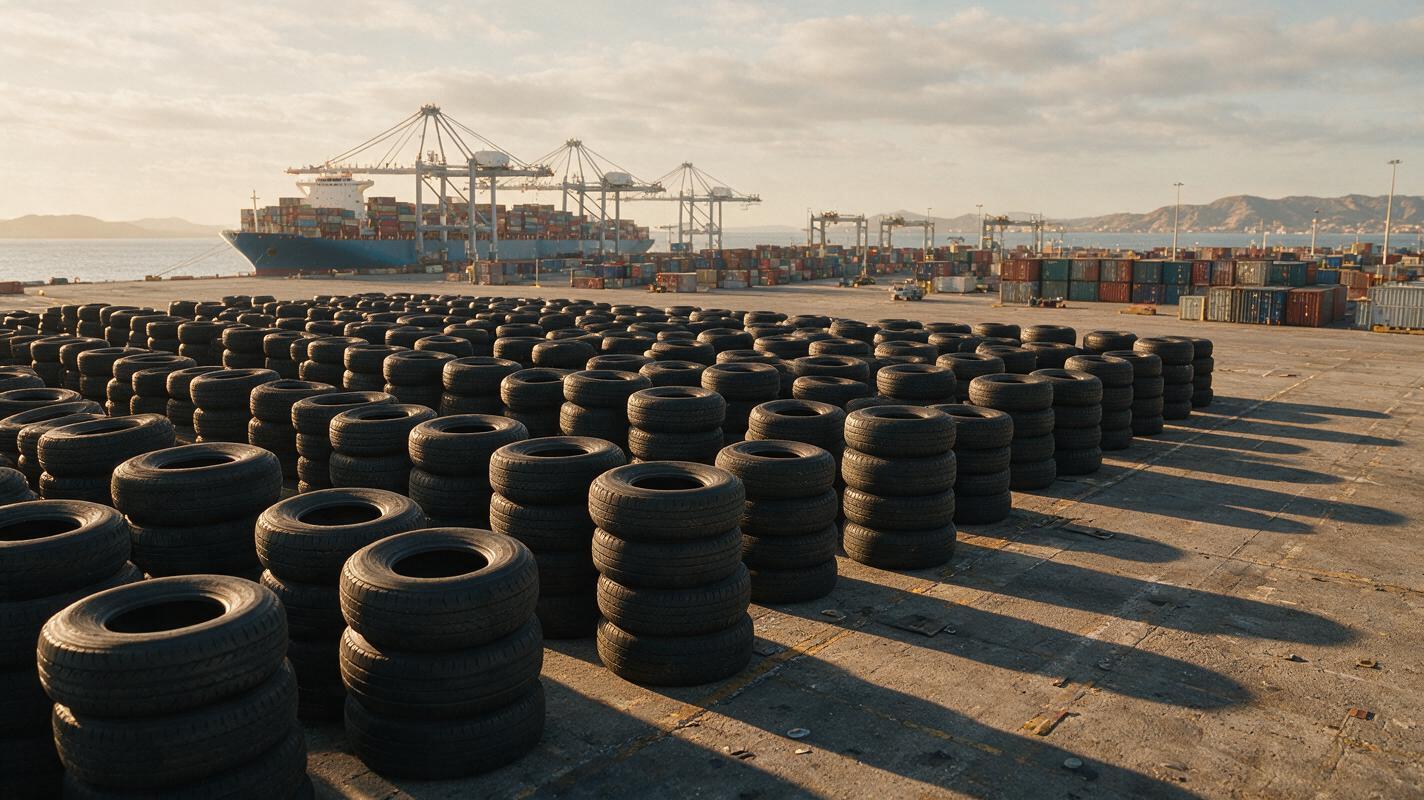
The U.S. market is becoming increasingly difficult to enter. In the first seven months of 2026, the United States imported 10.05 million tires from China, a year-on-year decrease of 28%. Truck and bus tires fell 37% to 532,000 units. Over the same period, total U.S. tire imports declined by only 3.9%. The contraction in direct Chinese tire exports to the U.S. significantly outpaced the overall decline in U.S. imports.
According to analysis by Tirechina.net, this divergence reflects both the sustained impact of trade barriers and the substitution of Chinese tire companies' overseas production for domestic exports. Understanding this shift requires examining where orders have gone and where tires are now being manufactured.
Tariffs Have Changed Sourcing Decisions
Pressure on Chinese tire exports to the U.S. has persisted for years. In 2015, the U.S. imposed anti-dumping and countervailing duty orders on Chinese passenger vehicle and light truck tires. These measures have since been extended through sunset reviews, and the second review in 2026 again upheld the measures. Combined with Section 301 tariffs, the cost of shipping China-manufactured tires to the U.S. has been driven steadily higher. For importers, the procurement comparison has extended beyond ex-factory prices to include tax-inclusive costs, delivery reliability, and policy risk. Even though Chinese factories retain manufacturing advantages, these may not translate into price competitiveness in the U.S. market.
However, the shift in market share does not mean that all other origins are experiencing comprehensive growth. In the first seven months, U.S. tire imports from Thailand reached 38.74 million units, also declining 11%. The U.S. procurement landscape is adjusting, and major supply regions are experiencing varying degrees of pressure.
Exports Decline, But Chinese Tires Have Not Exited
In response to the impediment of direct exports, Chinese tire companies have adopted a key strategy: extending production overseas. Zhongce, Linglong, and Sailun have established manufacturing bases in Thailand; Sailun, General Tire, and others have expanded into Cambodia, gradually forming multi-origin production capacity. However, overseas manufacturing cannot permanently insulate against trade risk. U.S. anti-dumping measures against certain tire products from Thailand demonstrate that policy pressure extends to other origins as well. Multi-region expansion increases order allocation flexibility but also brings costs in factory investment, supply chain organization, and capacity ramp-up. The gap between companies is widening from manufacturing capability to global operational capability.
New Growth Comes from More Markets
Beyond the U.S., Chinese tire companies are increasing investment in European, Middle Eastern, Latin American, and African markets. According to industry statistics, in the first quarter of 2026, China's tire export value to Africa reached approximately USD 681 million, a year-on-year increase of 13.55%. Local replacement demand, as well as logistics, mining, and engineering construction, provide market opportunities for different tire categories.
Market expansion is also coordinated with production capacity deployment. Zhongce, Sailun, and Fengshen are advancing projects in Egypt, considering not only local demand but also regional coverage of Europe, the Middle East, and Africa. However, growth in new markets cannot simply be regarded as an equivalent substitution for lost U.S. orders. Differences in product mix, sales prices, channel efficiency, and payment terms ultimately produce different profit outcomes.
Tirechina.net concludes that the decline in U.S. exports reflects a reallocation of the Chinese tire industry's global business structure. The U.S. remains important, but industry growth increasingly depends on multiple markets and production bases working in concert. This adjustment can diversify risk, but its effectiveness must be validated by sustained orders and actual profitability.
This platform focuses on the import and export of Chinese automotive equipment, gathering hundreds of certified Chinese automotive suppliers and connecting with global buyers. The platform achieves full transaction transparency, expands diverse cooperation opportunities, and helps both domestic and foreign parties build deep and stable cooperation bonds. Whether you are looking for vehicle manufacturers, purchasing automotive parts, or need customized procurement solutions, CNAUTO is your trusted first choice for cooperation.




