Tire Costs Surge Amid Rubber Supply Gap(August 20)
Global Natural Rubber Supply Gap Widens, Tire Cost Pressure Continues to Rise
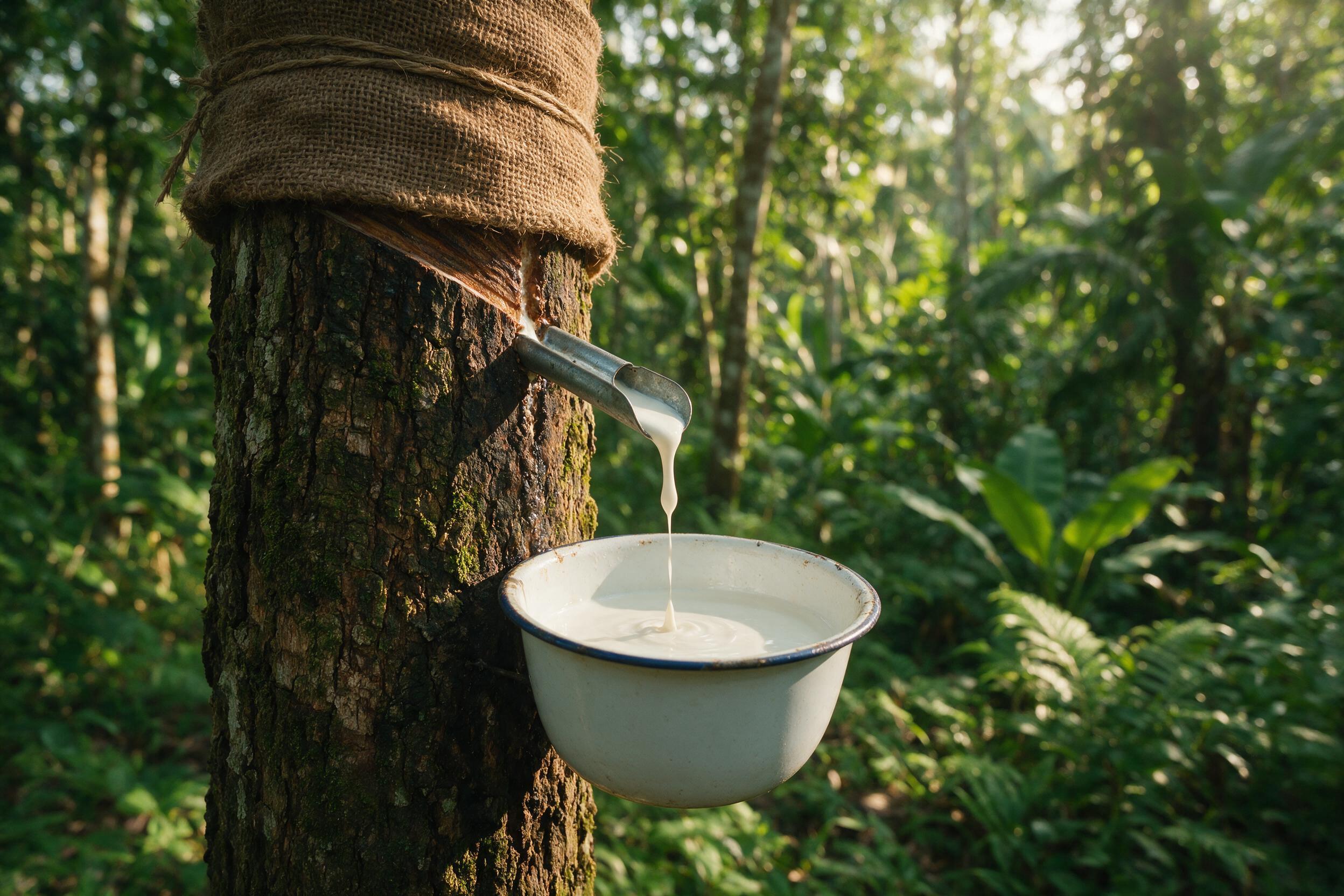
The Rubber Statistical Bulletin released by the International Rubber Study Organization (IRSG) on August 7 shows that in the first quarter of 2026, global rubber consumption fell 5.3% year-on-year, while total production contracted 3.3%.
Meanwhile, the June monthly report from the Association of Natural Rubber Producing Countries (ANRPC) shows that global natural rubber production in June fell 3.7% year-on-year to 1.207 million tons, while consumption rose 3.3% to 1.30 million tons.
Taken together, these two datasets paint a seemingly contradictory picture of the global rubber market: medium- to long-term demand is cooling, yet natural rubber supply and demand are in a tight balance or even widening gap in the short term. For the tire industry, this means both the cost side and the market side will face new challenges simultaneously.
Global Demand Cooling, but Regional Divergence Is Significant
IRSG data shows that the decline in rubber consumption in the first quarter of 2026 was primarily driven by markets outside the Asia-Pacific region. Consumption in Europe, the Middle East, and Africa fell 9.7% year-on-year, the Americas dropped 10.9%, while Asia-Pacific consumption edged down only 0.5%, demonstrating notable resilience.
In the natural rubber sector, global production fell 1.2% year-on-year in the first quarter, while consumption declined more sharply by 6.3%. International trade cooled in tandem, with natural rubber imports down 4.8% and exports down 9.4%. For synthetic rubber, production fell 4.7% and consumption declined 4.3% in the first quarter.
IRSG summarized: "Against the backdrop of a challenging global economic environment and weakening consumption in major markets, rubber demand is declining."
The direct implication for the tire industry is that the demand environment for replacement tires in Europe and America is deteriorating. Europe and America are both important tire consumption regions and the core destinations for Chinese tire exports. The nearly 10% and 11% declines in rubber consumption in Europe and America indicate that replacement tire demand in these markets will face sustained pressure.
Indeed, recent financial reports from giants such as Yokohama Rubber and Sumitomo Rubber also show that Middle East tensions, geopolitical risks, and inflation concerns have already exerted substantial suppression on global replacement tire demand.
Natural Rubber: Short-Term Tight Balance, Weather Becomes the Biggest Variable
Unlike the demand weakness reflected in IRSG's first-quarter data, ANRPC's June monthly report reveals a more compelling fact: natural rubber is experiencing short-term supply-demand mismatch.
In June alone, global natural rubber production fell 3.7% year-on-year to 1.207 million tons, while consumption rose 3.3% to 1.30 million tons, with the production-consumption gap continuing to widen. Cumulative production for the first half of the year fell 2.3% to 6.069 million tons, while cumulative consumption fell 1.3% to 7.513 million tons.
The direct cause of the production decline is the seasonal tapping off-season compounded by "abnormally high temperatures and rainfall disruptions in Southeast and South Asia." ANRPC notes that climate models show multiple agencies have officially confirmed the formation of an El Nino event, with a 63% probability of it reaching "very strong" intensity between November 2026 and January 2027.
Regionally, major producing countries show significant divergence. Apart from China's marginal 0.07% increase, Thailand, Indonesia, Vietnam, and Malaysia saw June production fall 0.57%, 3.27%, 9.97%, and 14.12% respectively, indicating a clear supply contraction trend across Southeast Asian major producers.
On the demand side, growth is driven by China and India. In June, China's natural rubber consumption reached 602,500 tons and India's reached 114,000 tons, supported by stable tire and electric vehicle-related demand, China's manufacturing PMI remaining in expansion territory (50.3), India's manufacturing PMI showing strong resilience (54.2), and India's auto retail sales hitting record highs.
ANRPC projects that global natural rubber production will reach 15.31 million tons in 2026, up 2.3% year-on-year, while consumption will reach 15.411 million tons, up 0.7%, resulting in a supply-demand gap of approximately 100,000 tons.
Forward-Looking Implications for the Tire Industry
Cross-referencing IRSG and ANRPC data provides the following forward-looking judgments for the tire industry across several dimensions.
First, natural rubber prices face upward pressure on their central tendency. Supply-side contraction due to weather disruptions, combined with resilient demand from China and India and a widening production-consumption gap, will support natural rubber prices. Tire companies' raw material cost pressures will persist over the next two quarters.
Second, cost-pass-through capability will become the dividing line. With natural rubber prices remaining firm, whether tire companies can pass cost pressures downstream through product price increases will directly determine their profitability.
Third, regional market divergence demands differentiated strategies. Tire companies need to maintain profitability in European and American markets through high-value-added products while seizing growth opportunities in China and India, particularly in NEV (new energy vehicle) original equipment and replacement markets.
Fourth, supply chain risk management grows in importance. El Nino uncertainty, logistics cost increases triggered by geopolitics, and supply contraction in major producing countries all require tire companies to build more flexible raw material procurement and inventory management systems. Over-reliance on a single source or single time-point procurement strategy will face greater risk amid price volatility.
Fifth, the substitution space for synthetic rubber warrants attention. IRSG data shows synthetic rubber production fell 4.7% and consumption declined 4.3% in the first quarter, with supply and demand weakening in tandem. Given the impact of Middle East tensions on crude oil prices, synthetic rubber also has cost support. However, changes in the price spread between natural and synthetic rubber may open new room for tire companies to optimize their formulations.
This platform focuses on the import and export of Chinese automotive equipment, gathering hundreds of certified Chinese automotive suppliers and connecting with global buyers. The platform achieves full transaction transparency, expands diverse cooperation opportunities, and helps both domestic and foreign parties build deep and stable cooperation bonds. Whether you are looking for vehicle manufacturers, purchasing automotive parts, or need customized procurement solutions, CNAUTO is your trusted first choice for cooperation.