China's Agricultural Tire Market Trends in May
In May 2026, China entered a critical period for summer harvesting and planting, leading to a significant increase in the frequency of agricultural machinery operations and driving a steady recovery and structural optimization in the agricultural tire market.
Supported by the advancement of agricultural modernization, the replacement of agricultural machinery, and the essential needs of spring and summer planting, the industry as a whole has steadily expanded in scale, accelerated product upgrades, and continued to increase market concentration. However, it also faces the ongoing challenges of supply and demand matching and technological iteration, maintaining a stable and positive operating tone.
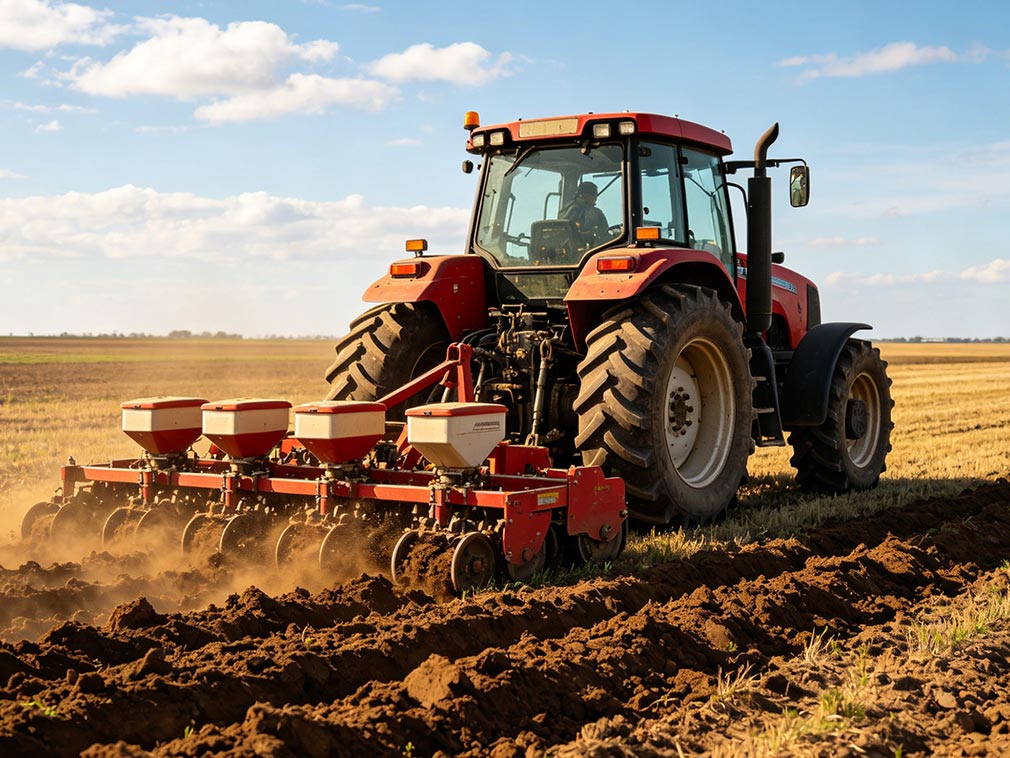
From the perspective of overall market size, the agricultural tire industry has maintained a steady development momentum since 2026. As of May, the industry's annual market size reached 48.5 billion yuan, a year-on-year increase of 7.8%, with total output remaining stable at 128 million tires. Capacity utilization has rebounded to a healthy range of 78.5%, indicating a recovery from the previous slump caused by idle capacity and weak demand.
On the end-user demand side, concentrated agricultural activities such as wheat harvesting, rice transplanting, and corn planting are underway across the country, with tractors, combine harvesters, and seeders operating at high frequency, effectively boosting replacement tire demand and becoming a key driver of market growth in May.
Meanwhile, the nation's continued promotion of high-standard farmland construction and large-scale planting, coupled with the increasing adoption rate of large-scale modern agricultural machinery, has provided a stable growth space for mid-to-high-end agricultural tires.
Product structure upgrading is a prominent feature of the current market development. With the widespread adoption of large and heavy-duty agricultural machinery, the adaptability of traditional bias-ply agricultural tires has continued to decline, with their market share shrinking to below 11.5%, gradually withdrawing from the mainstream application market.

All-steel radial agricultural tires, with their advantages of high load-bearing capacity, wear resistance, puncture resistance, large contact patch, and friendliness to arable land, have become the core engine of market growth, with their market share continuing to climb.
Compared to traditional products, radial tires have a more rational structure, better adapting to modern agricultural scenarios such as high-frequency field transfers and heavy-duty operations, meeting the development needs of ecological farming and conservation tillage, and are currently the mainstream choice in the agricultural machinery matching and replacement market. At the same time, the market demand for high-performance customized tires with low ground pressure, anti-rollover properties, and wear resistance is also showing rapid growth.
The market competition landscape continues to optimize, and industry concentration is steadily increasing. After years of industry consolidation and technological iteration, small and medium-sized outdated production capacity has been gradually eliminated, while leading companies have continued to expand their market share by leveraging their technological, production capacity, and channel advantages. As of May 2026, the market share of the top ten companies in the industry had increased to 58.3%, demonstrating a clear trend towards large-scale and standardized development.

Major domestic tire companies have continued to deepen their focus on the agricultural tire segment, constantly optimizing product performance and improving their product portfolio. Relying on a stable supply chain system, they have effectively ensured product supply during the peak spring and summer planting seasons, maintaining an overall balance between market supply and demand, with no large-scale shortages or stockpiles.
Regarding the export market, agricultural tire foreign trade orders remained stable in May 2026. The global agricultural tire market is steadily recovering, with continued release of demand from large-scale overseas agricultural production.
Domestic agricultural tires, relying on their high cost-performance advantage, have maintained stable export volumes in emerging markets such as Southeast Asia, Africa, and Latin America, becoming an important supplement to the industry's growth. However, factors such as fluctuations in international trade policies and competition from overseas domestic brands still pose certain constraints on export business.
Overall, in May 2026, the domestic agricultural tire market saw stable demand and a continued strengthening of the structural upgrading logic. The industry is shifting from scale expansion to a high-quality development stage driven by quality improvement and technological upgrading.
In the short term, replacement tire demand will decline slightly after the summer harvest and planting season, but the long-term demand for agricultural machinery replacement and large-scale agricultural development remains unchanged, and the industry is expected to maintain steady operation in the future.