
China's Leading Tire Manufacturers Revolutionize the Industry
China's Top Tier Tiers Are Reshaping the Competitive Landscape
A leading group of domestic tire manufacturers has emerged: Zhongce, Sailun, Linglong, Double Coin, and Triangle. These five companies have been deeply rooted in the industry for decades, with businesses spanning tire R&D, manufacturing, and sales, covering mainstream application areas such as passenger cars, commercial vehicles, and construction machinery.
With mature manufacturing systems, well-established domestic and international channels, and stable product quality, they maintain their leading positions in the industry and are the core force for Chinese tires to participate in global competition.
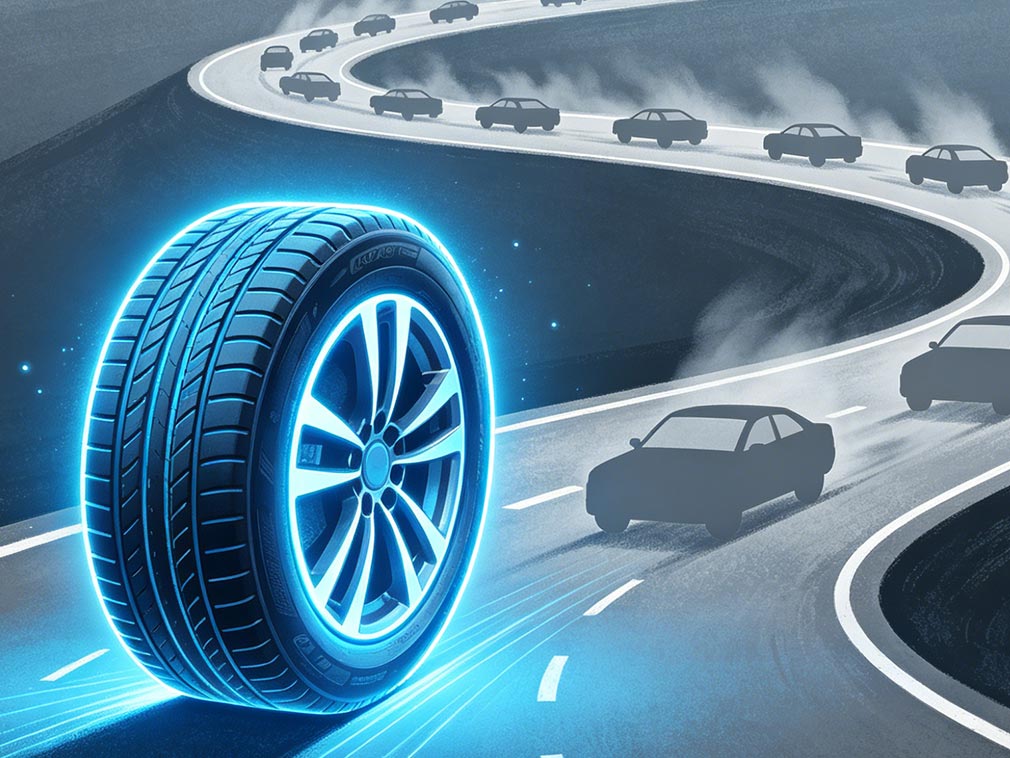
127.5 Billion Yuan in Revenue, Steady Increase in Global Market Share
In 2025, the domestic tire industry entered a critical stage of quality and efficiency improvement. The combined efforts of OEM, distribution channels, and supply chain are driving the continued upward performance of leading companies.
Public data shows that the combined annual revenue of the five companies exceeded 127.5 billion yuan, a year-on-year increase of 12%, further increasing industry concentration. In the global market, the sales share of leading domestic tire manufacturers rose from approximately 7% last year to around 9%. This change not only reflects the increase in sales volume but also demonstrates that domestic tires are gradually entering the mid-to-high-end market, previously dominated by overseas brands, and their influence is increasing.
Three Engines Driving Growth: Replacement of Imported Products, Deepening Channel Development, and Supply Chain Upgrading
This round of growth primarily stems from the simultaneous advancement of three levels.
Domestic substitution in vehicle manufacturing is the most crucial driver of incremental growth. In recent years, China's new energy vehicle and heavy-duty commercial vehicle industries have developed rapidly, leading to a more comprehensive vehicle manufacturing system.
Domestic tire companies, leveraging their advantages of good adaptability, high cost-effectiveness, and rapid after-sales response, are gradually replacing some imported products and entering the core supply chains of mainstream automakers. The proportion of domestic tires used in categories such as new energy vehicle tires and quiet, wear-resistant passenger car tires continues to rise.
At the channel level, leading companies continue to penetrate third- and fourth-tier cities and county-level markets domestically, optimizing their dealer networks and building a service system that combines online consultation with offline after-sales experience. Overseas, they are actively expanding into emerging markets such as Southeast Asia, Africa, and Latin America, improving their distribution networks, and activating the end-market.
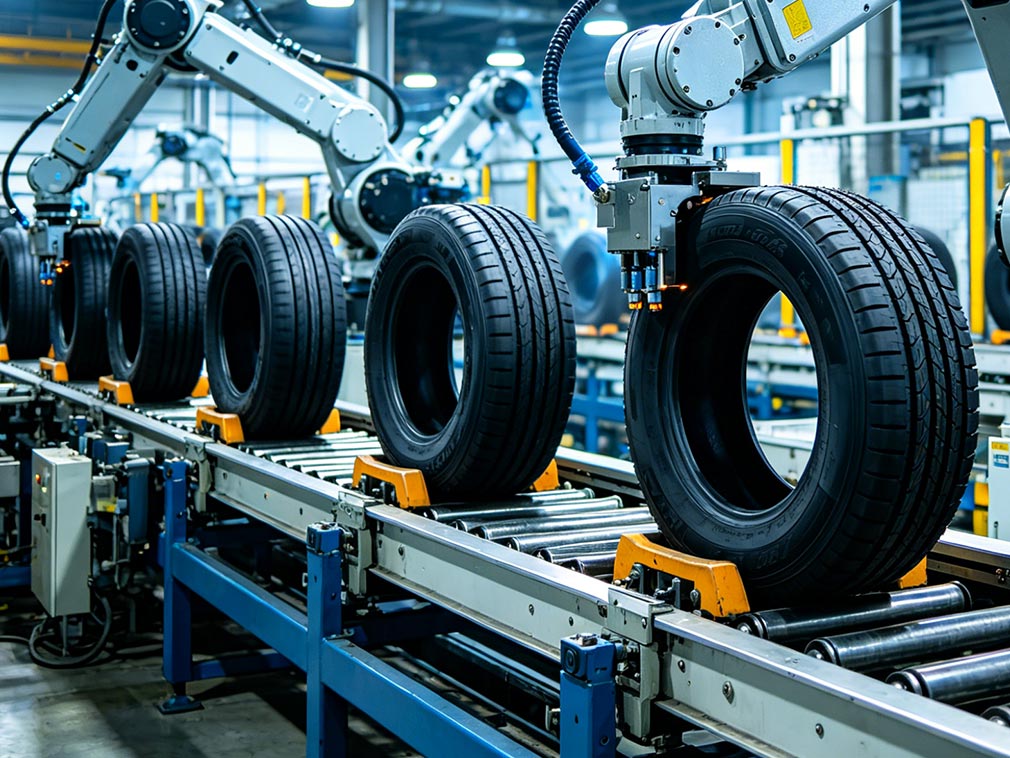
At the supply chain level, relying on mature domestic raw material supply chains such as rubber and steel, combined with intelligent factory upgrades, production efficiency has significantly improved, costs have been effectively controlled, and production capacity output has remained stable, providing support for upstream growth.
Differentiated Development: Five Companies Each Leveraging Their Strengths
The five companies have adopted different development paths, forming a complementary industrial structure. Zhongce Rubber boasts a leading overall scale, with product lines covering the entire spectrum from passenger vehicles to industrial applications, demonstrating outstanding comprehensive strength. Sailun focuses on technological advancements, continuously accumulating experience in the R&D and manufacturing of smart and environmentally friendly tires.
Linglong specializes in passenger vehicle OEM, particularly in the new energy tire sector, where it has an early presence and aligns well with industry trends, resulting in significant market performance. Double Coin and Triangle, on the other hand, have deeply cultivated niche markets such as commercial vehicle and construction machinery tires, establishing strong competitive advantages in their respective markets through product durability and quality stability. Their different focuses collectively constitute the competitiveness of the leading domestic tire manufacturers.
Gap Still Exists: Globalization, Brand, and Technology
Beyond achievements, gaps must be acknowledged. Compared to the world's two tire giants, leading domestic companies still have shortcomings in several areas.
In terms of globalization, international giants have completed global factory deployments, enabling them to produce and sell locally based on regional market demands, effectively circumventing trade barriers and reducing operating costs. Domestic leading tire manufacturers are still in the expansion phase of their overseas factory construction and global networks, lacking experience and capabilities in global capacity allocation and localized operation management.
At the brand level, leading international brands possess over a century of technological accumulation and market experience, giving them a clear advantage in the high-end market and strong brand premium. Domestic tire manufacturers currently dominate the mid-range and high-value-for-money segments, with limited penetration in the high-end market. Brand value and international recognition require long-term development.
At the technological level, gaps remain in key areas such as high-end rubber formulations, precision manufacturing processes, and core algorithms for intelligent tires. This is one of the underlying reasons for the industry's limited profit growth despite sales and revenue increases.
Addressing these shortcomings and shifting towards technology-driven and high-end markets
The gap itself signifies a direction. The era of relying on scale expansion is over, and leading companies are shifting towards a technology-driven and quality-first development path. Each company is continuously increasing R&D investment, focusing on overcoming core technological challenges related to green and low-carbon development, intelligent manufacturing, and product premiumization.
Simultaneously, leveraging China's complete industrial chain, the company continuously adjusts its product structure, gradually phasing out low-value-added, high-energy-consuming outdated production capacity, and concentrating resources on high-value-added categories such as new energy tires, high-end engineering tires, and special tires, gradually addressing industrial shortcomings.
From a Manufacturing Giant to an Industrial Powerhouse
Chinese companies deeply rooted in the tire industry have consistently focused on one thing: acknowledging the gap and steadily catching up. From initially relying primarily on OEM manufacturing and struggling to establish a foothold in the domestic market, to now independently developing technologies, proactively expanding overseas, and entering the global mainstream competitive system, the industry has broken through bottlenecks step by step.
In the future, with technological iteration, brand accumulation, and the improvement of global layout, the development potential of domestic tires will be further released. Continuously breaking through performance ceilings, shedding the label of low-end OEM manufacturing, gaining a foothold in the global high-end market, and moving from a tire-producing giant to an industrial powerhouse—the road is still long, but the direction is clear.




