Domestic Sales Decline While Exports Surge 138%: New Energy Vehicles Face a Tale of Two Markets(Oct 28)
Domestic Sales Decline While Exports Surge 138%: New Energy Vehicles Face a Tale of Two Markets
Source: Sina Finance / China Passenger Car Association
Domestic new energy passenger vehicle retail sales are declining, while exports have more than doubled. On October 23, the China Passenger Car Association's retail branch projected that total narrow passenger vehicle retail sales in October 2026 would reach approximately 1.6 million units, down 28.9% year-on-year. Of these, new energy vehicle retail sales were projected at 1.07 million units, representing a market penetration rate of approximately 66.9%.
Although new energy vehicles account for nearly 70% of the domestic passenger vehicle market, sales have not grown with the rising market share. Data shows that in September, domestic new energy passenger vehicle retail sales fell 16.7% year-on-year, with the first three quarters cumulatively declining 12.8%.
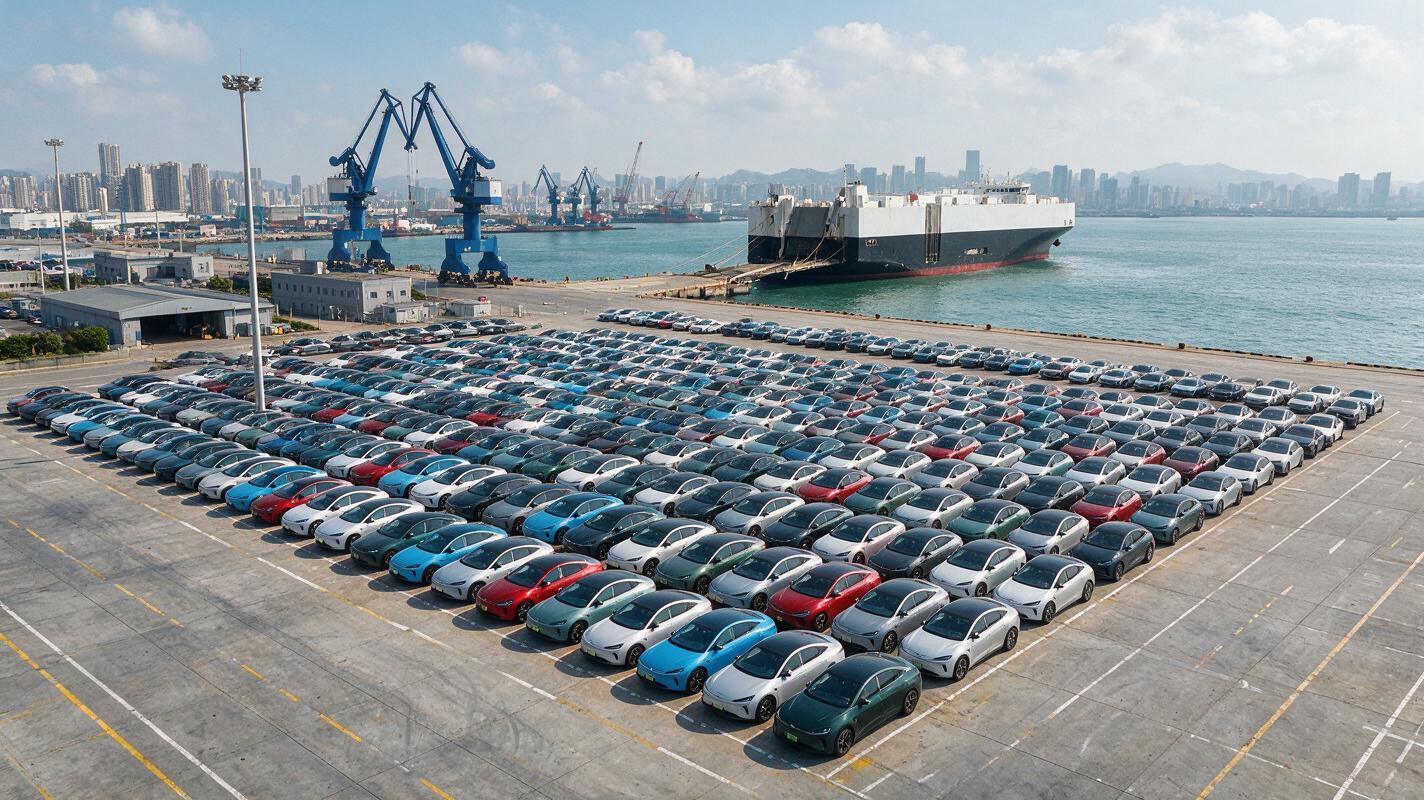
Export data presents a stark contrast to the domestic market. In the first three quarters of this year, China's new energy passenger vehicle exports reached 3.887 million units, up 138.8% year-on-year, with export volume already equivalent to about one-third of manufacturer wholesale sales during the same period. In September alone, new energy passenger vehicle exports reached 558,000 units, up 163.5% year-on-year.
Compared to the same period last year, the role of exports is even more pronounced. In the first three quarters of 2025, China exported 1.627 million new energy passenger vehicles; this year the figure rose to 3.887 million, an increase of 2.26 million units. Over the same period, manufacturer wholesale sales increased by only about 1 million units. This means that while domestic retail declined, overseas orders grew rapidly, supporting the sales scale of new energy vehicle manufacturers. The export volume in September was equivalent to 36% of manufacturer sales that month, compared to 19% in the same period last year.
The significant decline in domestic auto sales this year is directly related to changes in vehicle purchase subsidy policies. In 2025, consumers qualifying for the vehicle scrappage and replacement policy could receive a flat 20,000 yuan subsidy for purchasing a new energy vehicle. In 2026, however, the subsidy was changed to 12% of the new vehicle sales price, capped at 20,000 yuan. For a new energy vehicle priced at 100,000 yuan, the subsidy dropped from 20,000 yuan to 12,000 yuan, a reduction of 8,000 yuan. Meanwhile, new energy vehicle purchase tax incentives have also been adjusted, further dampening domestic demand.
This platform focuses on the import and export of Chinese automotive equipment, gathering hundreds of certified Chinese automotive suppliers and connecting with global buyers. The platform achieves full transaction transparency, expands diverse cooperation opportunities, and helps both domestic and foreign parties build deep and stable cooperation bonds. Whether you are looking for vehicle manufacturers, purchasing automotive parts, or need customized procurement solutions, CNAUTO is your trusted first choice for cooperation.
-
Domestic Sales Decline While Exports Surge 138%: New Energy Vehicles Face a Tale of Two Markets(Oct 28)5769
-
124 Chinese-Made Excavators Set Sail from Beibu Gulf Port Direct to Jakarta, Indonesia(Oct 28)7155
-
Natural Rubber Pricing Center Undergoing Systemic Reshaping: Prices Hit 9-Year High Before Pulling Back(Oct 28)5244
-
Used Car Exports Surge 134%, Adding a New Outlet for Vehicle Acquisition(Oct 27)8724
-
National Charging Infrastructure Reaches 24.777 Million Units, Up 37.2% Year-on-Year(Oct 27)7112