
Greening the Off-Road Tire Industry
Off-road tires (OTR tires) are specialized tires designed for rough, unpaved roads and extreme working environments. Unlike ordinary road tires, they feature a robust carcass structure, deep tread patterns, and reinforced sidewalls, enabling them to withstand heavy loads, rock friction, and mud erosion.
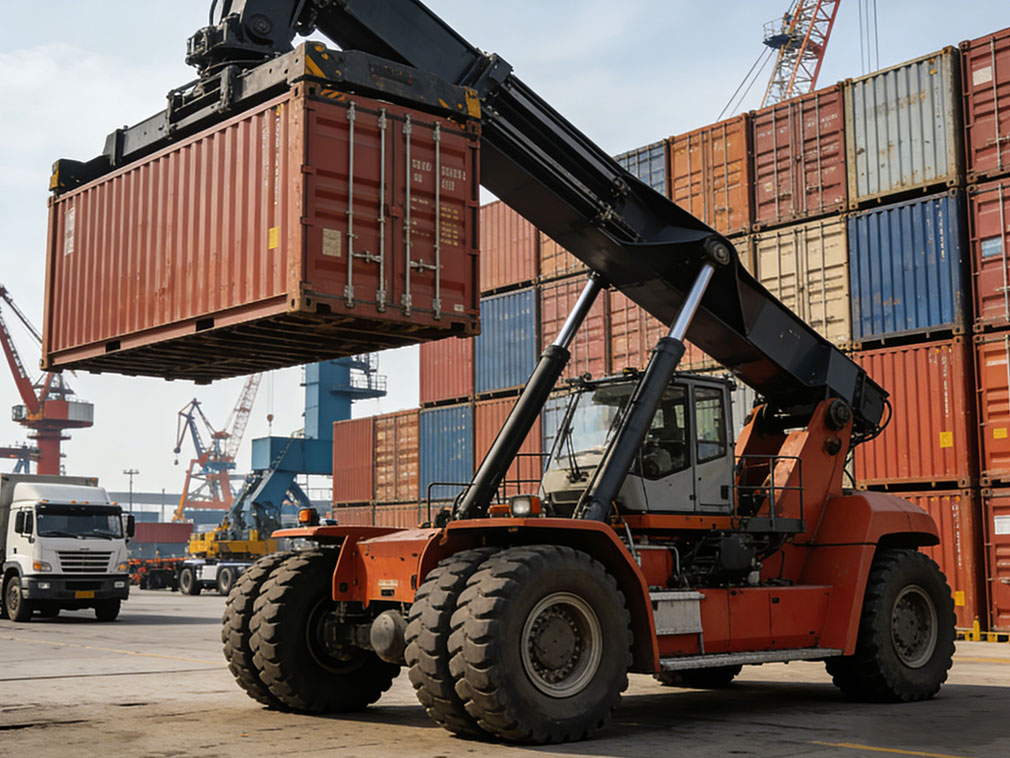
They are widely used in key sectors of the national economy, such as construction, agriculture, and mining. Industry data shows that the global off-road tire market reached $10.624 billion in sales in 2025 and is projected to continue expanding at a CAGR of 3.70% until 2032, exhibiting a steady growth trend.
In terms of product categories, off-road tires can be mainly divided into three categories based on their operating scenarios. Construction machinery tires are the core sub-category, encompassing the E/L series (suitable for graders, emphasizing lateral stability and cut resistance) and the G series (suitable for road rollers, often using smooth or fine tread patterns to increase the contact patch).
The specifications of bias-ply tires are commonly indicated by markings such as "23.1-26," where the "-" indicates a bias-ply structure, distinguishing it from the "R" marking of radial tires. Agricultural tires mainly include rear-wheel drive tires, guide tires, and tiller tires, with radial construction currently being the mainstream. Rear-wheel drive tires have extremely deep treads to provide strong traction; tiller tires have wider tread spacing to effectively prevent mud adhesion and are widely used in tractors, harvesters, and other agricultural machinery.
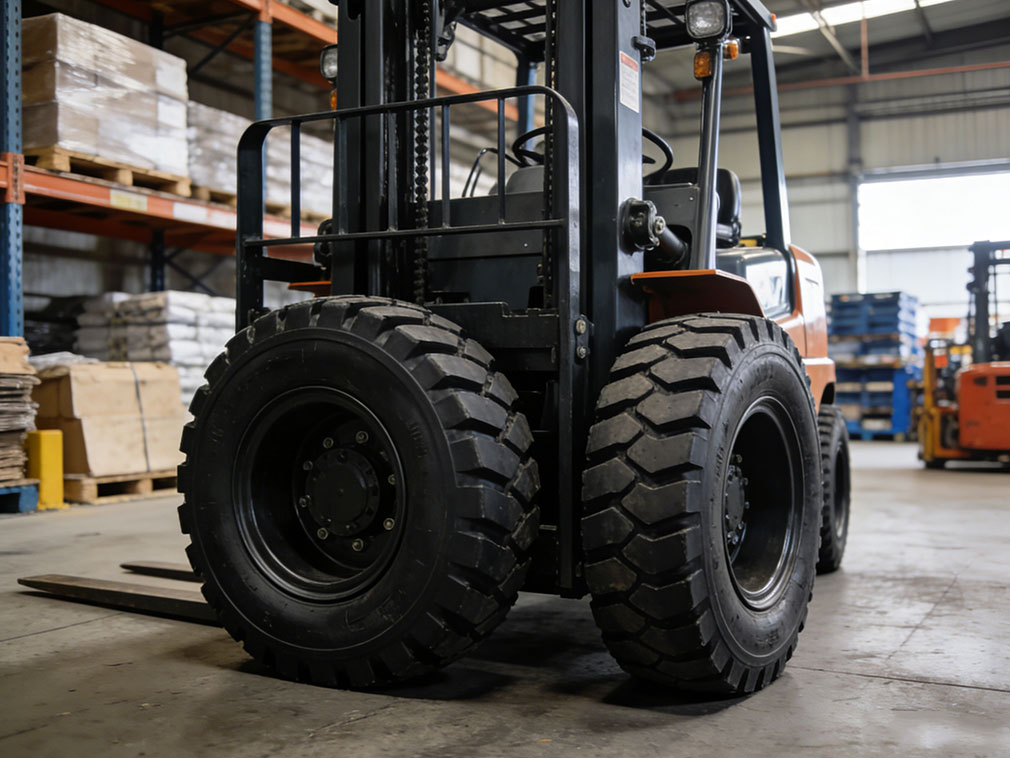
Industrial vehicle tires include solid tires, pneumatic tires, and polyurethane tires. Solid tires, due to their puncture resistance, are often used in harsh working conditions such as forklifts, while polyurethane tires are mostly used in indoor environments where high cleanliness is required.

Technological upgrades are becoming a key driver of industry development, with current innovation focusing primarily on three areas: environmental protection, intelligence, and high performance. In terms of environmental protection, the EU's REACH regulation, implemented from 2025, tightens the upper limit of polycyclic aromatic hydrocarbons (PAHs) in tires from 1% to 0.1%, prompting global companies to accelerate formula upgrades and significantly increasing demand for non-petroleum-based rubber plasticizers, which is projected to reach 920,000 tons by 2030.
In the field of intelligent technology, intelligent tire pressure monitoring systems (iTPMS) are gradually becoming standard equipment for original equipment manufacturers (OEMs). By 2025, the penetration rate of this system in off-road tires globally is expected to reach 30%, enabling real-time monitoring of tire pressure and temperature to effectively prevent tire blowout risks.
In terms of materials, the application of graphene composite materials has increased the tread abrasion index to 520, and new materials such as bio-based rubber are also accelerating industrialization. For example, Zhongce Rubber's bio-based nanocomposite rubber can increase the tire abrasion index by 25% and reduce rolling resistance by 18%.
From the perspective of market competition, the industry exhibits a clear tiered structure and is deeply influenced by policies and downstream demand. In the global market, international brands such as Michelin and Bridgestone lead in high-end sectors like giant mining tires, while domestic companies like Zhongce Rubber and Triangle Tire hold significant market share in small and medium-sized construction machinery tires and agricultural tires.
Taking Zhongce Rubber as an example, after its Thai factory went into operation in 2024, its annual production capacity increased to 12 million tires, driving a 23% year-on-year increase in exports.
Domestically, the "14th Five-Year Plan for the Development of a Modern Comprehensive Transportation System" promotes the construction of urban underground pipeline networks, directly driving a more than 15% increase in demand for loader tires.
Simultaneously, the industry is experiencing a regional shift in production capacity, with domestic low-end bias tire production gradually migrating to Southeast Asia. Approximately 80% of new production capacity in Mexico comes from Chinese investment, forming a new global industrial division of labor.
Overall, the off-road tire industry is deeply linked to infrastructure construction and agricultural modernization, and is continuously evolving towards high performance, green technology, and intelligent manufacturing.
-
National Day Highway Charging Hits Record: +60.4% YoY(Oct 8)8264
-
New Energy Vehicle Exports Accelerate: 3.435 Million Units in First 8 Months, Up 120% Year-on-Year(Oct 8)8882
-
Chinese Tire Exports: Volume Up But Revenue Down Nearly RMB 900 Per Ton(Oct 8)5408
-
CNH Industrial: Smart Farming, NE and Local Tech(Sep 30)5575
-
CNHTC Drives Surging NE Heavy Truck Exports(Sep 30)8500




