
How Modern Tires Reduce Noise
Tire noise is one of the most common sources of noise during vehicle operation and a key factor affecting ride quietness. From an acoustic and tire engineering perspective, tire noise is not simply determined by the road surface; its core lies in the mechanical vibration generated by the continuous impact of the tire on the road surface as it rolls, and the airflow noise generated by the interaction between the tire tread pattern and the air.
Road impact vibration is the primary cause of low-frequency tire noise. Traditional tire compounds typically add a large amount of hard carbon black as a reinforcing material to improve basic wear resistance. However, this significantly increases the overall hardness of the rubber, weakening the tire's cushioning ability when it contacts the ground.

Vibrations caused by minor road bumps and particle impacts are not easily attenuated but are quickly transmitted to the tire and vehicle body, forming a dull, continuous low-frequency noise, especially noticeable at high speeds.
To balance noise reduction performance with low-carbon environmental protection requirements, the new generation of tires has undergone in-depth optimization of its green material formulation. It no longer follows the traditional proportioning logic of high-hardness carbon black but instead improves the rubber matrix, enhancing the material's damping performance and flexibility to achieve vibration cushioning at its source.
The highly flexible rubber material effectively absorbs the mechanical energy generated by road impacts, reducing the vibration amplitude of tire-ground collisions and thus suppressing the generation and transmission of low-frequency noise.
Simultaneously, the formulation incorporates environmentally friendly raw materials such as recycled rubber, bio-based resins, and plant-based modifiers. Without compromising tire safety and wear resistance, it reduces the proportion of petroleum-based raw materials, lowering carbon and pollutant emissions during production. This achieves a dual improvement in quietness and low-carbon emissions, aligning with the current trend of green development in the automotive parts industry.
Many consumers have a misconception that uniform tread patterns offer better noise reduction; the opposite is true. Regularly arranged, uniformly spaced tread blocks create a fixed ground-slapping rhythm. As the tire rolls and slaps the road surface at a constant speed, the tread grooves rhythmically compress and expel air, creating a stable, whistling sound.

This fixed-frequency noise easily resonates with frequencies sensitive to the human ear, amplifying its loudness and making the continuous humming sound clearly perceptible to drivers and passengers. This is a major reason why tires with uniform tread patterns tend to have higher tire noise at high speeds.
To address this issue, most mainstream low-noise tires in the industry currently employ a variable pitch tread pattern design. This breaks away from the traditional, regular arrangement of tread patterns, designing the tread blocks into a staggered structure of varying sizes and spacing.
When the tire rolls, these staggered tread blocks disrupt the original single noise frequency, dispersing noise energy across a wider frequency band and preventing excessive concentration of energy in the low-to-mid-frequency range where the human ear is sensitive, effectively suppressing resonance effects structurally.
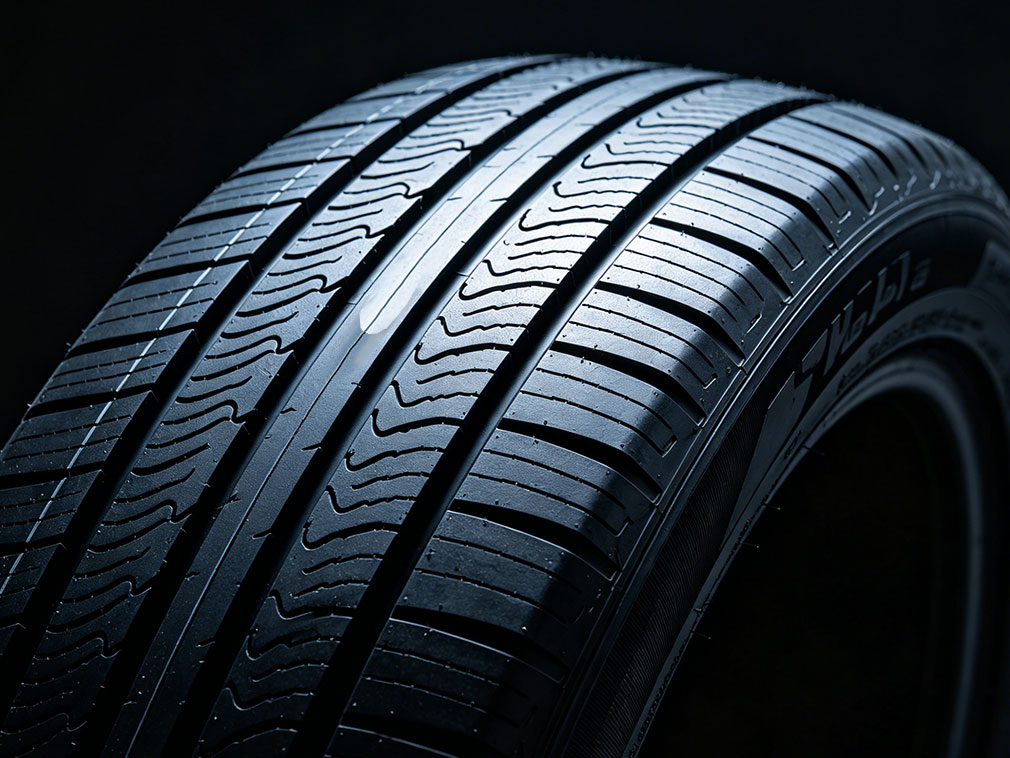
Simultaneously, these tires often incorporate sloping airflow grooves and a closed shoulder structure: the sloping grooves guide airflow within the grooves in an orderly manner, reducing turbulent noise generated by air compression and backflow; the closed shoulder prevents the formation of air vortices in the sidewall area, thereby weakening high-frequency, fine noise.
Through systematic optimization of structure and materials, the new generation of low-noise tires provides a quieter cabin environment for drivers and passengers while ensuring driving stability.
-
National Day Highway Charging Hits Record: +60.4% YoY(Oct 8)8256
-
New Energy Vehicle Exports Accelerate: 3.435 Million Units in First 8 Months, Up 120% Year-on-Year(Oct 8)8878
-
Chinese Tire Exports: Volume Up But Revenue Down Nearly RMB 900 Per Ton(Oct 8)5406
-
CNH Industrial: Smart Farming, NE and Local Tech(Sep 30)5569
-
CNHTC Drives Surging NE Heavy Truck Exports(Sep 30)8496




