
Standardized 3-Step Tire Inspection Process
As a critical safety component for vehicles, the appearance quality of tires directly affects driving stability, braking performance, and lifespan. Standardized appearance inspection is a crucial step in the tire manufacturing, warehousing, and re-inspection process. The current industry-standardized appearance inspection employs a three-step systematic testing model, with a complete inspection of a single tire taking only 30 to 40 seconds. This fast and accurate process systematically identifies appearance defects in key areas such as the tread, shoulder, sidewall, bead, and inner tube, providing a reliable basis for tire quality grading.
The standardized three-step tire inspection process has a complete operational logic, covering all vulnerable and defect-prone areas of the tire. The first step involves a full-area inspection of the tread and shoulder. The operator rotates the tire horizontally a full circle at a constant speed, focusing on the tread pattern area and both shoulder areas.
Key areas to check for include uneven tread wear, inclusions in the tread grooves, insufficient rubber, burrs, bubbles, scratches, and missing pieces. Simultaneously, the tire shoulder is inspected for cracks, abnormal wear, localized bulges, and edge damage. The tire shoulder, as the stress-bearing area connecting the tire tread and sidewall, is prone to hidden damage due to long-term pressure. It is a key area to focus on during visual inspection and requires meticulous visual verification throughout the process.
The second step involves inspecting the sidewall, bead, and inner lining depth on one side. First, tilt the tire 45 degrees to the left and inspect the corresponding sidewall and bead area. The sidewall needs to be checked for aging fine lines, cracks of varying depths, bulges, delamination, and rubber detachment. The bead, as the part where the tire fits with the rim, should be carefully inspected for structural defects such as deformation, insufficient rubber, wear, edge damage, and exposed steel wires to eliminate assembly safety hazards.
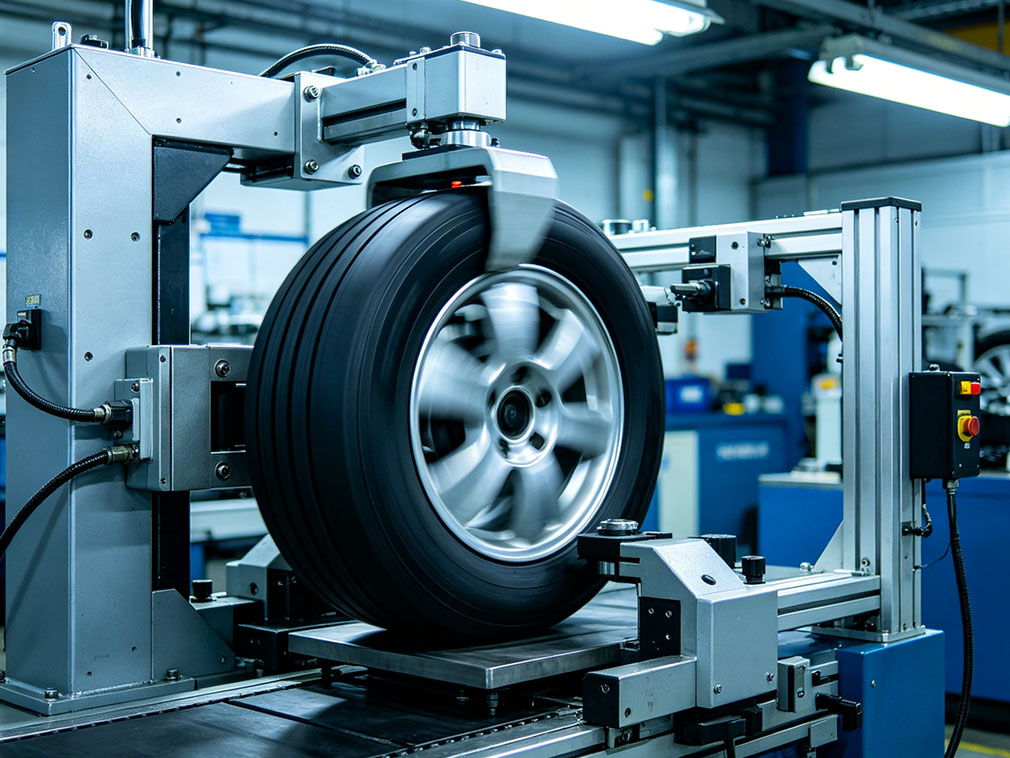
After completing the outer sidewall inspection, roll the tire around the rim at a constant speed for a full circumference check to comprehensively inspect the inner lining's airtightness, checking for hidden problems such as wrinkles, air bubbles, cracks, debris, and uneven rubber layers to avoid driving malfunctions caused by internal defects.
The third step is a reverse symmetrical re-inspection. The tire is tilted 45 degrees to the right in the opposite direction, and the second step is repeated to conduct a comprehensive re-inspection of the tire's sidewall, bead, and corresponding tread area on the other side.
This symmetrical inspection method avoids blind spots in single-sided inspections, ensuring that no aspect of the tire's quality inspection is missed. The entire process is concise, standardized, and efficient, completed within 30 to 40 seconds, meeting the needs of large-scale tire quality inspection operations.
According to domestic tire appearance quality industry standards, combined with the degree of defect, performance, and safety standards, tire appearance quality can be divided into four grades: Grade A, Grade B, Reworked, and Scrap.
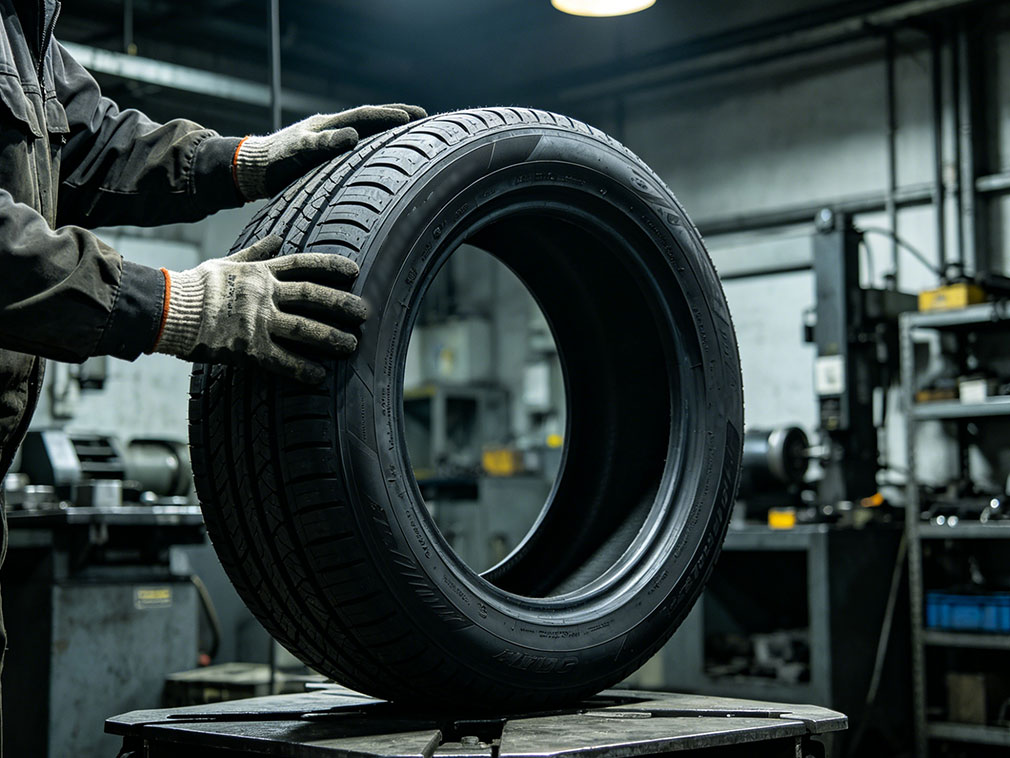
Grade A tires are high-quality and qualified, with no appearance defects, uniform tread pattern, smooth rubber layer, intact sidewall, bead, and tread, compliant dimensional parameters, and all performance standards met. They are suitable for various vehicle operating conditions and meet factory usage standards.
Grade B tires are qualified but have minor defects. Their overall performance is unaffected, with only minor cosmetic issues that do not impact structural safety or driving performance, such as small burrs, slight color unevenness, or very shallow scratches. These minor defects require no treatment and are suitable for assembly into regular civilian vehicles.
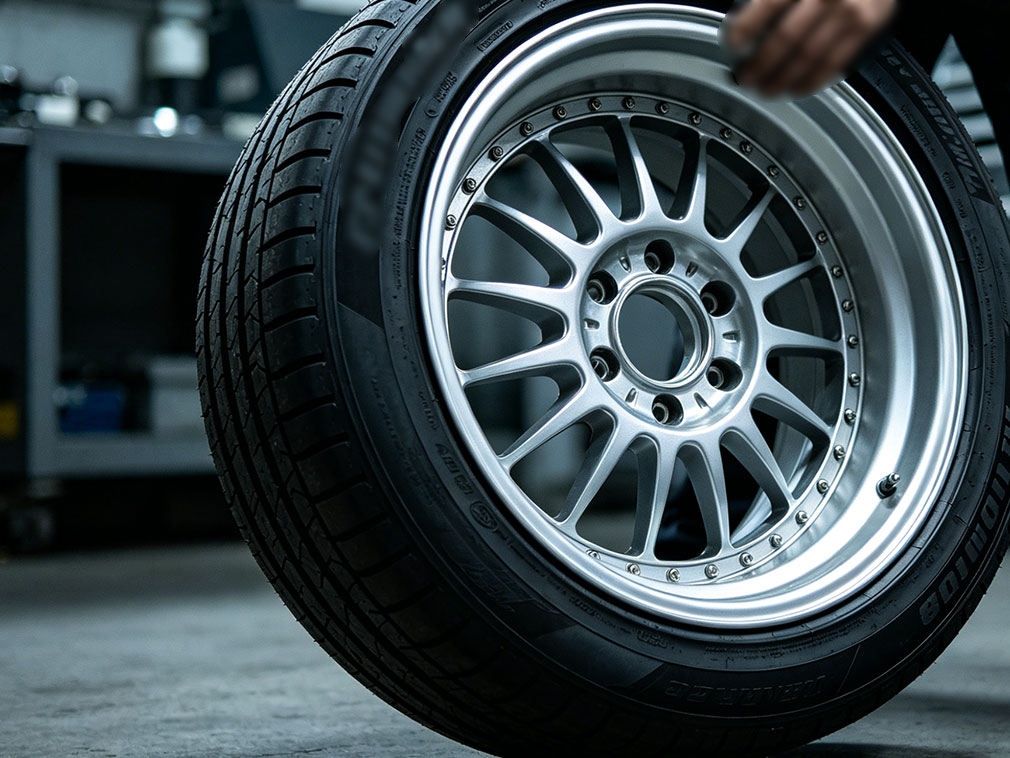
Repaired tires have repairable defects, such as missing rubber, shallow micro-cracks, minor air bubbles, or small areas of wear. These defects do not damage the internal ply layers or core structure and can be reused after professional repair, reshaping, and polishing.
Scrap tires have fatal structural and safety defects, such as deep cracks, large areas of rubber peeling, severe bulges, damaged beads, or exposed steel wires. Their structural strength is compromised, compromising driving safety, and they are beyond repair; they must be scrapped.
-
Foreign Media Visits Yimin Open-Pit Mine: 100 Autonomous 90-Ton Trucks in Operation(Oct 9)8222
-
IRSG: Natural Rubber Prices Hit Multi-Year Highs, Short-Term Correction Pressure Expected(Oct 9)8615
-
Used Car Exports Enter a Trust-Based Phase: Over 450,000 Units in First 8 Months(Oct 9)5384
-
National Day Highway Charging Hits Record: +60.4% YoY(Oct 8)8283
-
New Energy Vehicle Exports Accelerate: 3.435 Million Units in First 8 Months, Up 120% Year-on-Year(Oct 8)8905




