Tire Manufacturers Strategic Paths Diverge Globally
The strategic divergence among global tire giants is not a result of short-term decisions, but rather the combined effect of industry cycles, energy structure transformation, technological iteration, and the global market landscape. In 2026, the industry is at a clear turning point: the market for gasoline-powered vehicles continues to shrink, demand for tires for new energy vehicles is rapidly increasing, and green regulations are becoming increasingly stringent.
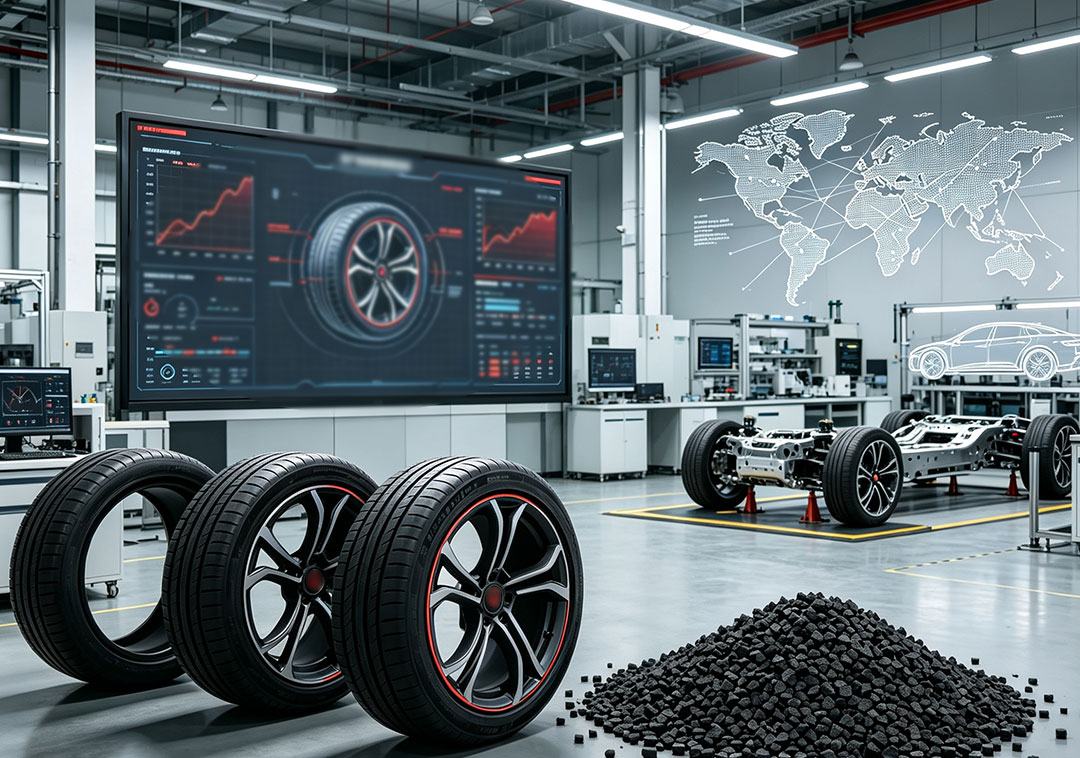
The role of tires as a component of vehicle performance is being redefined, and traditional manufacturing logic is undergoing fundamental changes. Different companies, based on their historical accumulation, have chosen differentiated paths. These paths are not inherently superior or inferior, but they provide valuable references for the upgrading direction of domestic tire brands.
At the market level, structural changes are a foregone conclusion. The large-scale penetration of new energy vehicles has transformed tires from simple wear-resistant components into performance components deeply coupled with the vehicle chassis. Heavier vehicles and higher instantaneous torque necessitate simultaneous improvements in multiple indicators such as low rolling resistance, quietness, lightweight design, high load-bearing capacity, and resistance to heat degradation.
Meanwhile, the implementation of green tire labeling regulations in the EU and China further raises the technological threshold. Industry data shows that the global new energy tire market exceeded 50 billion RMB in 2026, with China accounting for over 45% and maintaining an annual growth rate of around 25%. The pressure of technological iteration is driving leading companies to extend from traditional manufacturing to high-value-added materials and system solutions, thus clearly differentiating their strategic choices.
Michelin's "technology-driven ecosystem expansion" and Continental's "focused and in-depth development of its core tire business" are two relatively mature and proven models. These choices are rooted in the companies' own R&D accumulation, global layout, and risk appetite, rather than simple strategic speculation.
Michelin, relying on its long-term accumulated research capabilities in polymer materials, is advancing its "Michelin Leading 2030" diversification strategy, with its cross-industry layout consistently revolving around synergistic material technology development. In the first half of 2026, Michelin completed the acquisitions of US sealing company Fleisch, industrial coated fabric company Cooley Group, and specialty textile company Tex Tech Industries to strengthen its polymer composite materials business segment, which is expected to drive revenue growth of approximately 20% in this segment.
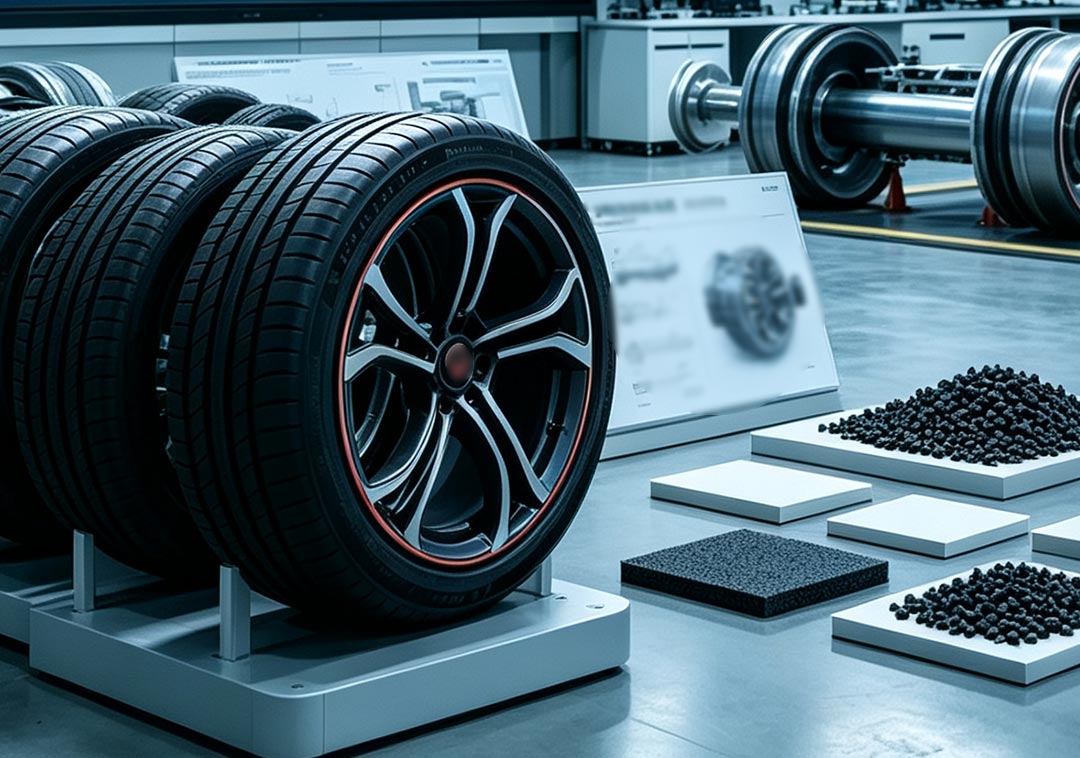
Concurrently, the company extended its tire lightweighting and airtight material technologies to urban public facilities, launching the OYA Urban Tree, a smart urban cooling and sunshade device based on pneumatic material technology. In its core business, it launched the Pilot Sport EV-specific tire for the high-end electric vehicle market and simultaneously applied low rolling resistance and quiet compound to aviation and engineering special tires. In 2025, the operating profit margin of the special tire segment reached 13.1%, becoming a significant contributor to the group's profitability.
Overall, this diversification strategy uses underlying material technologies as a link, reusing technological achievements across scenarios, reducing marginal R&D costs, and forming cross-industry technological barriers.
Continental, on the other hand, has taken a different path. The group proactively divested its non-core automotive parts business, completing the sale of its parts segment worth €1.7 billion in 2026, concentrating resources on tire R&D, manufacturing, and end-user services. This strategy focuses on tires, cultivating niche markets, and strengthening channel operations.
From a technological perspective, Continental doesn't pursue a full range of materials; instead, it continuously invests resources in two core technologies: BlackChili micro-rubber granules and CC7 variable frequency noise reduction, establishing a clear advantage in the high-end sports and new energy vehicle quiet tire segments.
Its SportContact SC7 achieved 21 wins out of 24 professional tire tests globally, helping to solidify its position in the high-performance car original equipment market. In terms of industrial layout, Continental continues to strengthen its production base in Hefei, China, with a cumulative investment of nearly €1 billion, building a local R&D and manufacturing system.
Simultaneously, it has expanded to over 1,000 Bestway high-end retail stores, forming a full-chain service from OEM to the replacement market. 2026 marks the 20th anniversary of the brand's entry into the Chinese market. The company further consolidates its high-end brand awareness through the implementation of user experience spaces, maintaining its market share in the high-end replacement market through long-term channel investment. In 2025, the group's tire business revenue reached €14.3 billion, with the Asia-Pacific market contributing significantly to the growth.
Both models have risks and limitations. Diversification does not automatically bring a safety margin, and specialization does not guarantee a permanent solution. Michelin's technology-driven expansion requires continuous and large-scale R&D investment to maintain its material reuse logic. Once the technological ties loosen, multiple business segments could lead to dispersed management resources and increased operational complexity.
Continental focuses on the tire market, allowing it to concentrate resources on product refinement. However, its market ceiling is relatively clear. If demand for high-end passenger vehicles experiences a temporary contraction, it will lack a second growth curve to smooth out cyclical fluctuations, requiring continued high investment in channels and branding. Both companies share the characteristic that all strategic actions are closely centered on their core technologies, avoiding blind expansion or contraction that deviates from their existing advantages.
In contrast, the most prominent challenge for Chinese tire companies is not making an either-or choice between diversification and specialization, but rather lacking a clear positioning that matches their capabilities. Following trends and imitating others easily leads to resource dispersion and market homogenization. Currently, the structural contradictions in the domestic tire industry remain evident: overcapacity in low-end products and insufficient supply of high-end products.
While China's total tire production accounts for more than 30% of the global total, foreign brands still hold more than 80% of the market share in the high-end new energy vehicle original equipment tire market (18 inches and above). The industry's overall gross profit margin has long been below 15%, and R&D investment as a percentage of revenue is far lower than Michelin and Continental's levels of over 5%.
Some companies, before achieving breakthroughs in materials technology, have simply imitated Michelin's diversification into new materials or equipment manufacturing, thus diverting resources from their core tire business's R&D. Others have mechanically copied Continental's specialization path, focusing solely on the economy replacement tire market, resulting in prolonged low-price competition and difficulty in breaking into the high-end market.
For domestic tire companies, the key task during this period of industry restructuring is to find a suitable niche and establish a long-term development path that matches their own resource endowments. Leading companies with complete materials R&D systems and global production capacity can engage in limited synergistic diversification around their core technologies such as low rolling resistance rubber and high-performance composite materials, expanding into areas such as new energy vehicle tires and recycled materials.
Medium-sized companies with a strong focus on regional markets and moderate production capacity are better suited to a niche-specialization approach, establishing differentiated technological advantages in vertical sectors such as commercial vehicle OEM, the aftermarket, and entry-level new energy vehicle OEM, while simultaneously building localized professional service channels.
Short-term expansion or contraction based on trends will not lead to sustainable competitiveness. The way forward for China's tire industry to upgrade lies not in copying the development models of international giants, but in leveraging the fundamental advantage of China's complete new energy vehicle industry chain.
It requires finding a balance between R&D investment, channel development, and industry selection, and building upon independent core material technologies to forge a development path that balances scale, technology, and brand value. Only in this way can China secure its position in the restructuring of the global tire industry.