
Why EV Tires Wear Faster Than Gas Car Tires
With the increasing popularity of new energy vehicles, tire wear differences have gradually become a focus of attention for car owners in their daily maintenance. Under the same road conditions and driving habits, the tires of pure electric vehicles generally wear out faster than those of traditional fuel vehicles, resulting in a significantly shorter lifespan. It's important to clarify that this phenomenon is not a tire quality issue, but rather the result of multiple factors, including vehicle structure, power characteristics, and tire design.
From the perspective of basic wear rate and lifespan, the difference between the two is quite clear. In typical urban commuting scenarios, the tread wear rate of fuel vehicle tires is usually stable at 0.1–0.15 mm/1000 km, and under normal maintenance, their lifespan is approximately 60,000–80,000 km, which can be extended to 80,000–100,000 km in high-speed driving scenarios.
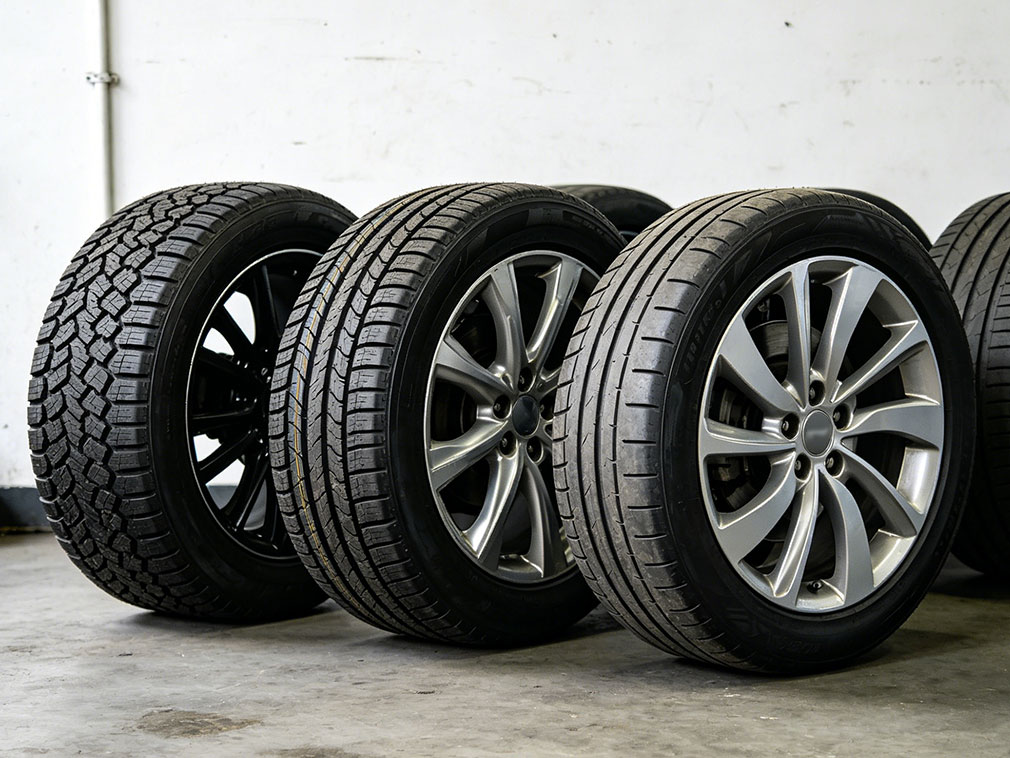
Electric vehicle tires, however, wear out significantly faster. Industry tests show that their overall wear rate is 20%–30% faster than that of fuel vehicle tires, and their typical lifespan is generally 40,000–60,000 km. In scenarios with frequent short trips and rapid acceleration, some vehicles may reach the wear and replacement standard after only about 30,000 km. Even with brand-new original equipment tires, the aging and wear levels of electric vehicle tires after 20,000 kilometers are roughly equivalent to those of gasoline vehicle tires after 40,000 kilometers.
The difference in vehicle weight is the fundamental reason for the difference in wear. Pure electric vehicles of the same class, due to their large-capacity battery packs, have a curb weight 200-500 kg heavier than gasoline vehicles, meaning the vehicle is constantly under extra load. Research by the UK emissions research firm Emission Analytics shows that for every 500 kg increase in vehicle curb weight, tire wear rate increases by approximately 20%.
The heavier vehicle increases the tire's contact patch, subjecting the tire shoulder to greater compression and deformation over time, significantly increasing the friction between the tire tread rubber and the road surface. Over time, this accelerates rubber wear and tire fatigue, resulting in more uniform tire wear.
The drastically different power output characteristics are the core reason why electric vehicle tires wear faster. Gasoline vehicles rely on the engine and transmission to transmit power step by step, with relatively smooth and linear torque release. The start-up and acceleration processes are gradual, making it less likely for the tires to experience sudden overload slippage.
Electric motors can release peak torque instantly, resulting in extremely strong initial acceleration. Some high-performance electric vehicles can achieve acceleration of up to 1.1G, causing a sudden surge in grip load on the drive wheels. Even without visible slippage, this instantaneous high-intensity ground friction continuously accelerates tire tread wear, and frequent rapid acceleration over time further amplifies uneven wear on the drive wheels.
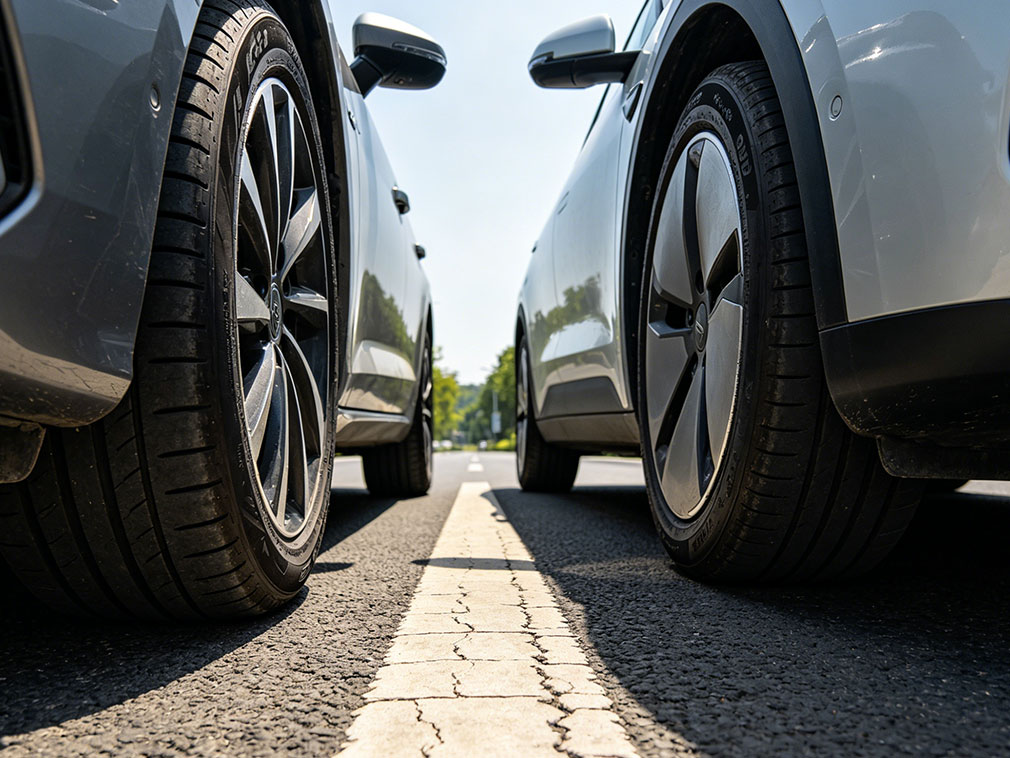
Differences in tire compound and structural design further widen the wear gap. Gasoline vehicle tires typically use high-hardness, wear-resistant rubber compounds, balancing durability and economy to match smooth power output. To match the high torque of the electric motor, reduce driving noise, and decrease rolling resistance to improve range, original equipment tires for electric vehicles often use high-silica, softer tread compounds, with some products even incorporating sound-absorbing foam structures.
These compounds offer better grip and quieter operation, but compared to the harder compounds in gasoline vehicle tires, their wear resistance is significantly lower, naturally resulting in faster wear. Meanwhile, electric vehicle tires are generally 10-20 mm wider, which, while improving driving stability, also increases the contact area with the road surface, indirectly accelerating the wear process.
Furthermore, the kinetic energy recovery systems commonly found in electric vehicles introduce hidden wear. When kinetic energy recovery engages during driving, the drive motor transforms into a generator, applying a reverse braking torque to the wheels.
This creates a reverse friction force, different from the coasting state of gasoline vehicles, continuously acting on the tire tread, causing subtle but persistent wear. This long-term accumulated reverse friction loss is something gasoline vehicles, with their simple mechanical braking, lacks, thus making the wear conditions of gasoline vehicle tires relatively more stable.
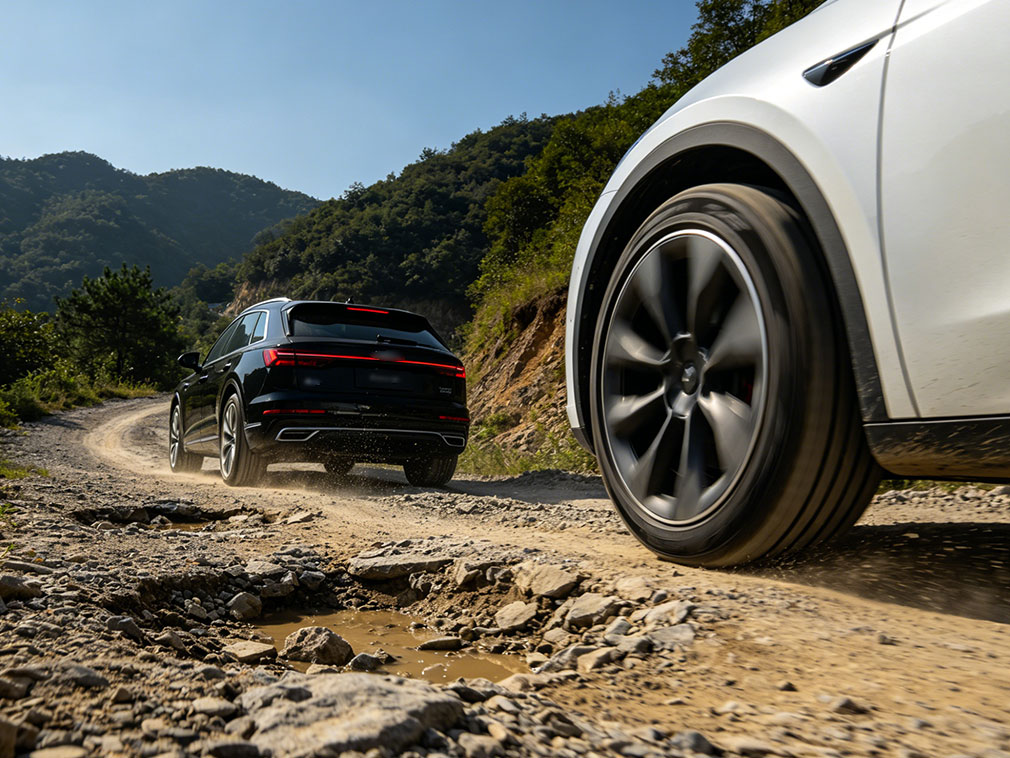
The faster wear of electric vehicle tires is an inevitable result of the combined effects of their weight, power output characteristics, specialized tire design, and kinetic energy recovery. In maintenance, owners can effectively slow down wear by maintaining smooth driving, reducing rapid acceleration, regularly performing four-wheel alignment and tire rotation, and maintaining proper tire pressure.
It is also recommended to abandon the tire replacement cycle mindset of the gasoline vehicle era and develop the habit of replacing tires promptly based on their actual tread depth and wear indicators to ensure driving safety.
-
National Day Highway Charging Hits Record: +60.4% YoY(Oct 8)8264
-
New Energy Vehicle Exports Accelerate: 3.435 Million Units in First 8 Months, Up 120% Year-on-Year(Oct 8)8882
-
Chinese Tire Exports: Volume Up But Revenue Down Nearly RMB 900 Per Ton(Oct 8)5408
-
CNH Industrial: Smart Farming, NE and Local Tech(Sep 30)5575
-
CNHTC Drives Surging NE Heavy Truck Exports(Sep 30)8500




