
Wheeled Tractors Driving Agricultural
Large-scale farm wheeled tractors are a core category of high-end agricultural machinery, precisely adapted to the needs of large-scale, intensive agricultural production and capable of handling various complex working conditions. Their development is closely linked to the upgrading of my country's agricultural mechanization towards high quality and efficiency.
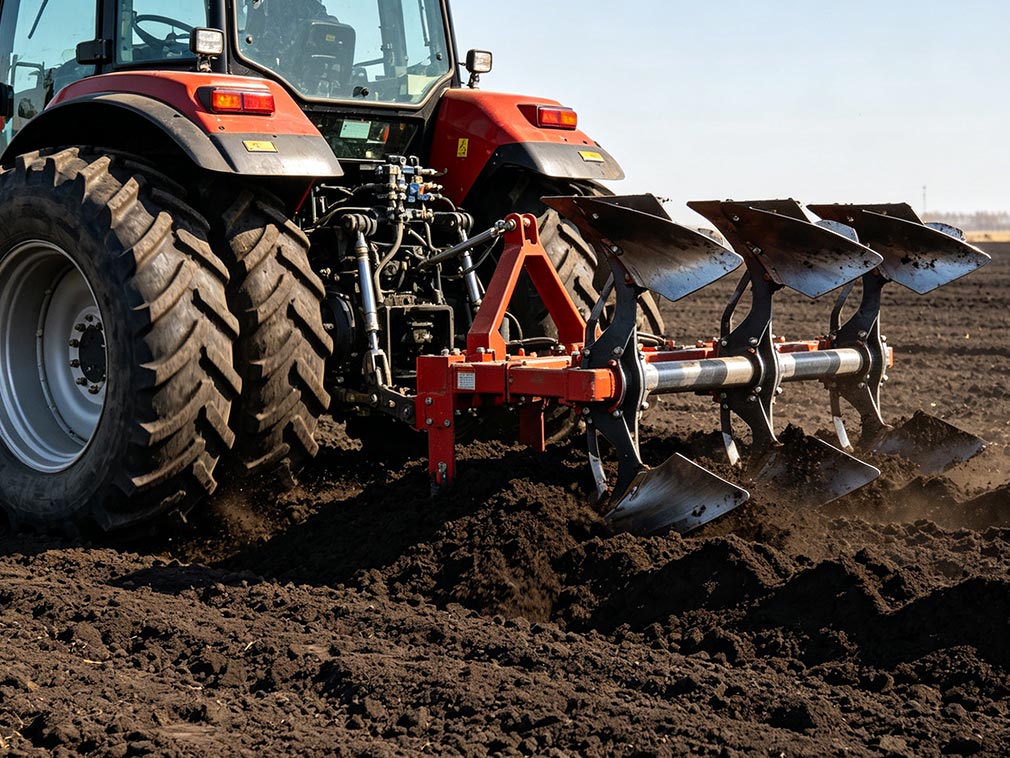
The industry as a whole exhibits a trend of "concentration among leading companies and upgrading demand."
In 2025, the domestic wheeled tractor market stabilized and bottomed out, with annual sales of approximately 258,500 units. Although the total volume declined year-on-year, high-horsepower models became a structural growth highlight, with sales of 250 horsepower and above models increasing by 19.64% year-on-year, opening up space for the 260 horsepower segment.
At the brand level, Weichai Lovol and China YTO Group dominate, with a combined market share of 37.3%, possessing strong technological and channel competitiveness in high-end models such as 260 horsepower. Changzhou Dongfeng Agricultural Machinery and Changfa Agricultural Equipment follow closely behind, while smaller brands face significant homogenization competition, with most struggling to enter the high-end, high-horsepower market.
Meanwhile, the market is shifting from "quantity expansion" to "value growth." The 260-horsepower model, precisely matching the needs of large-scale operations, boasts a higher unit value and has become a key product for companies expanding into the high-end market.
Technologically, breakthroughs in domestic production are progressing in tandem with intelligent and green transformation. The reliance on imported core components for high-end models is gradually being reversed. By 2026, leading domestic companies had achieved mass production of 200-300 horsepower continuously variable transmission (CVT) tractors, breaking the long-standing monopoly of foreign brands in this field; the domestic production rate of heavy-duty hydraulic systems and transmission components has exceeded 40%.
The 260-horsepower model generally features a mainstream brand high-pressure common rail engine with ample torque reserves. Combined with a multi-speed synchronizer gearbox, it can flexibly adapt to different operating speeds. Some models are equipped with a large 500-liter fuel tank, supporting 16 hours of continuous operation, meeting the needs of long-term operations on large plots of land.
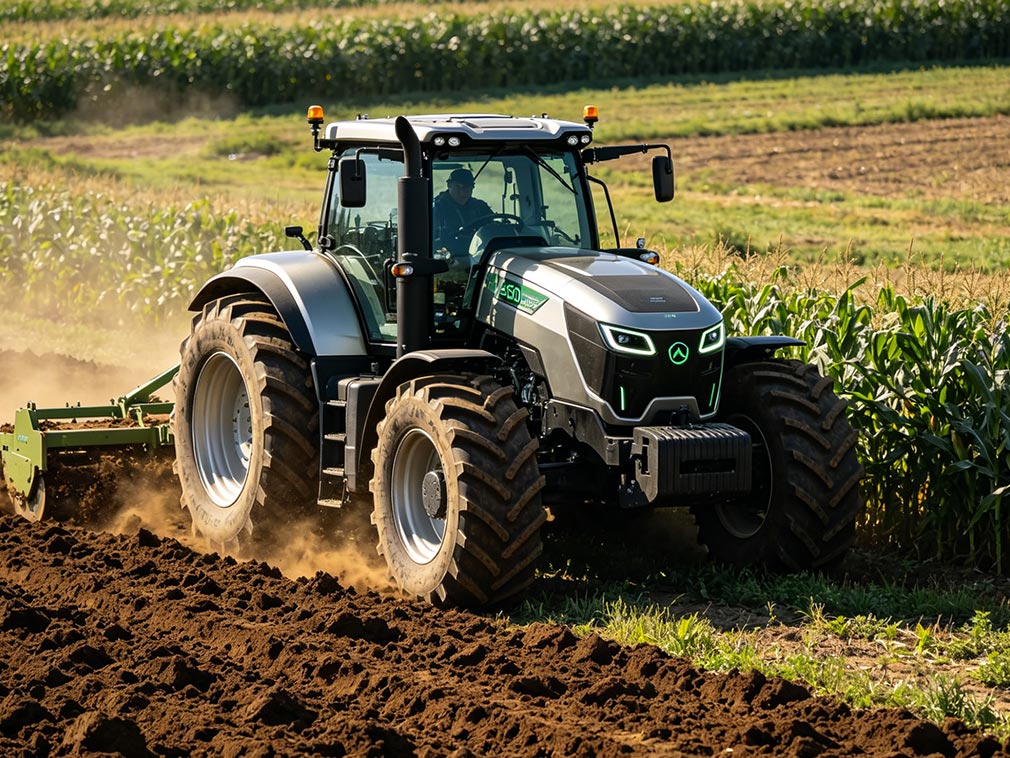
In terms of intelligent technology, the installation rate of the Beidou navigation automatic driving system continues to increase, and some 260-horsepower models can achieve centimeter-level operational accuracy. In addition, some companies have launched electric models, which offer over 30% higher operating efficiency and significantly reduced energy costs compared to traditional models.
Covering Complex Agronomic Practices and Supporting Large-Scale Production
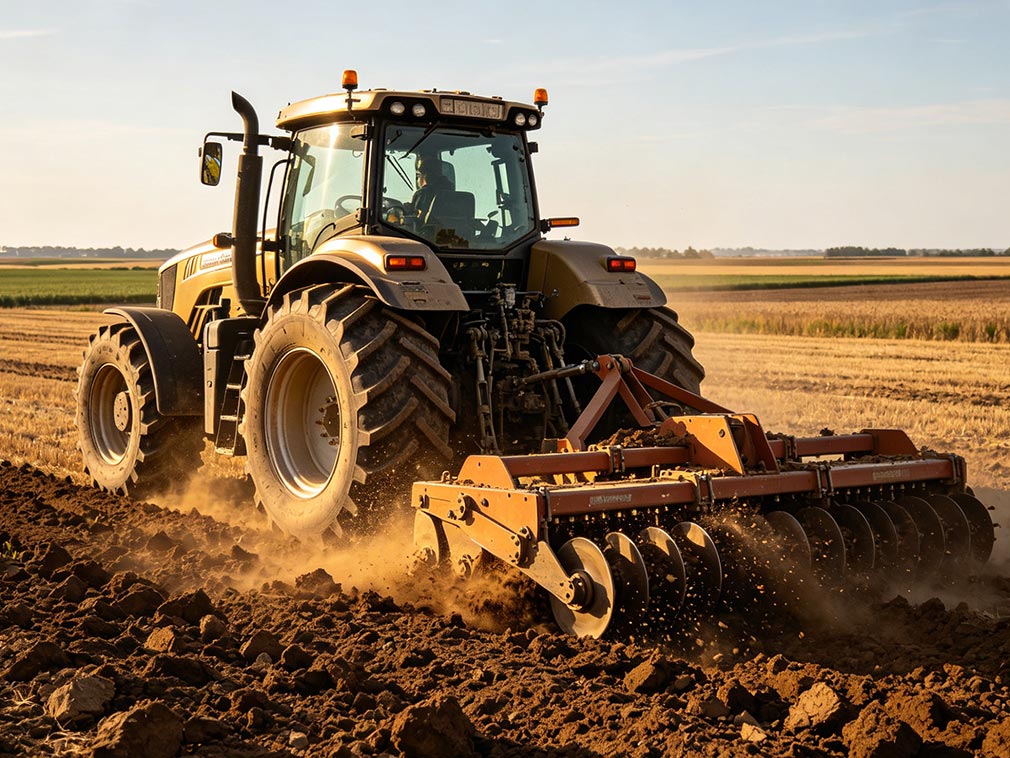
In terms of application scenarios, the adaptability of this model is constantly expanding, covering various complex agricultural environments. From deep plowing and loosening in the black soil of Northeast China to combined tillage and precision sowing in the Central Plains granary, and to ridging and fertilization in large-scale farms, the 260-horsepower model, with its robust body design and flexible wheelbase adjustment, can adapt to different soil conditions and operational requirements.
With the acceleration of land transfer, large-scale farms and agricultural cooperatives have become the main users, making the high-efficiency operation advantages of this model even more prominent. It effectively solves the problems of insufficient power and low efficiency of traditional agricultural machinery in heavy-load and large-area operations, promoting the improvement of agricultural production quality and efficiency.
Existing Bottlenecks: Core Components, Demand Differentiation, and Service Shortcomings Still Need to be Overcome
Currently, the development of this model still faces some bottlenecks. First, there are shortcomings in the localization of core components. The localization rate of key components such as high-end sensors and intelligent controllers is less than 50%, which drives up the overall manufacturing cost.
Second, market demand is fragmented. In the first half of 2025, sales in the high-end market of 260 horsepower and above dropped by 50%, reflecting that demand in some regions was not fully released due to the slower-than-expected progress of large-scale operations.
Third, the supporting service network is still incomplete. High-horsepower models have complex structures and high maintenance costs. Insufficient service coverage in some remote areas negatively impacts the user experience.
Overall, the development of large-scale farm wheeled tractors is highly aligned with the direction of my country's agricultural modernization transformation. Driven by policy support, technological breakthroughs, and market demand, this type of tractor is progressing steadily.
With continued breakthroughs in core technologies, further tilting agricultural machinery purchase subsidies towards high-end models, and the deepening development of large-scale agriculture, tractors will gradually overcome existing bottlenecks and play a more crucial role in complex operating scenarios, contributing to the comprehensive mechanization upgrade of agriculture.
-
National Day Highway Charging Hits Record: +60.4% YoY(Oct 8)8264
-
New Energy Vehicle Exports Accelerate: 3.435 Million Units in First 8 Months, Up 120% Year-on-Year(Oct 8)8882
-
Chinese Tire Exports: Volume Up But Revenue Down Nearly RMB 900 Per Ton(Oct 8)5408
-
CNH Industrial: Smart Farming, NE and Local Tech(Sep 30)5577
-
CNHTC Drives Surging NE Heavy Truck Exports(Sep 30)8500




