
2026 Spring Plowing Drives Ag Tire Market
Entering March 2026, spring plowing and production have fully commenced, bringing the first peak demand period of the year to the agricultural machinery tire market. Influenced by a confluence of factors including policy guidance, technological upgrades, raw material cost fluctuations, and global market evolution, the industry exhibits distinct characteristics of structural optimization and energy transformation, steadily moving towards high-quality, intelligent, and green development. The market structure continues to optimize, and regional demand differentiation becomes more pronounced.
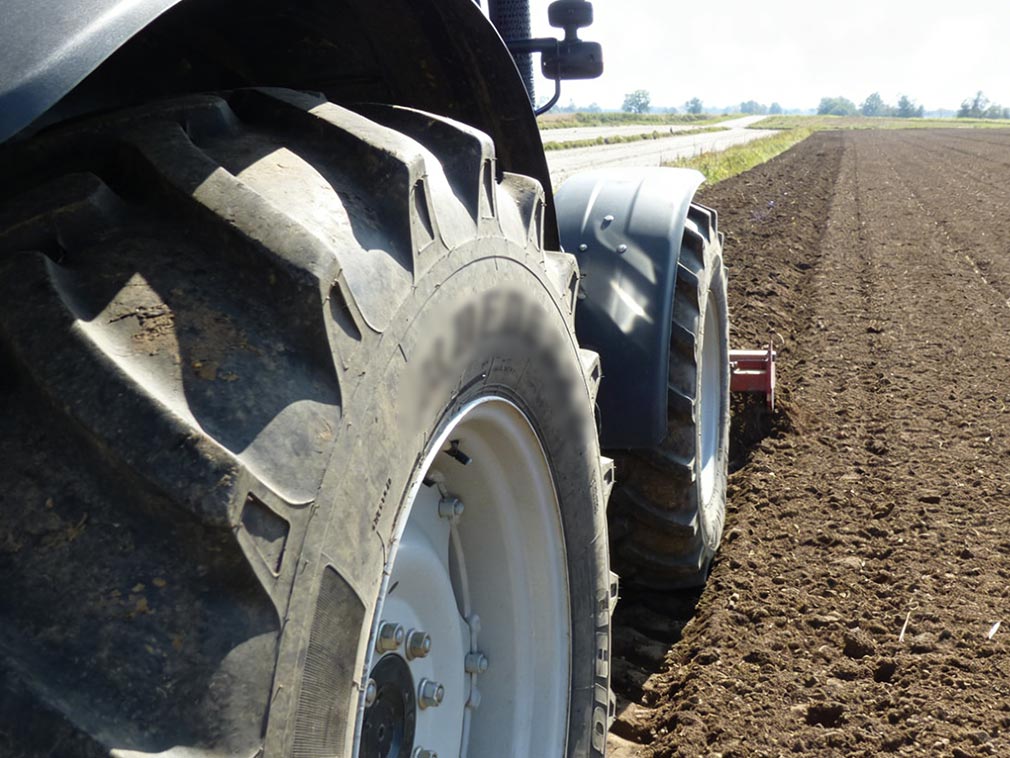
On the demand side, there is a significant characteristic of "release of essential needs and structural upgrading." As the core month for spring plowing, March sees tractors, combine harvesters, and other agricultural equipment entering a high-frequency operation cycle, leading to a concentrated release of demand for tire replacements for existing equipment.
Simultaneously, the continued advancement of high-standard farmland construction, coupled with increased subsidies for agricultural machinery scrapping and replacement, has effectively driven the growth of the original equipment market. In terms of regional structure, the three major grain-producing areas of Northeast China, the Huang-Huai-Hai Plain, and the middle and lower reaches of the Yangtze River contribute over 63% of market sales, with demand shifting towards high-performance tires for high-horsepower agricultural machinery.
Meanwhile, the southwestern hilly and mountainous areas and the northwestern cotton-producing areas are experiencing rapid growth in demand for narrow-width, lightweight, and special-purpose tires due to accelerated mechanization upgrades.
Furthermore, as family farms and farmer cooperatives gradually become the mainstay of agricultural production, they place higher demands on the professional adaptability and durability of tires, driving market demand to evolve deeply from general-purpose products to scenario-specific customization.
On the product side, there is an accelerated transformation towards "high performance, intelligence, and greenness." At the policy level, the 2026 Central Document No. 1 explicitly supports the research and application of high-end intelligent agricultural machinery and agricultural equipment suitable for hilly and mountainous areas, forcing upstream tire companies to accelerate technological upgrades.
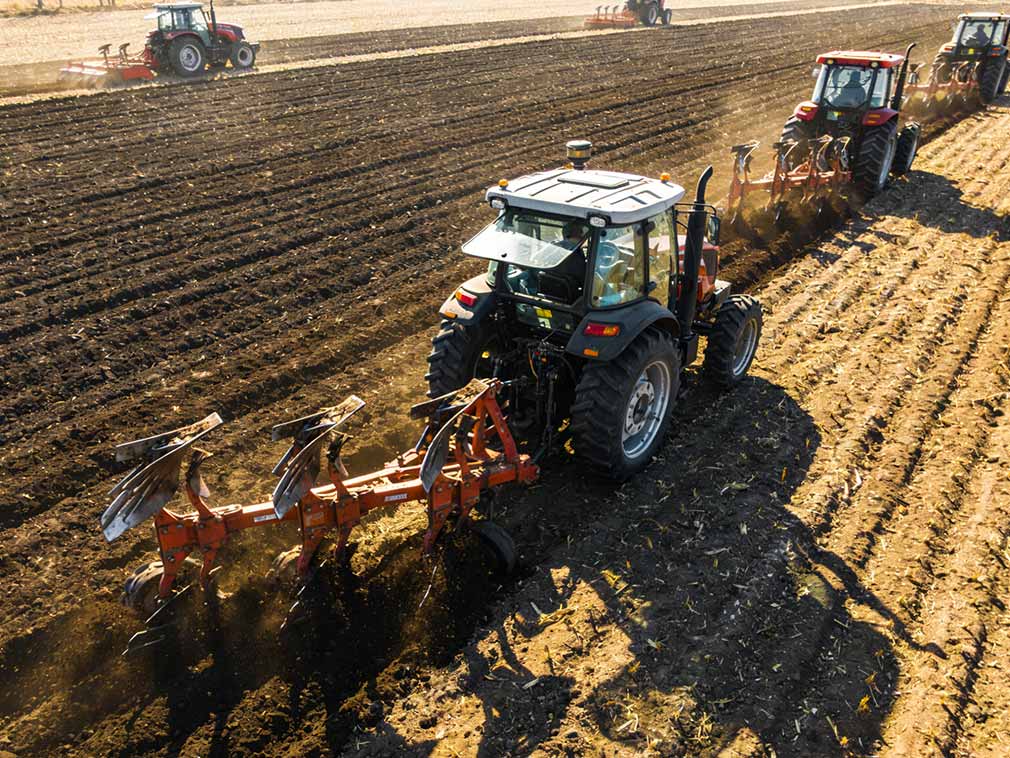
In terms of material innovation, new materials such as ultra-high molecular weight polyethylene and nanocomposite materials have achieved large-scale application, significantly improving tire wear resistance and load-bearing capacity; the application ratio of bio-based rubber materials continues to climb, and is expected to reach 20% by the end of 2026.
Intelligence has become a key direction for product iteration; intelligent tires with integrated sensing modules can monitor pressure, temperature, and wear status in real time, effectively adapting to the precision operation needs of intelligent agricultural machinery, and their penetration rate is currently on a steady upward trend.
In terms of green manufacturing, facing increasingly stringent environmental constraints, leading companies in the industry have generally increased investment in technological upgrades, accelerating the popularization of green technologies such as low-temperature vulcanization processes and the recycling of reclaimed rubber, thus promoting the low-carbon transformation of the entire industry chain.
Prices have risen moderately due to cost increases, but the overall market remains stable. Since 2026, natural rubber prices have continued to rise, exceeding 17,000 yuan per ton in early March, a year-on-year increase of over 10%. Coupled with high prices for some auxiliary materials, this has significantly pushed up tire production costs.

As of March 6, the average price of commonly used paddy field and harvester tires in China was 880 to 960 yuan per tire. Some companies have successively issued price increase notices, with adjustments ranging from 2% to 5%, but the overall increase is significantly lower than the increase in costs.
Thanks to sufficient industry competition and the continuous improvement in cost control capabilities of leading companies, this round of price adjustments has been moderate and orderly, without triggering significant market fluctuations, and the overall price system has remained stable.
The competitive landscape presents a trend of "increased concentration and differentiated competition and cooperation between domestic and foreign capital." In the domestic market, the leading companies in the industry continue to strengthen their dominance, with the top ten companies holding a 58.7% market share. Small and medium-sized enterprises are accelerating their exit from the market due to environmental constraints and cost pressures.
International brands still hold approximately 42.3% of the high-end market share due to their technological accumulation, but leading domestic companies are gradually narrowing the gap through continuous R&D investment, with the localization rate now reaching 79%.
Notably, the export market performed strongly. Benefiting from RCEP tariff reductions and the deepening of agricultural cooperation under the Belt and Road Initiative, agricultural machinery tire export orders continued to grow in March, mainly flowing to Southeast Asia, South Asia, and Africa. Coupled with the gradual implementation of overseas production capacity, the international competitiveness of domestic companies has further increased.
Overall, the agricultural machinery tire market in March 2026 presented a favorable situation of strong demand, accelerated product iteration, and stable and controllable prices, indicating that the industry is in a critical period of transformation and upgrading.
Looking ahead, with the continuous improvement of agricultural modernization, breakthroughs in technological innovation, and an increasingly complete policy support system, the agricultural machinery tire industry will continue to evolve towards intelligence, greening, and specialization. Enterprises need to focus more on product development, lean manufacturing, and customer service capabilities in order to accurately seize structural opportunities and gain the initiative in industry transformation.




