60+ Tire Companies Raise Prices Collectively: Price Hikes Struggle to Keep Pace with Raw Material Surge(Oct 21)
60+ Tire Companies Raise Prices Collectively: Price Hikes Struggle to Keep Pace with Raw Material Surge
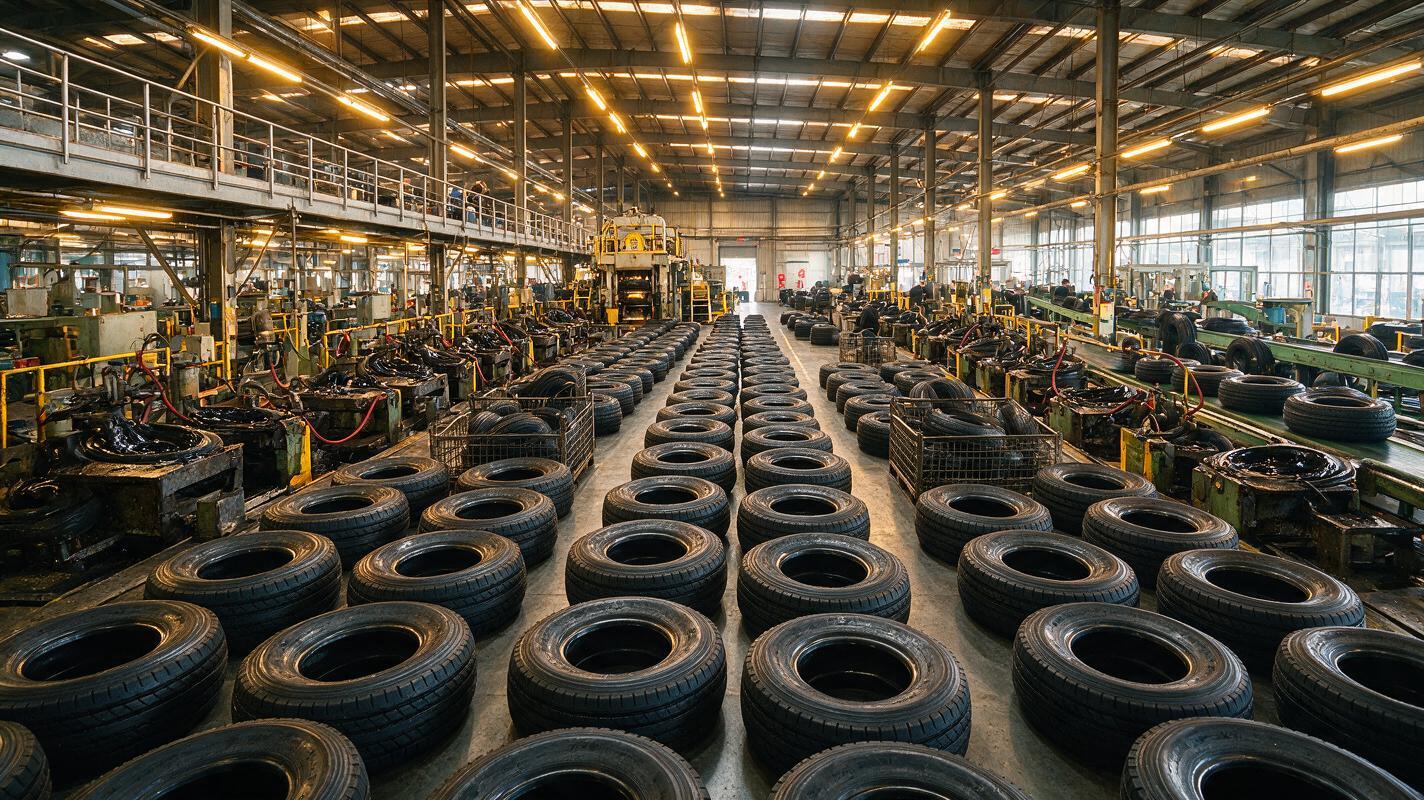
Source: Securities Times
Link: https://www.stcn.com/article/detail/4225004.html
============================================================
A TBR (Truck and Bus Radial) tire costs over a thousand yuan, so a 3%-5% increase means 30 to 50 yuan or more per tire. A heavy truck has over a dozen tires, so a single replacement costs several hundred to a thousand yuan extra — real money out of pocket.
The tire industry has entered its fourth round of price increases this year. According to CCTV Finance, since September, over 60 tire companies have issued more than 70 price hike notices, covering all-steel tires, semi-steel tires, and engineering tires, with adjustment rates generally between 2% and 5%.
The driving force behind this round of price increases is the continued rise in upstream raw material prices. Natural rubber, carbon black, and synthetic rubber prices have all risen, triggering collective price adjustments across downstream enterprises.
The rapid transmission of raw material price hikes into collective adjustments is directly related to the cost structure of tires. According to Zhu Hong, Deputy Secretary-General and Technical Economics Committee Advisor at the China Rubber Industry Association, raw materials account for over 70% of tire production costs, with natural rubber, carbon black, and synthetic rubber collectively representing over 60%.
High raw material costs have directly impacted industry profit statements. Statistics from the China Rubber Industry Association covering 386 key member enterprises show that in the first half of the year, total industry sales revenue reached 273.77 billion yuan, up 5.64% year-on-year, but total profit was only 9.684 billion yuan, down 23.99% year-on-year.
Unlike previous rounds, this round of price increases shows a clear structural characteristic: the TBR replacement market has become the main battlefield for price hikes.
On October 10, Linglong Tire issued a product price adjustment notice, announcing that starting November 1, all TBR brand product series for the domestic retail market would see a price increase of 3%.
On October 12, Xiongying Rubber Technology followed with a price adjustment, raising prices for all TBR brand products in the domestic replacement market by 3%-5%. The company specifically emphasized that prices would be based on delivery date, not order date — a measure to prevent distributors from placing concentrated orders before the price increase and picking up goods at the old price afterward.
Weifang Yuelong Rubber implemented a 3% price increase starting October 10, explicitly stating that this price hike would not accept advance payments. This clause is particularly noteworthy — companies judge that raw material prices will continue to rise and are unwilling to lock in future orders at current prices, avoiding "selling more, losing more."
The TBR replacement market is favored because it is fragmented, has large brand premium space, and smooth cost transmission. The TBR replacement market serves truck drivers, fleets, and repair shops, with rigid demand and high replacement frequency, while consumer price sensitivity is relatively lower than that of automakers.
In contrast, the OE (Original Equipment) market involves tire factories supplying automakers directly. This channel is large and concentrated, but automakers as major clients have extremely strong bargaining power. Against the backdrop of raw material surges, raising prices in the OE market is extremely difficult.
As of the end of September 2026, the raw material cost index for semi-steel and all-steel tires rose approximately 25% year-on-year, with cost pressure reaching a phased peak.
Natural rubber futures on the Shanghai Futures Exchange closed at 20,645 yuan/ton on October 9, up 2.89% on the day, setting a nine-year price high.
This market rally is not driven by explosive end-user demand, but rather the result of multiple factors resonating together: long-term structural contraction of supply, El Nino climate-related production reduction expectations, continued domestic inventory destocking, recovery of macro risk appetite, and pre-holiday capital trading.
Cost increases continue to outpace price increases. Industry insiders mention that some companies face the extreme situation of "losing 80 yuan per tire sold."
Linglong Tire disclosed that in Q2 2026, the comprehensive procurement cost of four main raw materials increased 15.07% quarter-on-quarter and 10.59% year-on-year, while tire product unit prices only rose 7.55% year-on-year during the same period.
Triangle Tire noted that in Q2 2026, comprehensive procurement prices for natural rubber, synthetic rubber, steel cord, and carbon black rose 10.31% year-on-year and 13.36% quarter-on-quarter, while sales prices fell 4.09% year-on-year due to intensified domestic and international competition and exchange rate fluctuations.
In the first half of 2026, the Chinese tire industry faced the severe challenge of "increasing revenue without increasing profit" under multiple pressures including market conditions, trade barriers, and costs, showing distinct structural differentiation.
Leading tire companies are attempting multiple measures to hedge risks, including signing strategic cooperation agreements with raw material suppliers for long-term price locking, adjusting product prices, and increasing the proportion of high-value-added tire sales.
However, these cost hedging measures have clear thresholds. Many small and medium manufacturers lack the capital and systems for long-term price locking and futures hedging, making them far less resilient to raw material fluctuations than leading listed companies. This round of raw material price increases is accelerating the elimination of inefficient capacity and driving industry resources towardleading enterprises with global layouts and product structure advantages.
This platform focuses on the import and export of Chinese automotive equipment, gathering hundreds of certified Chinese automotive suppliers and connecting with global buyers. The platform achieves full transaction transparency, expands diverse cooperation opportunities, and helps both domestic and foreign parties build deep and stable cooperation bonds. Whether you are looking for vehicle manufacturers, purchasing automotive parts, or need customized procurement solutions, CNAUTO is your trusted first choice for cooperation.
-
Chery Launches Industry's First V2G Large-Scale Operation Station(Oct 21)9723
-
60+ Tire Companies Raise Prices Collectively: Price Hikes Struggle to Keep Pace with Raw Material Surge(Oct 21)5274
-
Zijin Mining Science Conference: Self-Developed 230-Ton Pure Electric Mining Trucks Deployed at Scale(Oct 20)8563
-
Natural Rubber: Beware of Peak and Pullback as Super El Nino Confirmed(Oct 20)8147
-
Wucheng County Creates Used Vehicle Export Tax Rebate Fund Pool to Drive Auto Enterprises Overseas(Oct 20)5890