
ASEAN Tire Exports To Europe Surge Now
According to Tyres Europe's latest quarterly market report, imports of passenger car and light truck tires in the EU-27 and the UK saw a significant decline in the first two months of 2026. The core reason for this phenomenon is the EU's anti-dumping sanctions on Chinese tires, which directly led to a near halving of China's exports of these tires to Europe, thus dragging down the overall European import volume. This report clearly presents the significant fluctuations in the European tire import market, providing crucial reference for industry development.
Data shows that in January and February 2026, European imports of passenger car and light truck tires declined by 21.6% year-on-year, while the first quarter of 2025 saw a growth of 26%, a stark contrast. Specifically, the total European tire imports in the first two months were 5.6 million fewer units than the same period last year, with the most significant decrease coming from China, a drop of 8.7 million units, or 45%, far exceeding the overall decline. As a result, the share of Chinese tires in total European imports plummeted from 74% to 52%, a severe shrinkage in market share.
However, the sharp drop in imports doesn't mean the European market has abandoned Chinese tires; there's a specific market context behind it. Tyres Europe clearly points out that the dramatic decline in Chinese tire exports is primarily due to the "abnormally" high base of comparison in 2025.
When the EU initiated its anti-dumping investigation, European distributors were generally worried that import tariffs and prices would rise once sanctions were implemented. Therefore, they rushed to stockpile goods, securing low-cost supplies in advance. This artificially inflated Chinese tire exports to Europe in 2025, resulting in an "abnormal" surge.
A report by Astutus Research also confirms this. Influenced by the EU's anti-dumping investigation, European distributors' stockpiling activity was particularly intense in 2025, especially in the second half of the year, with a concentrated release of pent-up demand.
Tyres Europe further explains that September 2025 saw the peak of Chinese tire exports to Europe. Afterwards, as stockpiling demand gradually saturated and investigations continued, European tire imports from China began to decline from the fourth quarter, reaching a low point in 2026, which dragged down the overall import figures for the first two months.
It's worth noting that the demand for Chinese tires in the European market didn't actually evaporate; rather, the supply channels shifted. This situation is very similar to the changes in the US imported tire market in recent years—when domestically produced Chinese tires struggled to enter the market due to trade sanctions, Southeast Asian-produced Chinese tires quickly filled the gap.
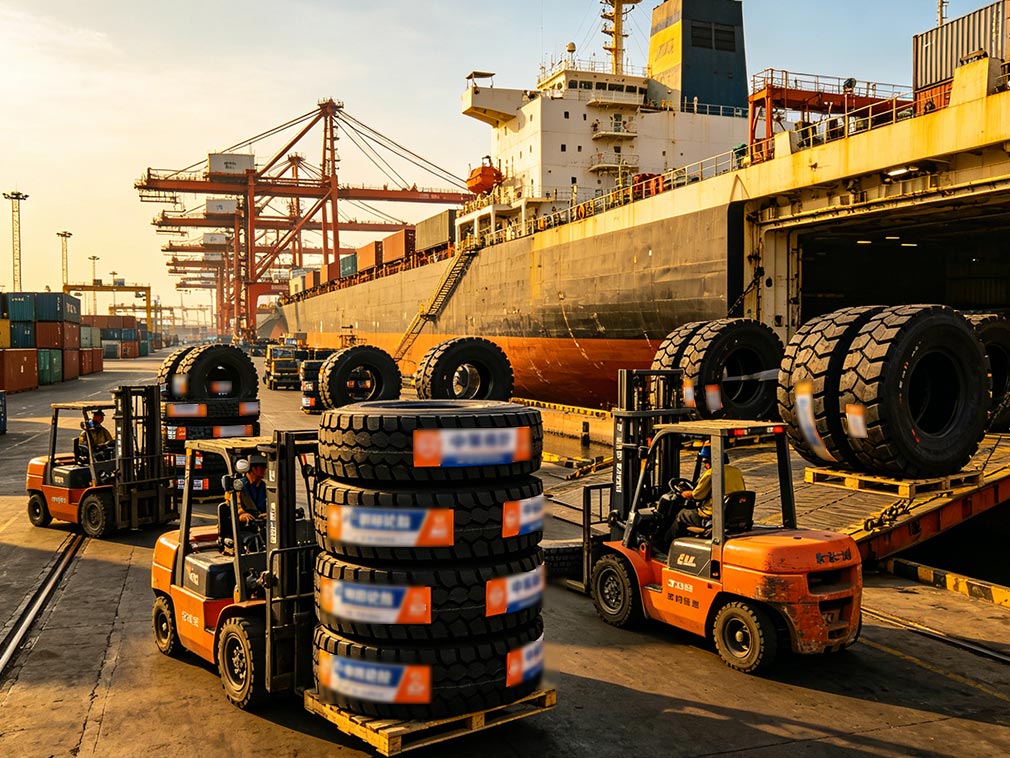
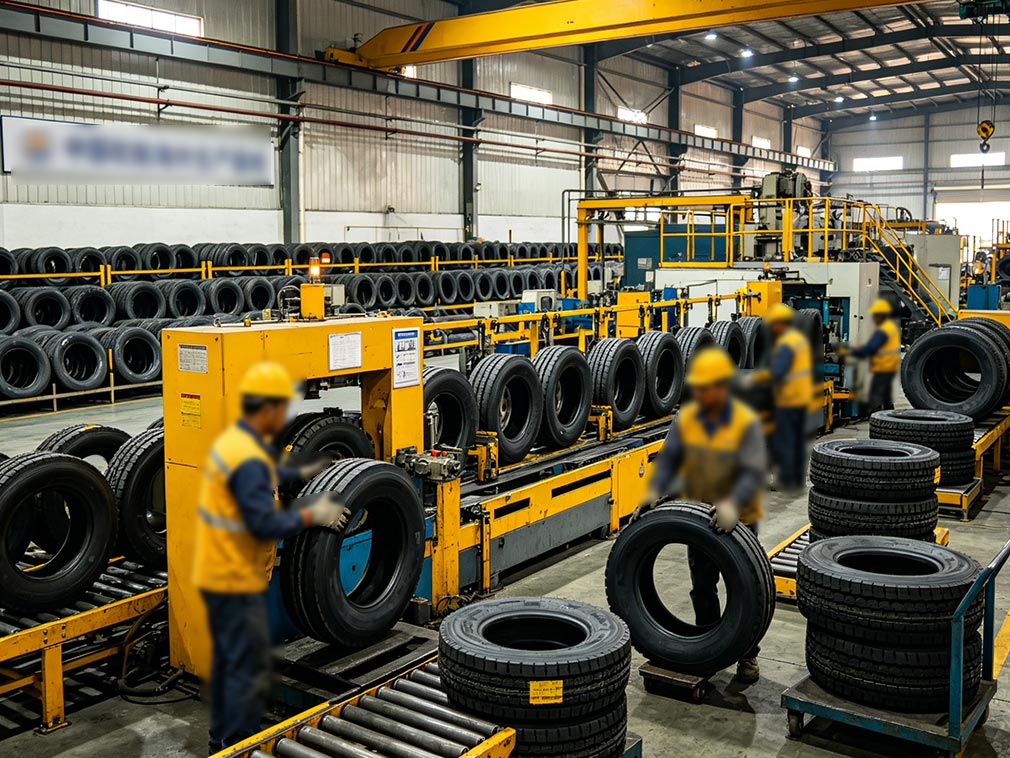
In fact, Chinese tire companies have long been establishing a global presence. To circumvent trade barriers in Europe and the US, leading companies like Zhongce, Linglong, and Sailun have built production bases in Southeast Asia. Tires produced at these bases can leverage local trade facilitation to enter the European market, creating a "circuitous export" route.
A research report from Zhongtai Securities in March 2026 mentioned that from the end of 2025, the release of overseas production capacity by Chinese tire companies accelerated significantly. The Southeast Asian base has consistently maintained high capacity utilization, primarily supplying markets heavily impacted by trade barriers, such as Europe and the United States.
Data shows that in the second half of 2025, Southeast Asian exports of passenger car and light truck tires to Europe saw significant year-on-year growth, with the majority produced in local factories by Chinese companies.
This strategic shift has helped Chinese tire manufacturers avoid direct anti-dumping sanctions from the EU while simultaneously meeting the continued demand in the European market for high-quality, cost-effective tires.
From a broader industry perspective, the EU's anti-dumping measures against Chinese tires did not emerge suddenly. In May 2025, the EU officially launched an anti-dumping investigation into Chinese passenger car and light truck tires.
At that time, the Chinese Ministry of Commerce explicitly stated that such protectionist practices would only artificially increase the burden on consumers, create trade barriers, and disrupt the stability of value chains and supply chains, ultimately harming both sides.
The Ministry urged the EU to resolve the issue through dialogue and consultation. In March 2026, the final anti-dumping ruling was issued, and it officially took effect in June, further tightening the channels for direct tire exports from China to Europe. This is precisely the direct policy driver behind the sharp decline in Chinese tire exports to Europe in the first two months of this year.
In general, the significant drop in European passenger car and light truck tire imports in the first two months of 2026 is the result of several factors, including EU anti-dumping sanctions and a decline in demand following unconventional stockpiling in 2025. However, this does not necessarily mean that Chinese tires will completely disappear from the European market.
Conversely, as Chinese tire companies deepen their global footprint, the "indirect export" model from Southeast Asian bases is gradually gaining momentum, and the market share of Chinese tires in Europe is likely to stabilize in the future. Meanwhile, once inventories are largely depleted and actual demand recovers, the European tire import market will gradually return to normal.




