China Reduces NEV Export VAT Rebate Rate from 13% to 9%(Oct 19)
China Reduces NEV Export VAT Rebate Rate from 13% to 9%
Source: China.com (3g.china.com)
https://3g.china.com/act/news/10000169/20261016/49797768.html
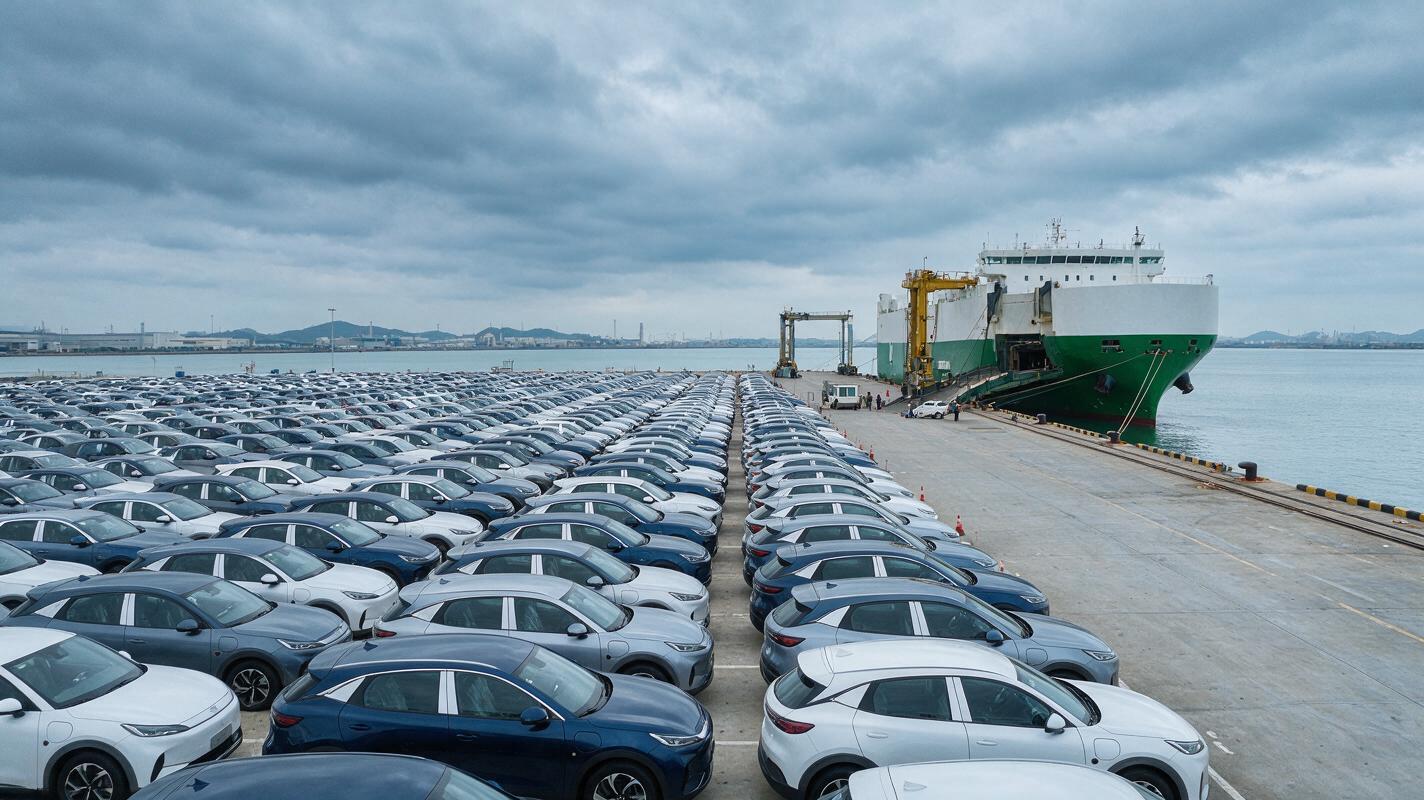
China's NEV exports bid farewell to the "tax rebate dividend" as rising export costs pose new challenges. On October 12, the Ministry of Finance and State Taxation Administration issued a announcement that starting April 1, 2027, the VAT export rebate rate for new energy vehicles will be reduced from 13% to 9%, covering 67 categories of NEV products including pure electric, plug-in hybrid passenger vehicles and commercial vehicles. Consumption tax export rebate policy remains unchanged. The policy determination standard is based on customs declaration date; vehicles declared before April 1, 2027 still use the 13% rate, giving the industry approximately 6 months of transition.
At the time of the announcement, China's NEV exports were in an explosive phase. According to CAAM data, NEV exports in the first three quarters of 2026 reached 4.006 million units, up 1.3 times year-on-year, accounting for nearly half of total vehicle exports, making it an important growth driver for foreign trade.
In the short term, the rebate reduction will directly increase vehicle export costs, especially for companies relying on low-price volume and thin-margin exports. A simple calculation: for an NEV with an FOB price of 150,000 yuan, the rebate amount will drop from 19,500 yuan to 13,500 yuan, a reduction of about 6,000 yuan per vehicle. For budget models with overseas net profit margins of only 3%-5%, this rebate reduction is enough to erode most overseas profits.
In the past few years, many automakers relied on export rebates to adopt aggressive pricing strategies in overseas markets, rapidly seizing market share in Southeast Asia, Latin America, the Middle East, and other emerging markets. Some models even relied on rebate subsidies to achieve "below-cost exports." While this low-price strategy boosted export numbers, it also triggered overseas trade frictions, such as EU anti-subsidy investigations and tariff barriers from multiple countries.
From a top-level design perspective, this rebate reduction is not about curbing NEV exports, but rather ending the extensive scale expansion fueled by rebate subsidies, pushing the industry toward high-quality globalization. The policy reserves a six-month transition period, providing companies with buffer time for order scheduling, pricing negotiations, supply chain restructuring, and overseas factory construction, similar to the earlier rebate adjustment paths of the photovoltaic and lithium battery industries.
Industry differentiation will become a significant feature after the policy takes effect. Leading automakers with overseas localized production capacity, high product premiums, and mature overseas channels will be less affected. Vehicles produced at overseas factories are no longer subject to domestic vehicle export rebate rules. High-end models, with higher gross margins, can offset the cost pressure from rebate reductions through supply chain cost reduction and localized parts procurement.
Pressure is concentrated on budget vehicle manufacturers that only do domestic vehicle exports without overseas factories, and companies highly dependent on overseas markets with low overseas business gross margins. These companies' overseas logic relies on price advantages; after the rebate dividend disappears, their price advantage is weakened and orders face pressure. They must either reduce overseas deployment or accelerate overseas localized factory construction. During the transition period, the industry may see a short-term "export rush" phenomenon.
In the global trade environment, this policy adjustment is also a proactive measure to reduce overseas trade friction risks. In recent years, China's NEV exports have triggered questions from multiple countries about "subsidized exports." Moderately reducing export rebate rates can alleviate overseas accusations of Chinese auto subsidies, reduce the risk of anti-subsidy and anti-dumping investigations, and secure a more stable trade environment for Chinese automakers.
Challenges remain. Emerging markets are highly price-sensitive; once automakers raise prices, they easily lose market share to Japanese, Korean, and European competitors. If they choose to absorb costs themselves, already thin overseas business profits will be further compressed, and many small and medium automakers' overseas business will turn from profit to loss.
For the supply chain, the transmission effect is equally noteworthy. Vehicle export profit pressure will push upstream battery and parts companies to lower prices, forcing the entire supply chain to continuously reduce costs. At the same time, it will accelerate the supply chain's overseas expansion following OEMs, speeding up overseas parts factory construction, transitioning from "vehicle exports" to "supply chain exports."
The export rebate reduction marks the end of the era of extensive low-price exports. Future global competition will be about brand, technology, localized manufacturing, and overseas service network strength. In the short term, the market will face pain; budget export model profitability will be pressured, accelerating industry consolidation. In the medium to long term, leading brands that can withstand cost pressure, complete overseas layout, and build product premiums will gain a firm foothold in the global market. China's auto exports are transitioning from "quantity breakthrough" to "value decisive victory."
This platform focuses on the import and export of Chinese automotive equipment, gathering hundreds of certified Chinese automotive suppliers and connecting with global buyers. The platform achieves full transaction transparency, expands diverse cooperation opportunities, and helps both domestic and foreign parties build deep and stable cooperation bonds. Whether you are looking for vehicle manufacturers, purchasing automotive parts, or need customized procurement solutions, CNAUTO is your trusted first choice for cooperation.
-
China Reduces NEV Export VAT Rebate Rate from 13% to 9%(Oct 19)8491
-
EAEU Imposes Anti-Dumping Duties on Chinese Tire Enterprises' Thailand and Vietnam Bases(Oct 19)9072
-
New Energy Heavy Truck Landscape Reshaped: Sinotrank Leads, XCMG and SANY Close Behind(Oct 16)9934
-
Construction Machinery Industry Recovery Accelerates: Excavator Exports Surpass Domestic Sales for the First Time(Oct 16)6095
-
Russian Delegation Visits Suifenhe to Deepen Cross-Border Used Vehicle Trade(Oct 16)5465