
Ecodesign Tire Rules Face Industry Opposition
The EU plans to include tires as a key target of its Sustainable Product Ecodesign Regulation (ESPR), with the new rules expected to take effect in 2027. The rule's intention is to promote a green transformation in the tire industry through ecodesign, but the restrictions on specialty materials and chemicals in the draft have sparked considerable controversy.
On June 5, 2026, the European Tire Association issued a position paper clearly stating that these materials should not be restricted hastily without specific assessments and quantitative data to support them; policies must balance environmental protection, industrial development, and road safety.
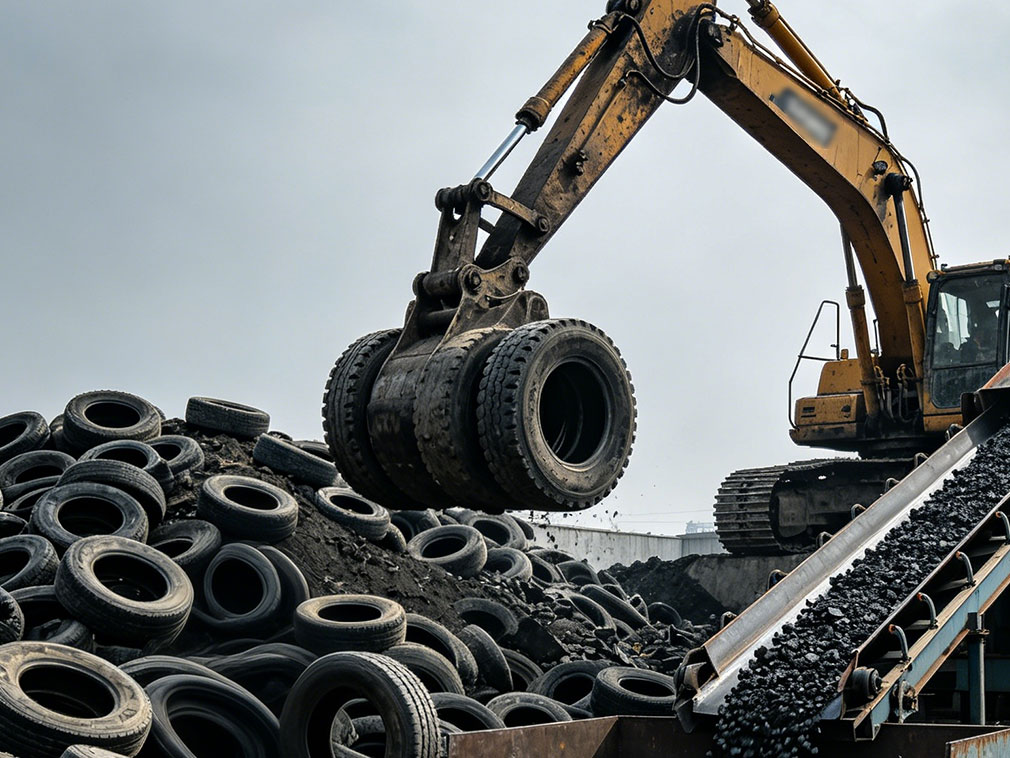
The EU's focus on tire eco-control stems from its desire to address the long-standing challenge of waste tire recycling and disposal. Currently, the utilization rate of high-value resources from waste tires in Europe is low, and incineration remains widespread.
The recycling industry believes that sealants, foam materials, and reinforcing structures inside tires interfere with mechanical crushing and pyrolysis processes, thus reducing recycling efficiency. Therefore, they hope to reduce recycling difficulties at the source through upstream material control, an approach consistent with the EU's overall green development policy.
However, the tire manufacturing industry completely opposes this approach, arguing that the new rules are too one-sided and lack rigorous scientific life-cycle analysis. The European Tire Association points out that the EU has not conducted any specific impact assessments on these special materials, nor can it provide quantitative data to prove that they actually hinder recycling.
Industry data shows that about half of the waste tires in the EU end up incinerated, a much higher proportion than tires containing sealants and foam materials on the market. This indicates that the real root cause of the high incineration rate lies in the imperfect recycling system and the lack of large-scale application of high-value recycling technologies, rather than the special materials themselves. Simply restricting materials at the source cannot solve the fundamental processing problem.
From a life cycle perspective, sealants and foam materials actually have both safety and environmental value. They can repair tire damage, reduce wear, extend tire life, ensure driving safety, reduce tire replacement frequency, and reduce the consumption of raw materials such as rubber and carbon black, thus achieving energy conservation and emission reduction at the source. Restricting the use of these materials merely to save recycling time would offset the environmental benefits of tires throughout their entire life cycle, making them uneconomical.
The global tire recycling industry is still in its developmental stage, and China faces similar challenges to Europe. The domestic waste tire recycling market is fragmented and lacks standardization. High-value processing technologies such as pyrolysis have not yet been widely adopted, and most waste tires are still processed in a crude manner.
It is generally believed in the industry that developing a circular economy for tires should focus on improving downstream recycling facilities and upgrading resource recycling technologies, rather than simply reducing the design of upstream materials. Currently, although domestic and foreign tire companies are actively developing waste tire recycling and pyrolysis reuse technologies, the related processes are not yet mature, and the supporting industrial chain still needs further improvement.
The controversy surrounding this new regulation ultimately boils down to a conflict between two philosophies: end-of-life recycling and end-of-life green development. The ESPR regulation aims to promote the green upgrading of the tire industry, which is undoubtedly the right direction.
However, current material restrictions lack scientific basis, focusing only on end-of-life recycling while ignoring the comprehensive value of tires throughout their entire life cycle. The tire industry is not against green transformation, but rather urges the EU to conduct a thorough scientific assessment, comprehensively weighing issues such as material safety, environmental protection, and recycling to formulate policies that are more in line with the industry's actual situation.
Currently, EU regulators and the tire industry have not reached an agreement. Fortunately, there is still room for policy adjustments before the new regulation takes effect in 2027. This debate also serves as a reminder to the global tire industry of its green transformation: industrial upgrading cannot rely solely on simple policy restrictions; it must be based on technological innovation, optimizing materials, recycling processes, and support systems to ensure that ecological and industrial benefits are truly aligned, while maintaining safety and industry stability.
-
National Day Highway Charging Hits Record: +60.4% YoY(Oct 8)8264
-
New Energy Vehicle Exports Accelerate: 3.435 Million Units in First 8 Months, Up 120% Year-on-Year(Oct 8)8882
-
Chinese Tire Exports: Volume Up But Revenue Down Nearly RMB 900 Per Ton(Oct 8)5408
-
CNH Industrial: Smart Farming, NE and Local Tech(Sep 30)5575
-
CNHTC Drives Surging NE Heavy Truck Exports(Sep 30)8500




