
Challenges in Tire Raw Materials & Equipment
Tires are the only point of contact between a vehicle and the road surface; therefore, the upstream raw material industry, as well as manufacturing and testing equipment, are crucial to a tire's ability to withstand millions of friction cycles. China produces 1.2 billion tires, with over 60% exported—a figure that cannot be ignored. Therefore, the biggest challenge for China to become a truly powerful tire manufacturer, rather than merely a large-scale one, lies in overcoming numerous challenges in the upstream supply chain.
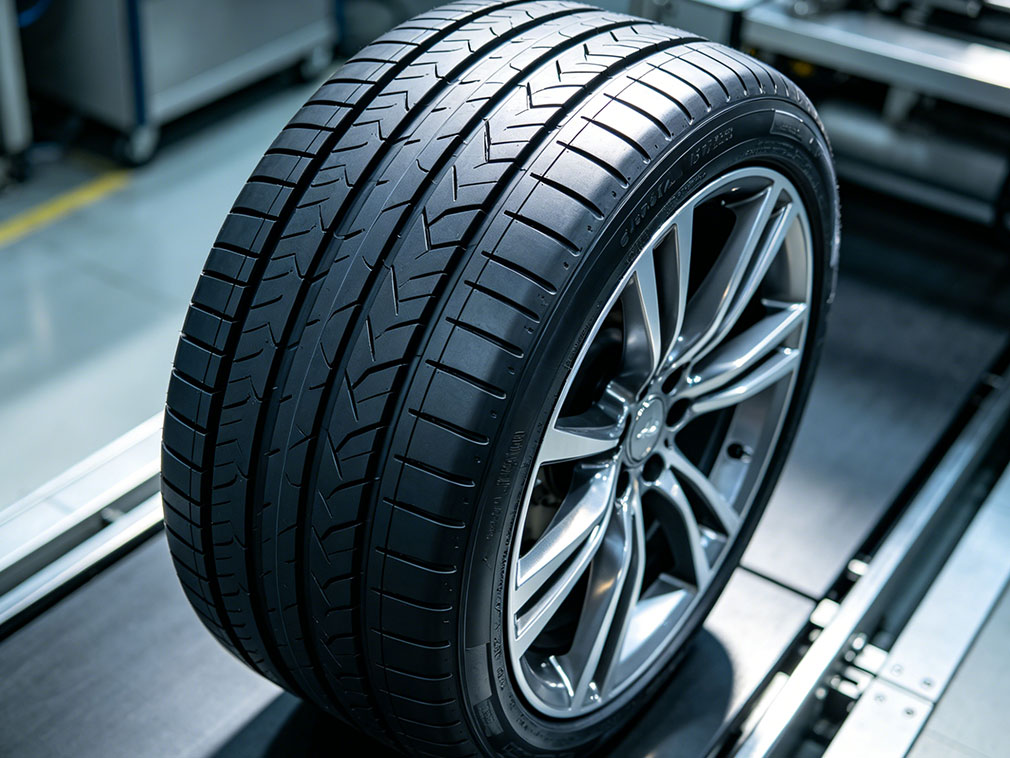
Raw Materials—Large Quantity, Diverse Types, High-End Products—Remain a Bottleneck
Over 70% of the total cost of a tire is spent on raw materials. Fluctuations in raw material prices, including natural rubber, synthetic rubber, carbon black, steel cord, and various additives, have a significant impact on tire manufacturers' financial statements.
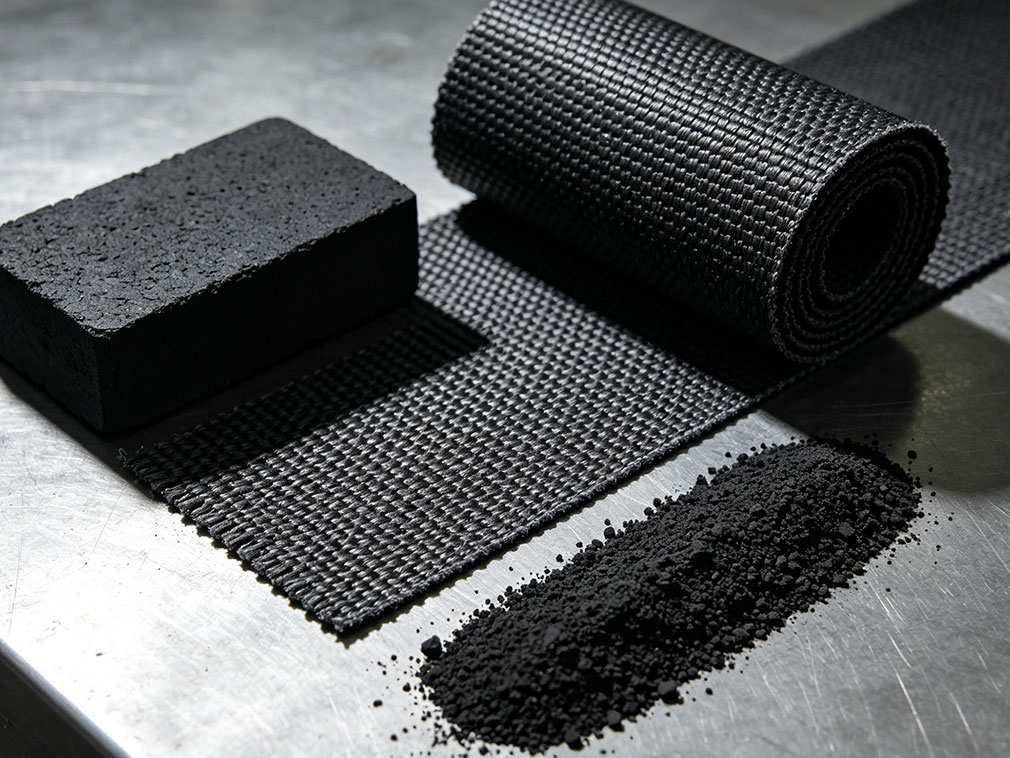
Natural Rubber—A Weak Link in China's Tire Manufacturing Industry
China's domestic tire industry is highly dependent on imported natural rubber. Although China is the world's largest consumer of natural rubber, its production accounts for only about 20% of domestic supply. Imported rubber mainly comes from Thailand, Indonesia, and Vietnam.
The La Niña phenomenon, which will continue until 2025, has significantly slowed rubber tapping in Southeast Asia, while ongoing floods have also driven up rubber prices. For example, in early 2026, the price of Thai RSS3 smoked sheet rubber exceeded $2,000 per ton. This situation accelerated the implementation of "superior varieties + intelligent tapping" trials in Yunnan and Hainan; however, it will take some time before domestic rubber production truly takes a dominant position.
Synthetic rubber—general-purpose SBR and BR are mainly produced in China, but high-performance SBR and BR rely heavily on imports.
On the other hand, fluctuations in the prices of natural and synthetic rubber indicate that rubber product prices will continue to face pressure, thus affecting their sustainable production. Therefore, all aspects, including tire performance and quality, must be continuously improved.
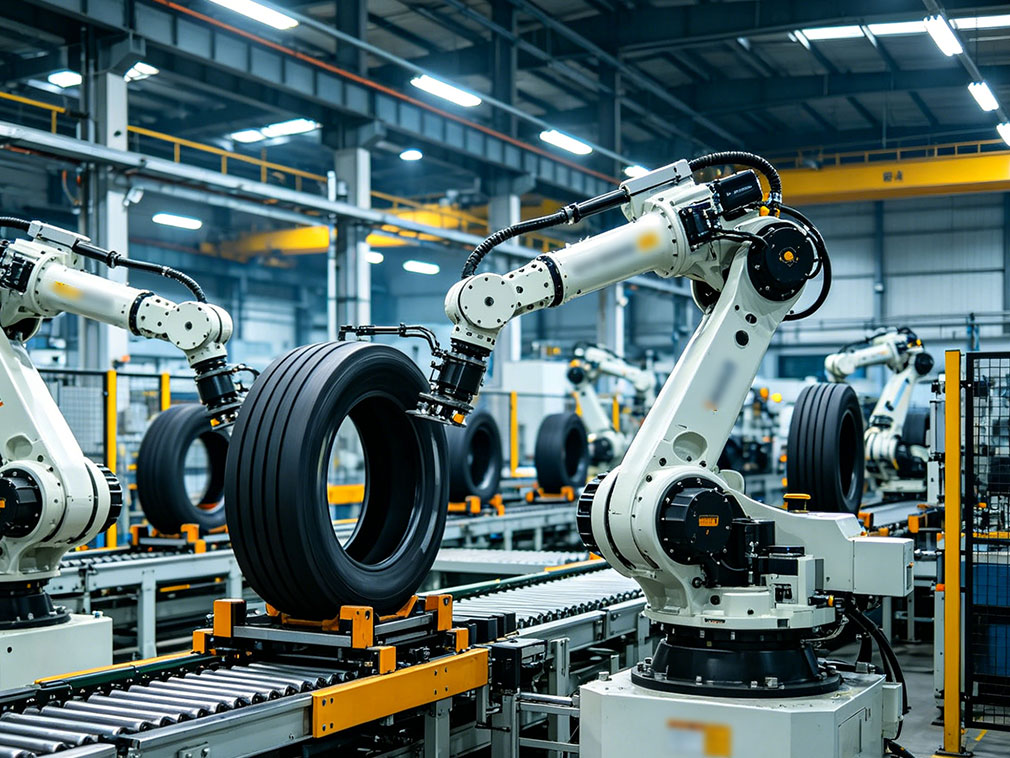
Equipment and testing are key issues in tire manufacturing
Most of the molding and testing equipment for tire production comes from the United States. Domestic manufacturers, such as Yiyang and Dalian, offer ultra-large (tandem) low-temperature internal mixers suitable for most systems, so most manufacturers use domestically produced equipment. Domestic manufacturers also offer hydraulic vulcanizing machines, which employ group control, enabling vulcanization workshops to automatically control temperature and time; this avoids over-vulcanization and saves steam.
The biggest problem in molding and testing lies in the one-step molding machine for semi-steel radial tires. Domestic production of such machines has increased significantly, with the cycle time and accuracy of medium-speed models approaching those of imported models.
However, for high-speed production and large, low-profile, high-performance tires, the VMI forming solution produced in the Netherlands is more stable than domestically produced all-steel tire forming machines in terms of quantity, uniformity, and dynamic balance control. Although domestically produced all-steel tire forming machines are now widely used as "mainstream" equipment, the order volume for domestic manufacturers remains limited in the vast tire forming market.
Inspection equipment is another area where bottlenecks exist. International competition for uniformity testing machines, dynamic balance testing machines, and high-speed X-ray inspection machines is limited. These devices were previously almost entirely monopolized by three major international manufacturers, and they have extremely stringent requirements for repeatability accuracy.




