
How Premium Tires Drive Cheap Tire Sales
Amidst the wave of transformation and upgrading in the tire industry from 2025 to 2026, a significant market phenomenon has become increasingly clear: the deployment and strong sales of high-end tires not only enhance a company's brand value and profitability but also drive sales of mid-to-low-end "cheap tires," creating a virtuous cycle of "high-end setting the benchmark and low-end expanding the market."
This phenomenon is not accidental but an inevitable result of the synergistic effect of industry development, consumption upgrading, and corporate strategy. It aligns with current tire market trends and is strongly supported by the financial reports of leading global companies.
The core value of high-end tires lies in establishing brand trust, thus solidifying the market foundation for cheaper tires. In today's fiercely competitive tire market, consumers often face the dilemma of "difficulty in discerning quality and high selection costs."
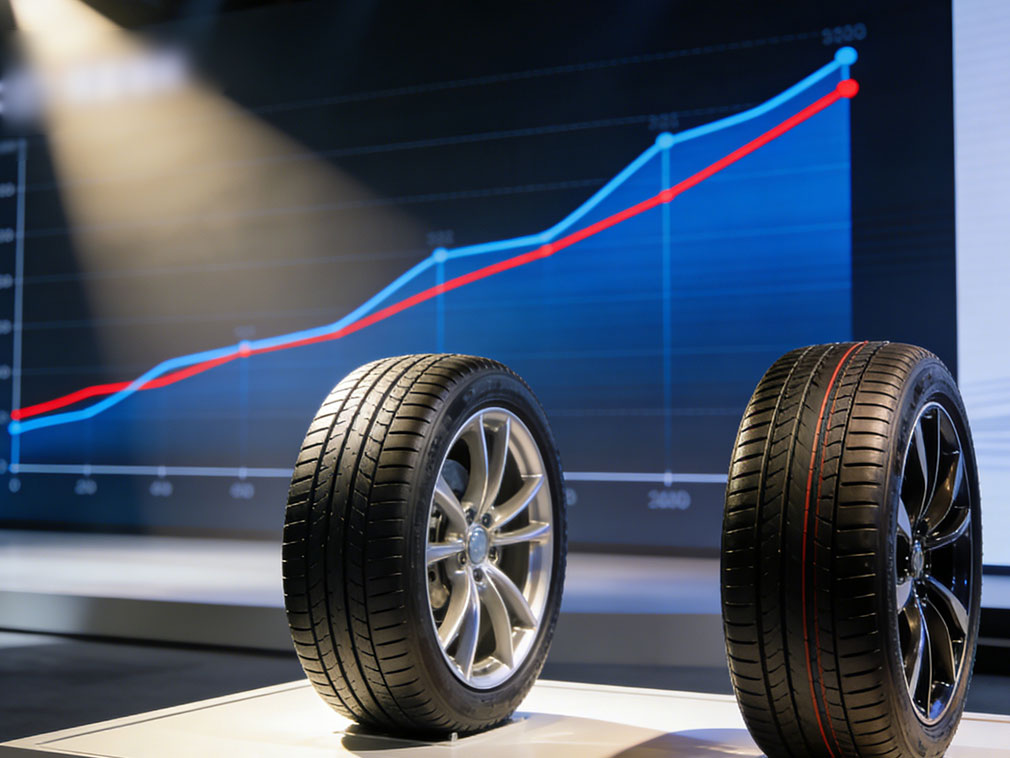
High-end tires, with their technological research and development and performance advantages, become a "litmus test" of brand strength. For example, Pirelli's high-value tire sales accounted for 79% of its total sales in 2025, and the sales growth rate of 18-inch and larger tires exceeded the industry average.
Through exclusive F1 sponsorship, Pirelli not only solidified its position in the high-end market but also gained wider consumer recognition of its brand strength. This led to increased consumer preference for the brand when purchasing mid-to-low-end tires, driving steady growth in sales of affordable tires.
Similarly, Hankook Tire enhanced its brand influence by leveraging its high-end iON series of tires specifically designed for new energy vehicles, achieving record sales in 2025. Its low-end product line also saw simultaneous growth due to brand benefits.
The downward shift of high-end tire technology has effectively lowered the quality threshold for affordable tires, enhancing their cost-effectiveness. The technologies accumulated by tire companies in high-end product development are gradually being applied to mid-to-low-end product lines, allowing affordable tires to maintain low prices while significantly improving quality and performance, creating the advantage of "democratizing high-end technology."
Since 2025, leading domestic companies such as Sailun and Linglong have broken through the technological bottleneck of the "devil's triangle" of tire performance, bringing core technologies such as wear resistance and low rolling resistance from high-end products to mid-to-low-end products, significantly improving the lifespan and safety of affordable tires.
This technological penetration has made consumers realize that affordable tires are no longer synonymous with "low quality," but rather a practical choice offering "high cost-performance," thus driving continuous sales growth and becoming a key reason for the increasing market share of domestically produced affordable tires in the replacement market in 2026.
The segmented demand across consumption scenarios allows high-end and affordable tires to complement each other, achieving a two-way synergy. Currently, the tire market demand exhibits a clear segmentation: high-end tires primarily serve new energy vehicles, high-end passenger cars, and professional scenarios, while affordable tires widely cover ordinary family cars, commercial vehicles, and lower-tier markets.
The strong sales of high-end tires have promoted the expansion of brand channels and the improvement of service systems, allowing more consumers in lower-tier markets to access the brands; simultaneously, some consumers, after experiencing the high cost-performance of affordable tires, may upgrade to high-end products when replacing their tires in the future, forming a virtuous cycle of "low-end lead generation and high-end conversion."
During the 2026 tire replacement boom, the replacement market demand surged. High-end tires met consumers' demands for quality upgrades, while affordable tires absorbed the replacement needs of many older vehicles and commercial vehicles. The brand reputation accumulated by high-end tires also became an important factor for consumers choosing affordable tires from the same brand.
Companies' product matrix strategies created a synergistic effect between high-end and affordable tires. Currently, both foreign giants like Michelin and Bridgestone, and leading domestic companies like Linglong and Zhongce, are committed to building a complete product matrix of "high-end + mid-to-low-end." High-end tires are responsible for enhancing brand premium and technological influence, while affordable tires are responsible for expanding market share and increasing sales volume; the two support each other.
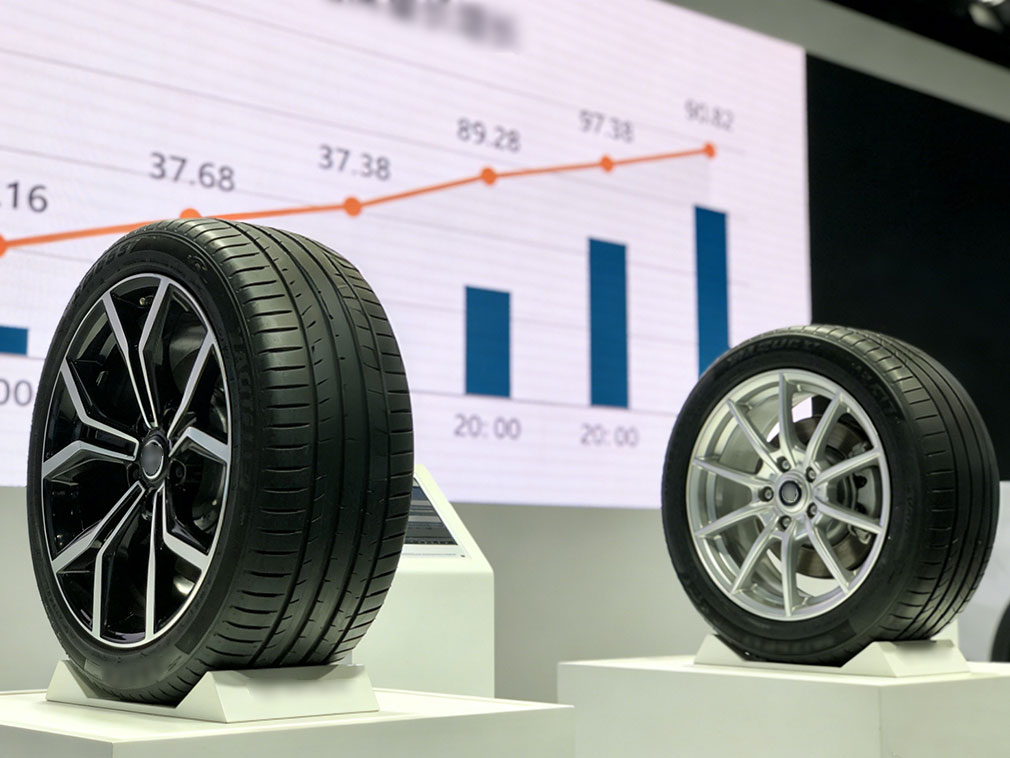
Data from 2025 shows that companies like Hankook and Yokohama boosted overall brand awareness with their high-end products, and their low-end product line sales all saw varying degrees of year-on-year growth. Domestic companies, on the other hand, broke the inherent label of "low price, low quality" with high-end products, significantly increasing the market acceptance of affordable tires and further seizing market share from foreign brands in the mid-to-low-end market.
In conclusion, the reverse effect of high-end tires driving sales of cheaper tires is essentially a result of the synergistic effect of brand value, technological strength, and market demand. Against the backdrop of tire industry price increases and accelerated domestic substitution in 2026, this driving effect will become increasingly pronounced.
For companies, developing high-end products does not mean abandoning the mid-to-low-end market, but rather establishing benchmarks and accumulating technology through high-end products, thereby driving sales growth of cheaper tires and achieving a win-win situation of "profitability in the high-end market and volume in the low-end market," thus promoting a comprehensive transformation of the industry from "scale expansion" to "value enhancement."
-
National Day Highway Charging Hits Record: +60.4% YoY(Oct 8)8264
-
New Energy Vehicle Exports Accelerate: 3.435 Million Units in First 8 Months, Up 120% Year-on-Year(Oct 8)8882
-
Chinese Tire Exports: Volume Up But Revenue Down Nearly RMB 900 Per Ton(Oct 8)5408
-
CNH Industrial: Smart Farming, NE and Local Tech(Sep 30)5577
-
CNHTC Drives Surging NE Heavy Truck Exports(Sep 30)8500




