
Technological Breakthrough in the Tire Industry
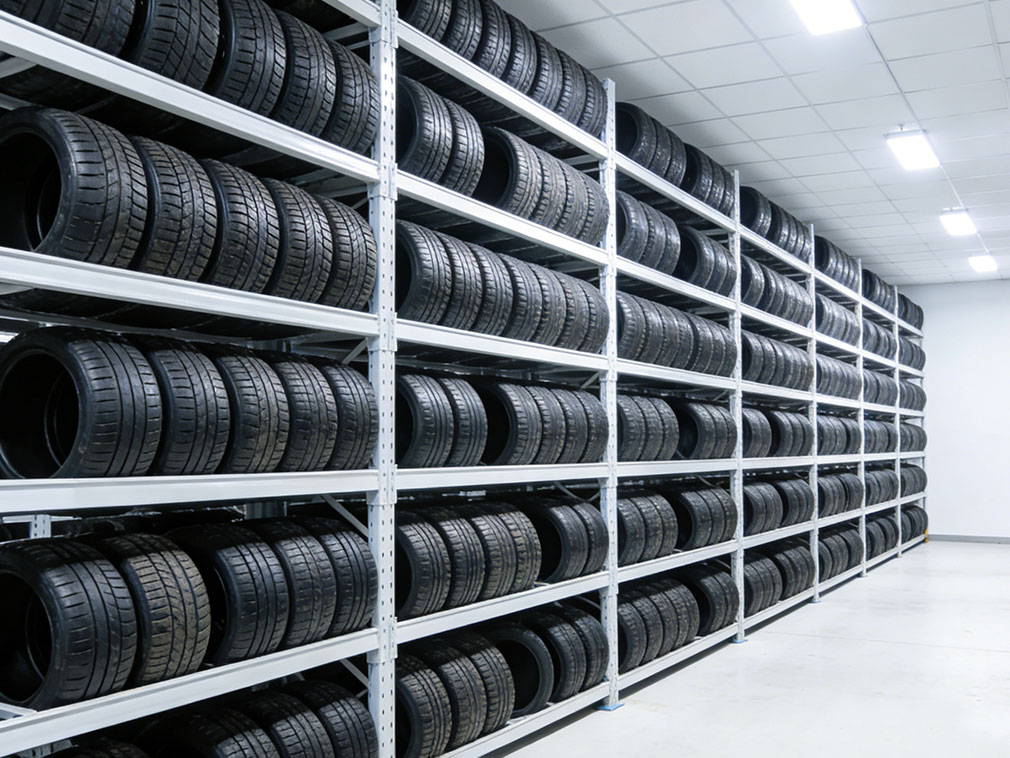
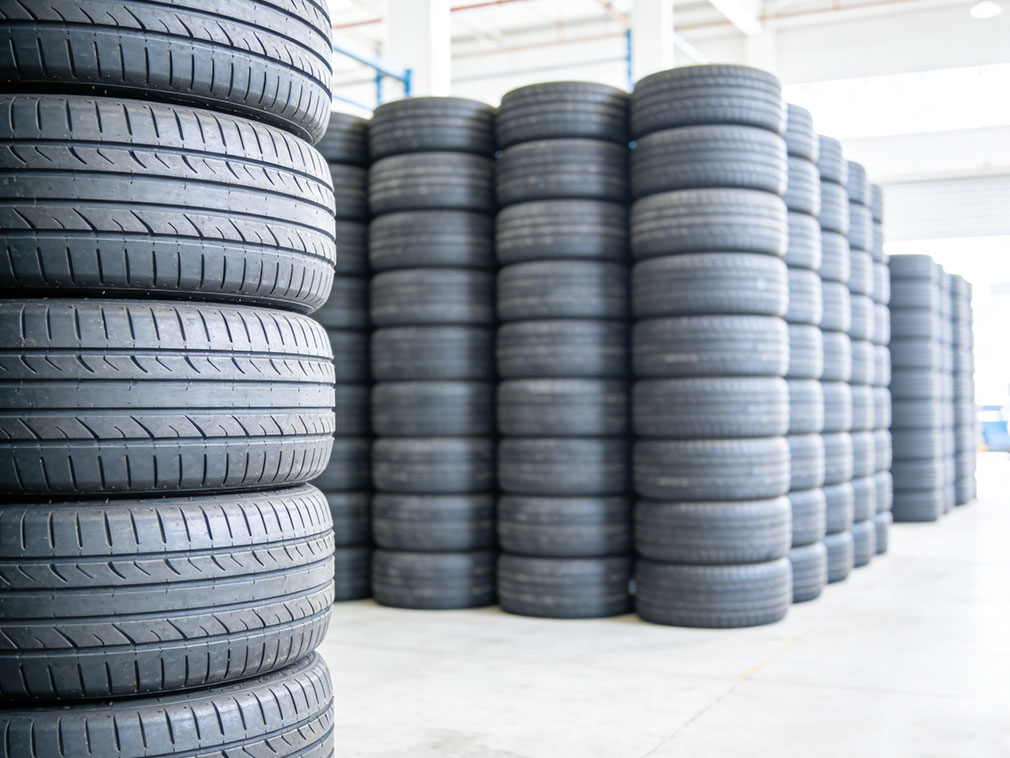
China's tire industry's sheer size is undeniable. Data from the China Rubber Industry Association shows that China's total tire production accounts for over 40% of global output, meaning that one in every two tires worldwide is made in China. In 2025, domestic tire production exceeded 1.1 billion units, with a market size approaching 870 billion yuan, securing a core position in the global industry landscape.
In the same year, China's passenger car tire exports reached 342 million units, continuing to lead the global export market, with export value ranking among the world's top, demonstrating strong industry resilience.
In terms of export distribution, Europe, with a 40.12% share, is China's largest overseas market for tires, followed by Asia and Latin America at 29.05% and 16.63% respectively, forming a three-way balance. Simultaneously, companies are actively expanding into emerging markets; in the first 11 months of 2025, exports to Africa and Russia increased by 125% and 75% respectively, effectively offsetting the risks posed by trade barriers in a single region.
Despite its significant size advantage, China's tire industry has long faced the dilemma of being "large but not strong," with overcapacity in the low-end market and a lack of presence in the high-end market. Core technologies and brand premium capabilities still lag behind international giants. As the global automotive industry shifts towards new energy vehicles, this landscape is rapidly changing, and the key to moving from "large" to "strong" lies in technological breakthroughs.
New energy vehicles place new demands on tires, requiring low rolling resistance, high noise levels, and long lifespans. Furthermore, their battery packs are 30%-50% heavier than comparable gasoline vehicles, placing even higher standards on tire load-bearing capacity. These demands are forcing Chinese tire companies to accelerate technological iteration.
Today, Chinese tire companies have gradually broken through technological barriers, successfully supplying tires for domestically produced high-end new energy vehicles, achieving a leap from "supplying low-end" to "serving high-end." Sentury Tire, as a core supplier for the Haobo SSR domestic supercar, has incorporated aviation tire technology into its ApexKing ADO-1 full-slick tire, breaking the monopoly of foreign brands in the high-end racing tire market and marking the official end of China's long-term reliance on imported performance tires for high-end automobiles.
Linglong Tire is a leading brand in the supply of tires for new energy vehicles. It has not only built the world's first "tire-vehicle" collaborative simulation laboratory, capable of simulating tire performance under different road conditions, but also jointly established the TIH laboratory with Geely Automobile Research Institute, shortening the development cycle and reducing R&D costs of supporting projects through virtual development technology.
In the field of technological innovation, Chinese tire companies have made breakthroughs in multiple areas, gradually solving the "devil's triangle" problem of simultaneously achieving good tire wear resistance, wet grip, and rolling resistance.
Sailun Group's "liquid gold" tire technology reduces rolling resistance by more than 30% and increases wear resistance by 50%, reaching industry-leading levels. Leading companies have generally increased their R&D investment, with R&D intensity exceeding 4%, focusing on high-value-added areas such as sound-absorbing cotton and self-healing materials, building patent barriers.
At the same time, companies are accelerating their intelligent and green transformation. By 2025, the industry's intelligent tire penetration rate will reach 12%, achieving tire blowout risk warning through integrated sensors and full-chain tracking through blockchain traceability systems; the proportion of green tires will reach 35%, with the application of environmentally friendly materials such as bio-based materials and recycled carbon black aligning with global carbon reduction trends.
It is worth noting that Chinese tire companies are breaking through trade barriers through globalization, with overseas production capacity accounting for over 35% by 2025. Linglong Tire's factories in Thailand and Serbia have effectively circumvented European trade barriers, resulting in a 41% year-on-year increase in overseas OEM volume. However, the industry also faces challenges such as intensified competition in overseas markets and "involution and spillover" effects.
Companies are shifting from a "commercial priority" to a "safety priority," focusing on regions with lower geopolitical risks to achieve localized and symbiotic development. From leading in scale to technological breakthroughs, the Chinese tire industry is using innovation as its engine to escape low-end homogeneous competition and climb to the high end of the global value chain, gradually realizing the leap from a "tire giant" to a "tire powerhouse."




