
July 2026 Natural Rubber Market
Entering July 2026, the global natural rubber market has maintained a volatile and weak trading pattern without obvious unilateral price movement. The current market performance is mainly driven by fundamental supply and demand dynamics.
Short-term abundant supply and sluggish end-user demand have capped upward price momentum, while potential extreme climate risks and long-term production capacity constraints in core producing regions have formed a solid bottom support for market prices. Overall, the market is in a typical range-bound game, with moderate fluctuations in both spot and futures markets across international trading boards.

In terms of global supply fundamentals, July falls within the traditional peak production season for natural rubber, resulting in sufficient short-term spot supply in the international market. Core Southeast Asian producing countries including Thailand, Indonesia and Vietnam have witnessed favorable weather conditions for tapping operations, with only intermittent short-term rainfall causing minor disruptions.
Stable tapping conditions and reasonable raw material prices have effectively stimulated rubber farmers’ production enthusiasm, driving a steady increase in raw material collection volume and continuously enriching market circulating supplies, forming a clear loose supply pattern in the short term.
Domestic producing areas in China, namely Yunnan and Hainan, have also entered the peak tapping season in rainy months. Continuous shipments of domestic natural rubber have further supplemented China’s domestic spot supply. Driven by sufficient new supplies, inventory at Qingdao Free Trade Zone has maintained a cumulative growth trend, and warehouse receipt volumes on the Shanghai Futures Exchange remain at a relatively high level. Ample circulating supplies have increased shipment pressure on global traders, leaving near-month spot prices lacking effective upward driving force.
From the perspective of medium and long-term supply outlook, the market faces prominent potential production reduction risks. The ongoing El Niño climate event continues to affect Southeast Asia, with meteorological monitoring data indicating a high probability of high temperature and drought weather across core producing regions this summer.
July and August account for the largest proportion of annual global natural rubber output, and sustained drought will directly restrict latex production, inevitably triggering a year-on-year decline in global output in the second half of 2026. Furthermore, traditional Southeast Asian producing areas are facing prominent aging problems of rubber trees.
Most rubber plantations have entered a production recession cycle. Coupled with regional labor shortages and structural crop replacement in rubber forests, the overall production capacity has reached a growth ceiling, making large-scale output growth impossible and providing rigid bottom support for medium and long-term rubber prices.

The seasonal off-season effect on demand is the core factor suppressing market prices in July, with highly distinct industrial periodic characteristics. High temperature weather in summer coincides with the traditional consumption off-season of the global tire industry.
Major tire manufacturers have actively reduced operating rates and arranged centralized equipment maintenance, leading to a continuous decline in industrial operating rates for both radial and bias tires compared with June. This trend has directly contracted the overall consumption of natural rubber raw materials, resulting in weakened rigid procurement demand from downstream manufacturers worldwide.
The global terminal tire market remains sluggish with no incremental demand advantages. Passenger car tire demand mainly relies on replacement markets, where excessive dealer inventory and slow capital turnover have made downstream procurement highly rigid with no centralized stock-up activities.
Despite slight sales recovery in the heavy-duty truck market supported by industrial policies, insufficient activity in the global logistics and freight industry has limited incremental orders for supporting heavy-duty tires. In terms of foreign trade, the implementation of overseas trade policy rulings has restricted the export growth space of Chinese tires. Manufacturers mainly maintain basic operational production, adopting a conservative raw material procurement strategy and further dragging down overall market demand.
Nevertheless, the natural rubber market still has stable long-term demand growth support. The continuous penetration of new energy vehicles globally has driven steady growth in demand for semi-steel tires, as new energy vehicles consume more rubber per unit vehicle and have shorter tire replacement cycles compared with traditional fuel vehicles. In addition, stable investment in infrastructure and mining equipment industries continuously underpins the rigid demand for all-steel tires, ensuring a mild growth trend in global natural rubber annual consumption.
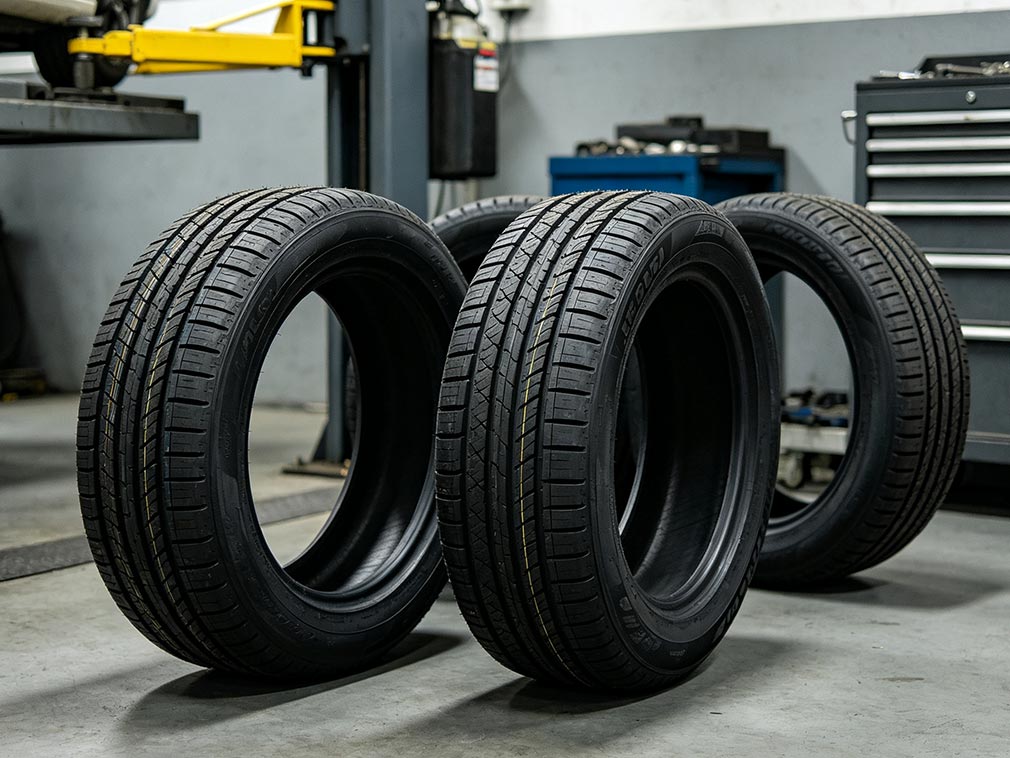
The current off-season downturn is only a short-term periodic suppression and will not reverse the long-term positive demand trend. Meanwhile, fluctuations in crude oil prices drive linked adjustments in synthetic rubber prices. Some downstream product manufacturers optimize production formulas and adjust raw material proportions to control costs, partially diverting natural rubber procurement demand and weakening short-term price upward momentum.
Inventory structure changes, new delivery regulations and macroeconomic conditions are producing indirect impacts on the global rubber market. At present, inventories in bonded zones, manufacturer warehouses and futures markets have increased simultaneously, and the high inventory level continues to restrict market price rebound space. The official implementation of new cross-border rubber delivery rules in July has reshaped the arbitrage logic between domestic and overseas markets and reconstructed the contract spread structure, becoming a key observation indicator for international spot trading and financial transactions.
In terms of macroeconomics, prolonged high interest rate policies in overseas markets have suppressed the overall valuation of bulk commodities. Although steady growth policies have been implemented in China, policy transmission to the real economy has a certain lag effect, leading to cautious market sentiment and intensified short-term price fluctuations.
To sum up, short-term negative factors dominate the July 2026 natural rubber market. Peak seasonal production, increasing inventory and seasonal weak demand jointly restrict the upward trend of rubber prices. However, climate-related production reduction expectations and long-term production capacity bottlenecks in core producing regions have effectively locked the downside space, making sharp price declines extremely unlikely.
The core market observation focuses on three dimensions: the actual impact of summer weather on Southeast Asian production, the launch time of seasonal stock-up by tire manufacturers, and the inventory digestion pace in China’s market. It is expected that by the end of the third quarter, as Southeast Asian producing regions gradually enter the low-production season and the terminal consumption off-season ends, the fundamental supply and demand structure of natural rubber will improve marginally, bringing opportunities for phased market recovery.




