
Smart Tires Driving the Future of Automotive Intelligence
The automotive industry is rapidly evolving in terms of smart technologies and connectivity, with advancements in technologies including autonomous vehicles, smart cockpits, and smart chassis.
To support the shift from simple rubber components (tires) to intelligent sensing devices that enable autonomous driving, tires are beginning to shed their traditional image as basic mechanical parts.
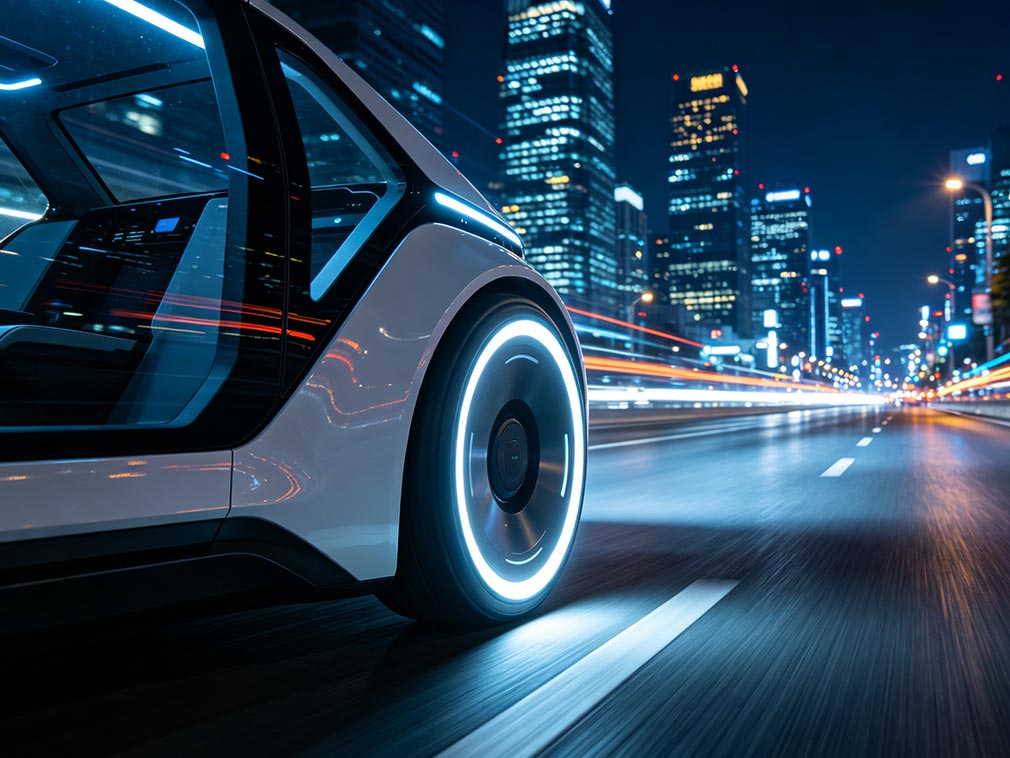
Tire intelligence is not a new concept; the automotive industry has long since moved from basic passive tire pressure monitoring (TPM) systems to adaptive active sensors. Therefore, smart tires have become an integral part of the basic design of intelligent vehicles—they enhance driving safety, improve fuel economy, and strengthen the stability of intelligent driving.
The $1.9 million investment by the international company Autri in smart tire technology research and development further underscores this, reinforcing market recognition of the technology's value and its enormous commercial potential.
Historically, traditional tires have had numerous limitations that restricted their overall performance. The limited materials and structures of traditional tires made them unsuitable for a wide variety of driving conditions, leading to numerous functional deficiencies. A common example is the trade-off between studded and non-studded tires. Studded tires significantly improve grip on ice. However, when used on dry roads, studded tires experience a significant drop in ride comfort and faster wear, thus compromising their applicability and performance in many different driving scenarios.
This problem is being solved with the integration of materials technology and automotive sensing technology. Nokian Tire's Hakkapeliitta 01 adaptive studded tire uses an innovative dual-action stud structure combined with temperature-sensing rubber to autonomously adjust grip performance based on road temperature and actual driving conditions, flexibly adapting to different road conditions such as ice, snow, dry roads, and wet roads.
This dynamic adaptation and proactive optimization performance allows the tire to move beyond passively receiving data and truly achieve proactive adaptation to road conditions and autonomous optimization of driving performance.
The key value of smart tires lies in establishing a complete data closed loop. By embedding small, high-precision sensors in the tread and sidewall, key data such as tire pressure, tire temperature, wear level, road adhesion coefficient, and driving vibration can be collected in real time and wirelessly transmitted to the vehicle system and cloud platform.
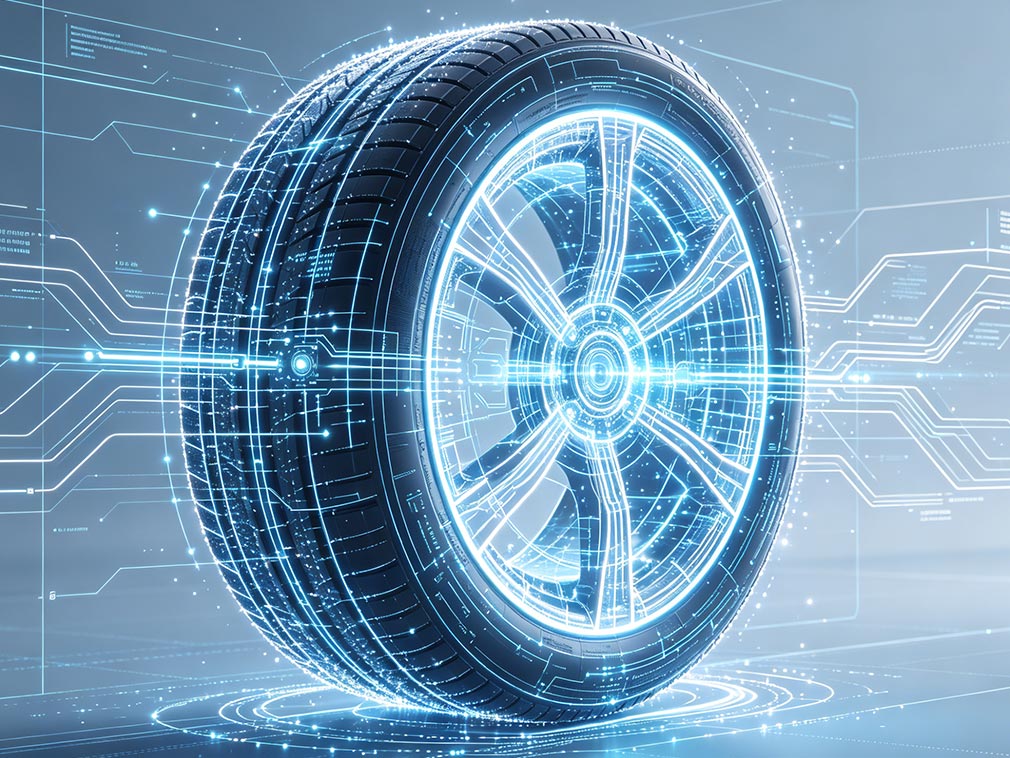
This real and accurate road and vehicle condition data provides direct evidence for vehicle safety warnings, vehicle posture adjustment, and driving condition optimization, serving as crucial underlying data support for intelligent vehicle decision-making.
Targeting the trend of automotive intelligence, major global tire companies such as Michelin, Pirelli, and Goodyear have already made early investments and continuously increased their R&D investment in intelligent tire technology. Driven by them, the tire industry is moving away from simple hardware competition and transforming towards digitalization, service-oriented approaches, and an ecosystem-based model, with the intelligent tire industry system gradually taking shape.
Currently, major brands have launched relatively mature commercial technology solutions. Michelin's Tire Connect IoT system can directly connect to various fleet management platforms, monitoring tire status in real time, helping logistics companies accurately grasp tire pressure and temperature, effectively reducing fuel consumption, and achieving both cost reduction and maintenance improvements.
Pirelli's Cyber Tire intelligent tire, relying on built-in accelerometers and gyroscopes, can accurately identify road conditions within milliseconds and dynamically adjust in conjunction with the vehicle's suspension system, significantly improving ride stability. Goodyear focuses on advanced autonomous driving scenarios, collaborating deeply with technology companies to optimize trajectory planning algorithms based on real-time road data collected by tires, providing strong support for the safe implementation of intelligent driving.
These technological explorations and industry practices are reshaping the tire industry's positioning. Tires are no longer just mechanical components, but indispensable data collection terminals in intelligent vehicles and smart transportation systems. The technological content and added value of products have significantly increased, and the overall value of the industry continues to advance.
Currently, key technologies for intelligent tires are ready for implementation, but large-scale commercial adoption still faces three major bottlenecks: high cost, data security, and product durability.
Regarding cost, the addition of intelligent hardware such as sensors and wireless communication modules increases the production cost of a single intelligent tire by 30%–50%. Currently, it is mainly suitable for high-end models and is difficult to penetrate into mid-to-low-end passenger cars and commercial vehicles, limiting market coverage.
Regarding data security, the information continuously collected by tires, such as road environment, driving trajectory, and geographical location, involves sensitive data, and the industry has not yet formed a unified standard for data encryption and sharing, posing certain security risks.
In terms of durability, tires operate under extreme conditions of high temperature, high pressure, and high-intensity friction and deformation for extended periods. Ensuring the stable service life of embedded intelligent modules for over five years remains a key challenge for materials research and precision manufacturing.
With the widespread adoption of vehicle-to-everything (V2X) technology and the maturation of Level 4 autonomous driving, the market value of intelligent tires will be fully realized.

From mechanical components combining rubber and steel wires to intelligent terminals integrating sensing, AI, and communication technologies, the iterative development of tires is a true reflection of the intelligent transformation of the automotive industry. The deep integration of traditional manufacturing and digital technology transforms each tire into a data entry point for smart mobility, continuously driving the industry towards greater safety, efficiency, and environmental friendliness.
-
Foreign Media Visits Yimin Open-Pit Mine: 100 Autonomous 90-Ton Trucks in Operation(Oct 9)8222
-
IRSG: Natural Rubber Prices Hit Multi-Year Highs, Short-Term Correction Pressure Expected(Oct 9)8621
-
Used Car Exports Enter a Trust-Based Phase: Over 450,000 Units in First 8 Months(Oct 9)5384
-
National Day Highway Charging Hits Record: +60.4% YoY(Oct 8)8283
-
New Energy Vehicle Exports Accelerate: 3.435 Million Units in First 8 Months, Up 120% Year-on-Year(Oct 8)8907




