
Southeast Asia Agricultural Tire Market Expansion Strategies
In recent years, the mechanization of agriculture in Southeast Asia has accelerated, leading to a sustained increase in demand for imported agricultural machinery tires, making it a core growth market for domestic tire companies expanding overseas.
However, the industry still faces multiple practical obstacles in its actual expansion: the continuous release of local tire production capacity in Southeast Asia, the challenges of adapting to special working conditions brought about by the six-month-long rainy season, the inconsistent market access and certification rules of various countries, the competition from low-priced retreaded tires in lower-tier markets, and fluctuations in international trade policies, all of which constrain the market expansion pace of domestic companies.
Based on the current agricultural operation scenarios in ASEAN, the status quo of the foreign trade industry, and the latest market rules, domestic agricultural machinery tire companies can make adjustments in five areas: product customization, local layout, channel construction, compliance construction, and refined operation, to steadily maintain and expand their overseas export share.
I. Targeting the Special Working Conditions of the Rainy Season: Differentiated R&D to Avoid Low-End Homogeneous Competition in the Local Market
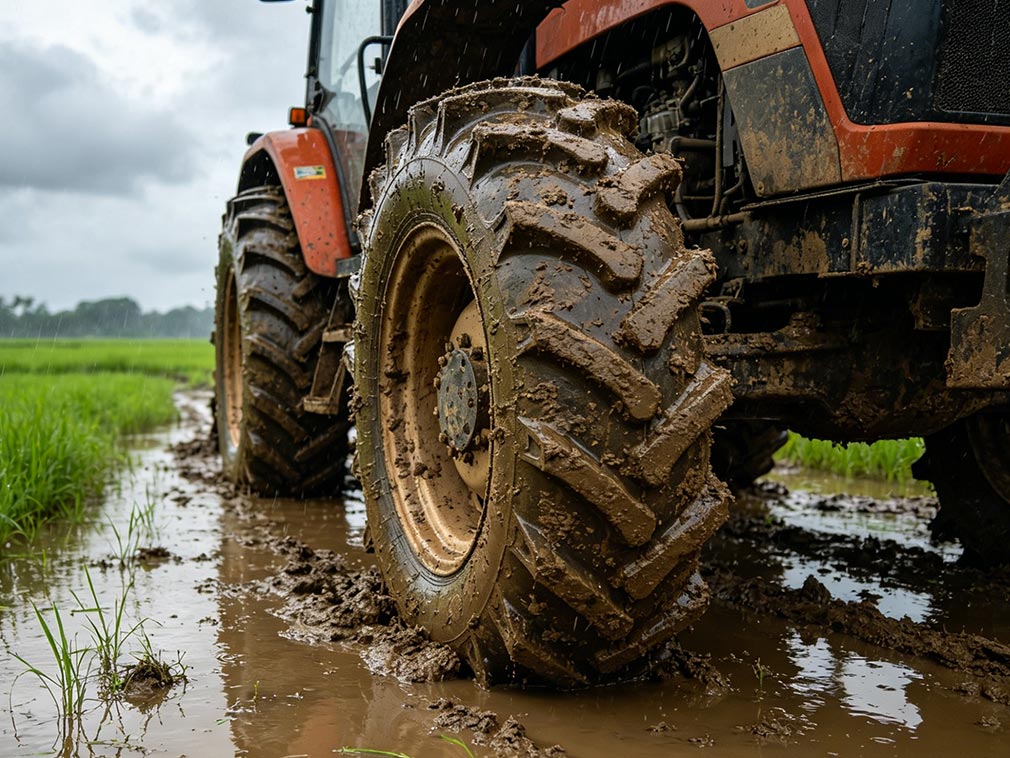
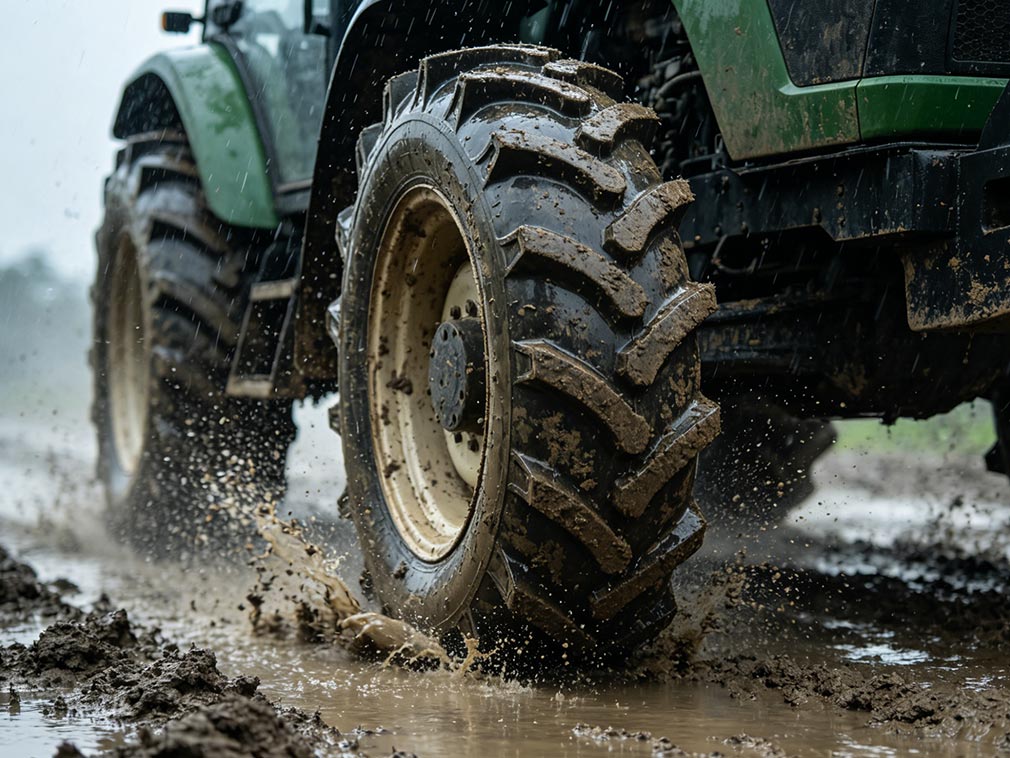
Southeast Asia experiences more than six months of continuous rainfall each year, resulting in muddy paddy fields, slippery slopes, and numerous gravel areas. Local tire manufacturers mostly focus on basic shallow-tread general-purpose agricultural tires, with significant shortcomings in anti-skid, anti-sinking, and tear-resistant technologies. This is also a key breakthrough point for domestic companies to differentiate their products.
Enterprises need to develop products tailored to specific regional scenarios: For rice paddies in Vietnam and the Philippines, mass-produce high-pattern anti-skid tires with deeper lateral drainage grooves to optimize tire contact area and reduce agricultural machinery slippage and getting stuck in rainy weather; for palm and sugarcane slopes in Malaysia and Indonesia, launch widened heavy-duty anti-skid radial agricultural machinery tires with reinforced sidewall tear-resistant compounds to adapt to soft slopes after rain; for mixed crop and livestock farming in Thailand, launch multi-purpose all-season anti-skid agricultural tires that balance wear resistance in dry seasons and grip performance in rainy seasons.
Simultaneously, upgrade tropical-specific rubber compounds to adapt to the high temperature and humidity environment of Southeast Asia year-round, preventing tread hardening and rapid tread wear when wet. By creating a niche market advantage with anti-skid specialty tires, they can break free from the price competition of low-priced ordinary tires in the domestic market, obtain stable premiums through functional products, and weaken the cost competitiveness advantage of domestic production capacity.
II. Promoting Localized Production Capacity and Warehousing in ASEAN to Offset Tariff, Logistics, and Raw Material Pressures
While RCEP tariff reductions lower export barriers, Vietnam and Thailand continue to expand their domestic tire production capacity, leveraging their local natural rubber resources to create cost advantages. This further squeezes the profits of companies solely focused on domestic production and export.
Leading companies can choose to establish supporting processing plants in rubber-rich Thailand and Vietnam, sourcing natural rubber locally and reducing cross-border transportation costs. Locally produced agricultural machinery tires can benefit from host country industry support policies, further reducing overall manufacturing costs.
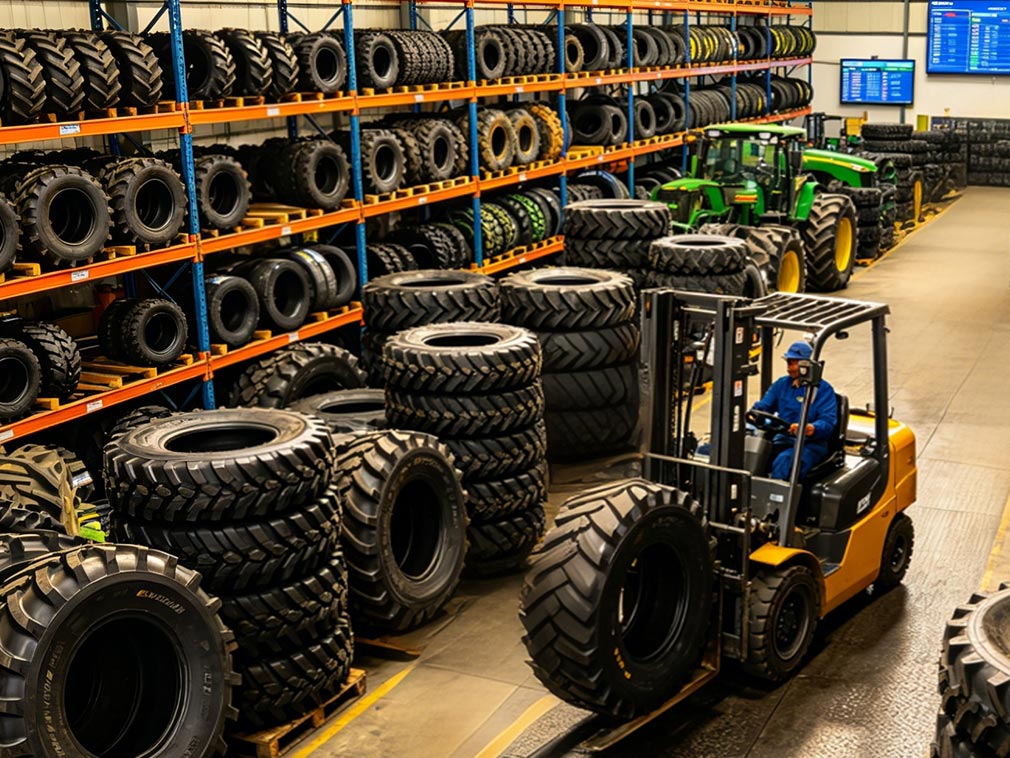
Small and medium-sized export enterprises can establish regional forward warehouses with minimal assets, setting up transit warehouses in Bangkok, Ho Chi Minh City, and Surabaya. By stocking up on anti-skid agricultural tires in bulk before the annual rainy season, they can shorten the replenishment cycle for downstream distributors, cope with the surge in replacement orders during the rainy season, and mitigate the time and cost risks associated with fluctuations in sea and land logistics, avoiding lost customer orders due to delayed deliveries.
III. Building a Dual-Channel System of Complete Machine Participation + Offline Replacement to Counter the Impact of Low-Priced Retreaded Tires
A large number of used retreaded agricultural machinery tires circulate in the Southeast Asian rural market. These tires, with worn treads and compromised anti-skid performance, rely on extremely low prices to capture the market share of small-scale farmers. Domestic companies cannot rely solely on price competition; they need to establish two core channels to stabilize their customer base.
First, collaborate with domestic agricultural machinery export manufacturers to establish partnerships, making anti-skid tires standard equipment on tractors and harvesters. Leveraging the bulk export volume of complete machines will secure long-term OEM orders, forming a stable sales base.
Second, cultivate local offline agricultural machinery service providers and county-level repair shops. Conduct educational outreach to farmers on tire usage for rainy weather operations, emphasizing the safety and durability advantages of new anti-skid tires, differentiating them from retreaded tires with no performance guarantee.
Simultaneously, cultivate local dealer teams, providing product operating condition manuals and simple tire wear assessment tutorials. This will help distributors promote mid-to-high-end anti-skid agricultural machinery tires to large-scale farmers and farms, bypassing the low-end small-scale market dominated by retreaded tires and cultivating a high-value customer base.
IV. Establish a Regional Compliance Certification System to Break Down Market Access Barriers in Various Countries
In recent years, ASEAN countries such as Malaysia, Indonesia, and the Philippines have continuously tightened tire control standards, adding special tests for anti-skid performance, environmentally friendly raw materials, and safety strength.
Products that have not completed local certification cannot enter the end-user market, becoming a major obstacle to the expansion of small and medium-sized export enterprises. Enterprises need to establish dedicated foreign trade compliance departments to complete mandatory certification for agricultural machinery tires in different countries, submit separate grip test reports for anti-skid products for the rainy season, and update product qualification documents in advance to avoid demurrage fees incurred due to missing certifications upon arrival at the port.
Simultaneously monitor changes in regional trade policies, paying attention to tariff adjustments, import quotas, and environmental restrictions in various countries, and adjust export customs declaration plans in real time. For trade reviews against China by some countries and regional local industry protection policies, circumvent trade restrictions by shipping locally from overseas branches to ensure stable and smooth supply channels.
V. Refined Cost and Market Segmentation Operations to Alleviate Multiple Competitive Pressures
The market simultaneously faces three types of competitors: low-priced domestic tires, high-end European and American brands, and retreaded tires. Enterprises need to implement tiered pricing and product segmentation strategies.
For small-scale farmers, economical improved anti-skid agricultural tires are launched to control basic costs; for large-scale palm plantations and large-scale agricultural farms, heavy-duty radial anti-skid tires are deployed, relying on performance to obtain reasonable profits, forming a product matrix with high and low performance.
Internally, the production supply chain is optimized, with centralized procurement of raw materials such as rubber and steel wire to reduce unit purchase prices, and the design of anti-skid tire molds is optimized for universality to reduce the development costs of new products with multiple specifications.
Overseas, operation teams are divided by region, and differentiated promotion plans are developed for paddy fields and cash crop planting areas. Resources are concentrated on cultivating the incremental market of anti-skid specialty tires, reducing direct low-price competition with local manufacturers in the general agricultural tire market.
Overall, domestic agricultural machinery tire companies do not need to get bogged down in low-end price competition. The strategy for breaking through and stabilizing the overseas market is clear: capitalize on the essential need for anti-skid tires during the rainy season in Southeast Asia, build competitiveness with differentiated and distinctive products, and combine this with localized warehousing and production capacity layout, obtaining compliance qualifications in various countries, and building diversified sales channels.
This will easily mitigate the impact of local production capacity, low-priced retreaded tires, and trade policies. By leveraging this strategy, domestic companies can firmly establish themselves in the Southeast Asian market, continuously seize incremental market share, and achieve steady and long-term growth in overseas export business.
-
Foreign Media Visits Yimin Open-Pit Mine: 100 Autonomous 90-Ton Trucks in Operation(Oct 9)8222
-
IRSG: Natural Rubber Prices Hit Multi-Year Highs, Short-Term Correction Pressure Expected(Oct 9)8621
-
Used Car Exports Enter a Trust-Based Phase: Over 450,000 Units in First 8 Months(Oct 9)5384
-
National Day Highway Charging Hits Record: +60.4% YoY(Oct 8)8283
-
New Energy Vehicle Exports Accelerate: 3.435 Million Units in First 8 Months, Up 120% Year-on-Year(Oct 8)8907




