
Tire Rotation: Unnecessary Service?
Many people have heard that after driving a car for a certain number of kilometers, the front and rear tires should be rotated, supposedly to extend tire life. However, some suspect this is just a marketing gimmick by tire shops to increase service fees.
The conclusion is: regularly rotating tires is not a profit-making gimmick, but a low-cost, high-return scientific maintenance procedure. It evens out tire wear, extends overall tire life, and improves driving safety—a fact supported by extensive industry practice and data.
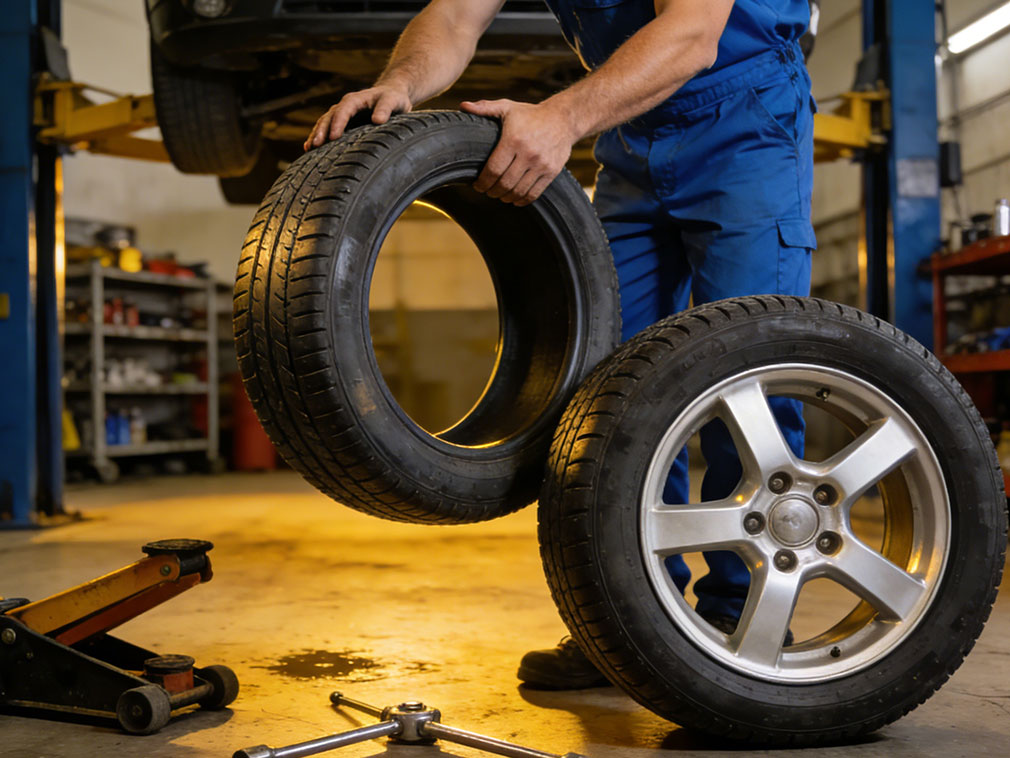
Why do front tires wear so much faster than rear tires?
Over 70% of passenger cars on the market are front-wheel drive. The front wheels are responsible for steering, driving force, and approximately 70% of braking force—a three-in-one operation, resulting in a much higher frequency and intensity of friction compared to the rear wheels.
Furthermore, with the engine, transmission, and other major components crammed into the front axle, the front axle typically bears 60%-65% of the vehicle's load, and during emergency braking, the instantaneous load on the front wheels can even reach 75%. These factors combined cause the front tires to wear 1.5 to 2 times faster than the rear tires.
What if it's not a front-wheel drive car? While the front wheels of a rear-wheel drive car don't drive, they still bear the primary responsibility for steering and braking, and their wear is still faster than the rear wheels, which only provide support and auxiliary drive. In a four-wheel drive car, although all four wheels contribute power, due to the different power distribution characteristics, prolonged tire rotation can lead to localized excessive wear.
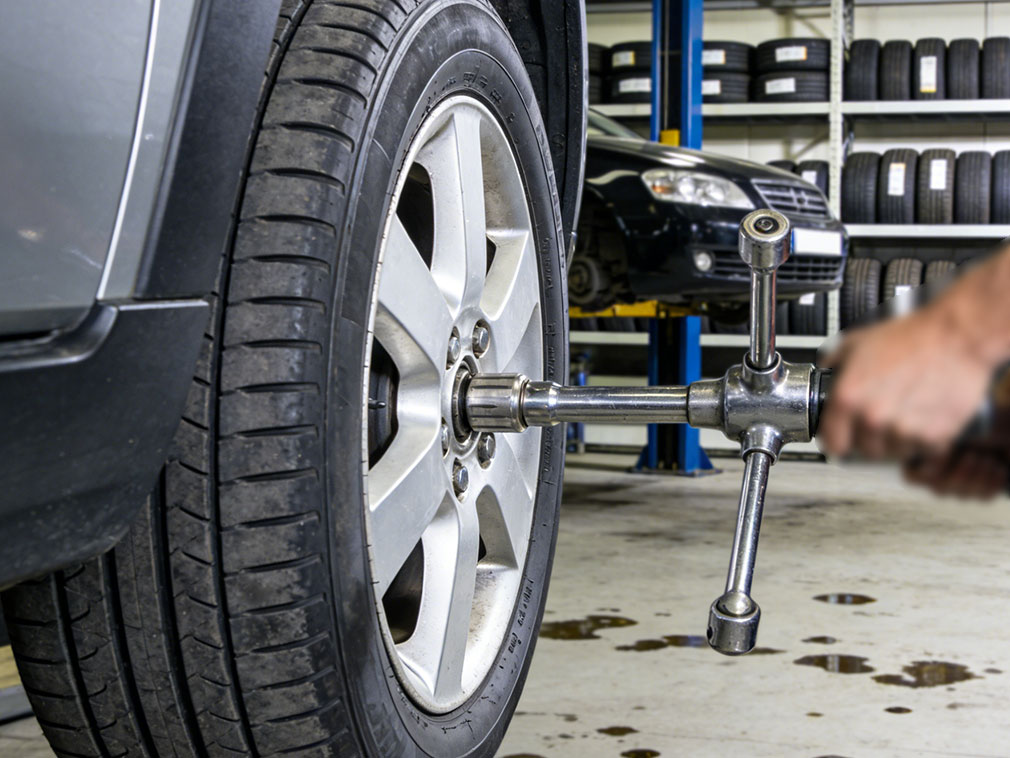
What problems arise from not rotating tires regularly?
The most direct problem is wasted tire life. Front tires may wear down to the legal 1.6mm tread depth prematurely and have to be replaced, while rear tires still have deep tread – essentially wasting a portion of the tire's value. Data shows that proper tire rotation can extend the lifespan of a tire set by 20%-30%, equivalent to saving 30%-40% on replacement costs.
The safety hazards are even more alarming. Uneven wear leads to an imbalance in grip, making it prone to skidding and increased braking distance in rainy weather or during emergency braking, especially dangerous at high speeds.
Is tire rotation expensive? Is it troublesome?
The process is actually quite simple. A reputable shop typically charges between 50-100 yuan for tire rotation, and wheel balancing (10-50 yuan per tire) is also available. Compared to the cost of replacing a set of tires, this expense is negligible.
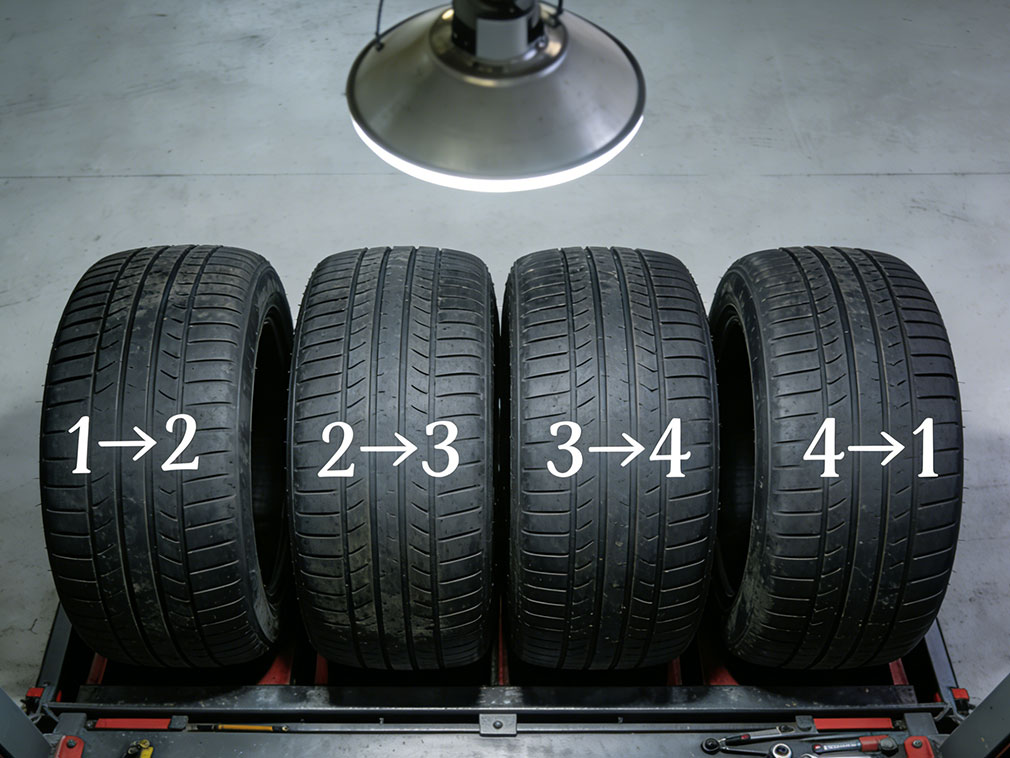
It's important to note that tire rotation isn't simply swapping front and rear tires. Front-wheel drive vehicles are recommended to rotate diagonally, rear-wheel drive vehicles to the opposite direction, and four-wheel drive vehicles are best rotated in a full cross pattern. Furthermore, if a tire has bulges, sidewall cracks, has been repaired more than three times, or is more than five years old, it's not recommended to rotate it; replacing it is safer.
For daily city commuting, rotating tires every 8,000-10,000 kilometers is appropriate; if you frequently drive on mountain roads, in congested areas, or drive aggressively, you can shorten this to every 6,000-8,000 kilometers.
In short, regularly rotating tires isn't about spending more money, but about saving you time, money, and ensuring safety. It allows all four tires to wear evenly, minimizing maintenance costs and preventing greater damage and risks. For every car owner, developing this habit is the key to making tires "run longer and run more stably".
-
National Day Highway Charging Hits Record: +60.4% YoY(Oct 8)8275
-
New Energy Vehicle Exports Accelerate: 3.435 Million Units in First 8 Months, Up 120% Year-on-Year(Oct 8)8897
-
Chinese Tire Exports: Volume Up But Revenue Down Nearly RMB 900 Per Ton(Oct 8)5414
-
CNH Industrial: Smart Farming, NE and Local Tech(Sep 30)5597
-
CNHTC Drives Surging NE Heavy Truck Exports(Sep 30)8513




