A shipbuilder's craftsmanship brings safety across thousands of miles | The story behind the construction of "Beihai Rescue 151"
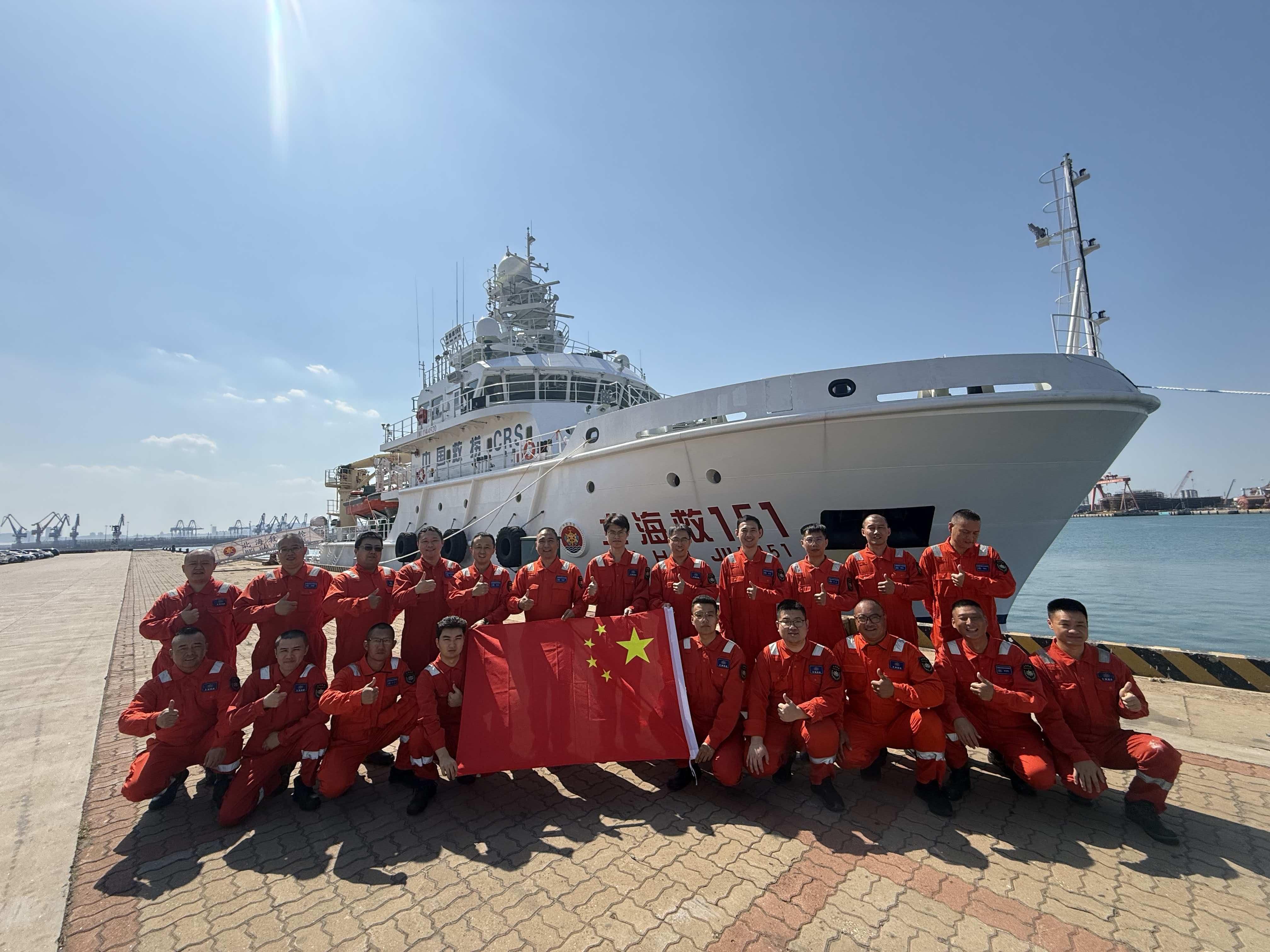
On September 20th, at the Beihai Rescue Bureau dock, the autumn sun shone on the shimmering sea. Under the eager gaze of onlookers, China's independently designed and built 4,000-kilowatt medium-sized marine rescue vessel "Beihai Rescue 151" slowly approached the dock. Bright flags fluttered in the wind at the ship’s bow, and supervising captain Shen Xiaowei, chief engineer Yu Yongxin, receiving captain Song Yuanhua, and others looked at this new vessel, into which countless efforts had been poured, filled with indescribable excitement and pride.
The glory of this moment carries the perseverance and effort of all ship receiving personnel over more than 400 days and nights. From the sparks flying at Guangzhou Huangpu Wenchong Shipyard to the journey of breaking waves by the Bohai Bay, its birth is a story of struggle written with sweat, wisdom, and loyalty.
Ingenious Craftsmanship, Meticulous Perfection to Forge a Sharp Tool
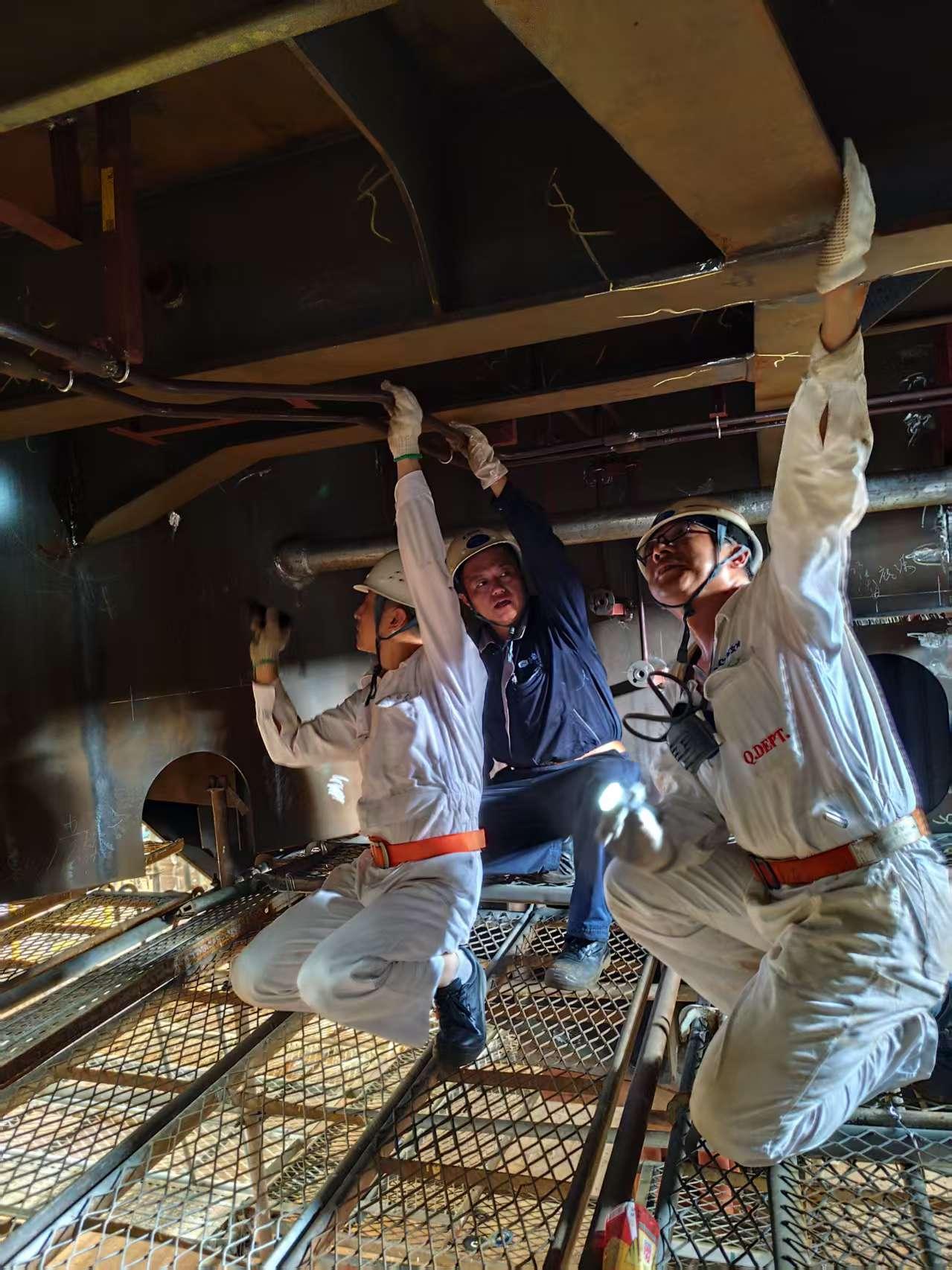
On June 5, 2025, Supervisory Ship Captain Shen Xiaowei arrived at Huangpu Shipyard. From the cutting of the first steel plate for the ship "Bei Hai Rescue 151," he formed an unbreakable bond with this vessel. As one of the first supervisors, he witnessed its every transformation from sheets of blueprints and pieces of steel plates to its majestic formation. Summers in Guangzhou are unbearably hot, with outdoor temperatures close to 40 degrees Celsius, and temperatures inside enclosed compartments reaching as high as 50 degrees Celsius. Shen Xiaowei's work clothes were soaked with sweat every day and could be wrung out to release water. The intense heat did not deter him; he coordinated daily progress with the shipyard quality inspectors, especially focusing on critical procedures such as liquid tank welding, sandblasting, and painting inspections. He donned a dust mask and crawled through cramped spaces to conduct point-by-point inspections, ensuring that no suspicious detail was overlooked. During the supervision process, he discovered discrepancies between the actual oil tank capacity and the theoretical design data through the water injection method. He immediately coordinated with the shipyard and the design institute to perform new 3D laser measurements, ultimately achieving an overall precision of 0.1% and producing an authoritative data report. This dedication to precision exemplifies the serious responsibility and meticulous diligence of the supervision team.
On August 12, 2025, Chief Engineer Yu Yongxin arrived at the shipyard for supervision. At home, he has elderly parents in their 80s and a child who just started junior high school. With his departure, all the household responsibilities fell solely on his wife's shoulders. Late at night, when everything is quiet, he buries his longing and guilt deep in his heart, only to reappear full of energy in the engine room the next day. The engine room is filled with dust from the grinding of bulkheads, and every day he wears a dust mask to inspect the equipment parameters, structure, and performance item by item. Facing the brand-new electric propulsion system, he understands the immense responsibility and starts by studying the equipment documentation and reviewing blueprints. He combines this with onsite progress to provide professional suggestions regarding the system's rationality, reliability, and ease of use. He also organizes engine room personnel to learn the dynamic positioning system and conducts "mentorship and guidance" around the electric propulsion system, enabling everyone to quickly grasp the key operational essentials. With tight deadlines and heavy tasks, he led the engine room team to inventory over 1,000 types of ship spare parts within just two weeks, organizing them into storage, with the heaviest component weighing over 400 kilograms.
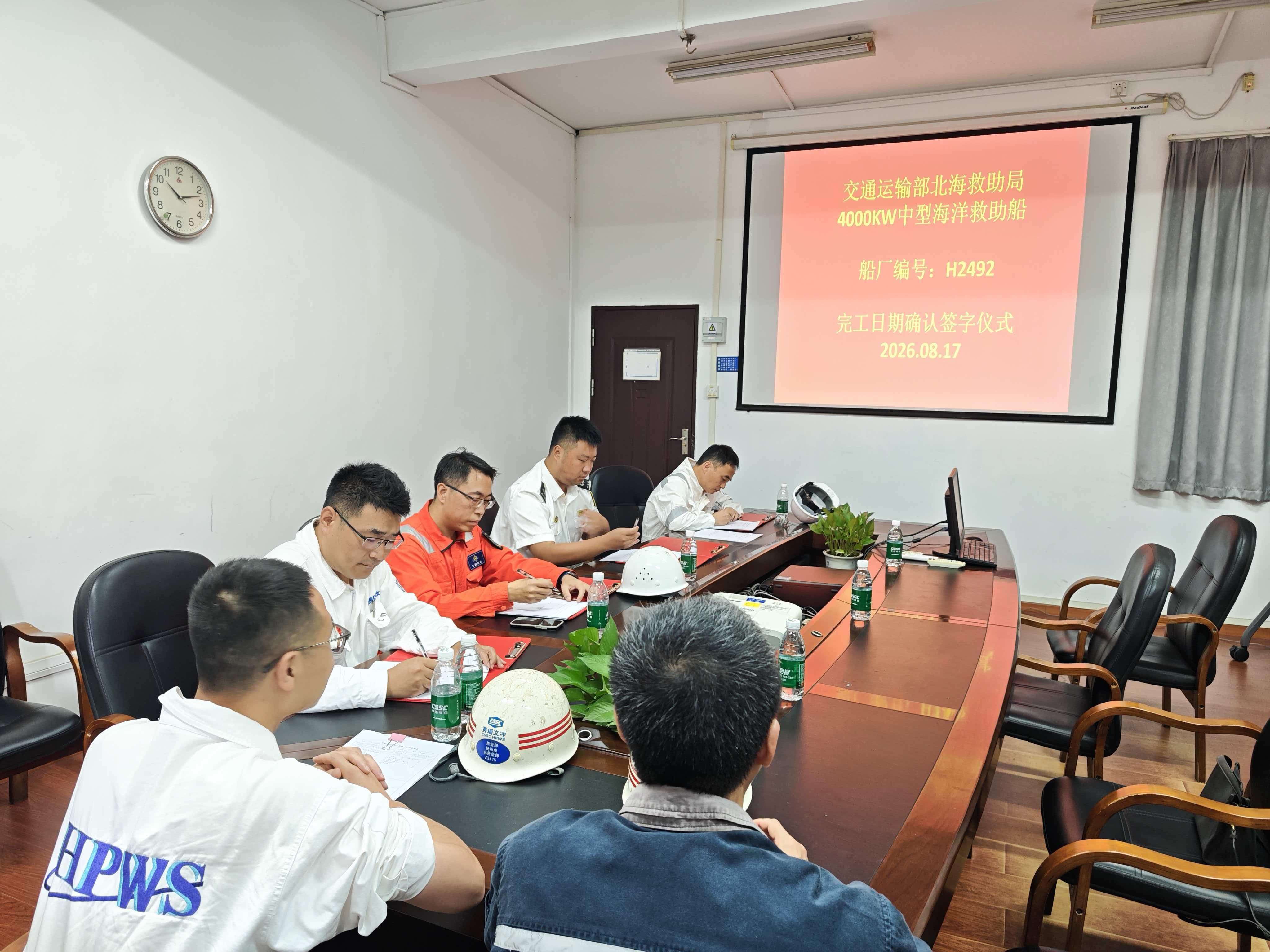
“Beihai Rescue 151” is the bureau's first all-electric propulsion vessel, featuring high intelligence and a complex power system. Electrical engineers Ji Cheng and Liu Shunyi have been deeply immersed in equipment documentation since the vessel entered the shipyard. Starting with the blueprints, they reviewed the electrical circuits over and over again. From power station management to propulsion frequency conversion, from dynamic positioning to intelligent engine rooms—through hundreds of blueprints and thousands of circuits—they inspected each page and checked every circuit, compiling over 30 system wiring tables, marking more than 200 key nodes, and identifying and facilitating the correction of over 40 issues related to circuit layout and equipment labeling. The two worked closely together, quickly mapping the entire vessel's power system framework, laying a solid foundation for subsequent supervision, commissioning, and vessel operation.
Chief mate Sun Ning led the entire crew of sailors, working tirelessly day and night in the deck area. During the day, they braved the scorching sun to carry out deck equipment installation and acceptance, pipe system inspections, and fire system debugging. At night, they worked overtime to clean cabins, transport materials, and organize spare parts. Rust removal and grinding, painting, life-saving equipment acceptance—each task was handled promptly and efficiently. For several consecutive months, they hardly had a complete day of rest, but through sheer hard work and sweat, they ensured the deck area was clean, orderly, and the equipment in excellent condition, winning precious time for sea trials and vessel handover.
Party-building leads, uniting hearts to overcome challenges
“Beihai Rescue 151” ship was not equipped with a ship political commissar, so Captain Song Yuanhua led the 10 party members aboard to establish a temporary party branch, carry out party branch learning activities, set up a ship's party-building culture wall during construction intervals, and designed the striking slogan "The ship in the heart, the heart on the ship." As the temporary party branch secretary, he focused on harnessing the pioneering and exemplary role of party members, deeply integrating party-building work with the task of receiving the ship, making every party member a "trailblazer" in overcoming challenges. During the trial voyage, he led party members to take on heavy responsibilities and charge forward, effectively promoting the integration of party-building and business development.
The establishment of the temporary Party branch provided the crew members, far from their hometowns, with a "pillar of support." Song Yuanhua led Party members in proposing optimization suggestions for the ship's design and formulating rectification plans. During his work, he discovered that the position of the ship's VSAT-Ku band satellite network antenna was too low, resulting in significant signal blind spots in the northern sea area. He promptly communicated with the shipyard to raise the antenna by 50 centimeters, effectively reducing the signal blind spots and ensuring smooth ship communication. He said, "Taking delivery of a ship is not simply about receiving the keys; it's about understanding the vessel's nuances and eliminating every hidden danger before going to sea."
Under the leadership of the party branch, all personnel performed their respective duties, coordinated seamlessly, and worked together in solidarity, efficiently advancing the supervision work. Facing harsh conditions, not a single person complained about the hardships or exhaustion, demonstrating through their actions the pioneering spirit of Communist Party members to "step up in critical moments and rise to the challenge."
Striving for Maritime Strength, Living Up to the Trust for Peaceful Waters
On September 21, the "Beihai Rescue 151" vessel, which carries the efforts of countless people, was commissioned in Yantai, Shandong.
“Beihai Rescue 151” is the first medium-sized marine rescue ship in the northern sea area of China. It has a total length of 69.5 meters, a beam of 14.6 meters, a depth of 6.9 meters, a design draft of 4.4 meters, a full-load draft of 5.2 meters, a maximum design speed of 15 knots, a bollard pull of 600 kilonewtons, can accommodate 100 rescued individuals, is equipped with a primary external firefighting system, meets B2-level ice zone reinforcement requirements, has DP2 dynamic positioning capabilities, and has obtained the i-ship (M, E, I) intelligent energy efficiency additional mark, with its core equipment localized. The vessel employs advanced fully rotational electric propulsion technology, featuring shallow draft and high maneuverability. It is also equipped with domestically-produced refrigeration optical tracking rescue systems, new types of unmanned rescue boats, and other intelligent equipment to effectively enhance emergency response speeds and success rates in high-risk waters of the northern sea area. The commissioning of “Beihai Rescue 151” further enriches and improves the modernized emergency rescue system, which includes a comprehensive integration of rescue resources across different sizes (large, medium, small), distances (far, medium, near), and domains (sea, land, air). Additionally, it effectively addresses the shortfall in water-based emergency rescue capabilities in the northern region.
From the welding sparks flying at Huangpu Wenchong Shipyard to the flags waving at Beihai Rescue Bureau's dock; from the cutting of the first steel plate to the successful completion of 55 major sea trial projects; from equipment debugging in freezing winds to cabin inspections under scorching heat—every milestone, every breakthrough of "Beihai Rescue 151" is imbued with the dedication and hard work of the construction supervision team.
-
The first provincial-level crew industry party committee in northern China was established in Tianjin.4802
-
A shipbuilder's craftsmanship brings safety across thousands of miles | The story behind the construction of "Beihai Rescue 151"3855
-
Jiangsu Launches First Container Shipping Route to Mexico4535
-
The on-site observation and exchange activity for the "Zero Discharge" initiative of ship water pollutants at ports in Fujian Province was held in Putian.3462
-
"Winning Aspiration" ship docks first, Yantai Port sets a new record for single-ship bauxite unloading.4746