
Rubber Price Volatility & Tire Industry Challenges
The domestic rubber futures market began volatilely at the start of 2026. Although the price of the main contract showed some upward movement in early January, the overall market remained complex. Data shows that as of December 31, 2025, the international rubber price closed at 179.90 US cents/kg, a decrease of 7.08% compared to the same period last year.
This reflects both the deep-seated global supply and demand dynamics and indicates that for downstream tire manufacturers, fluctuations in raw material costs are far from over and have become a challenge that needs to be addressed regularly.
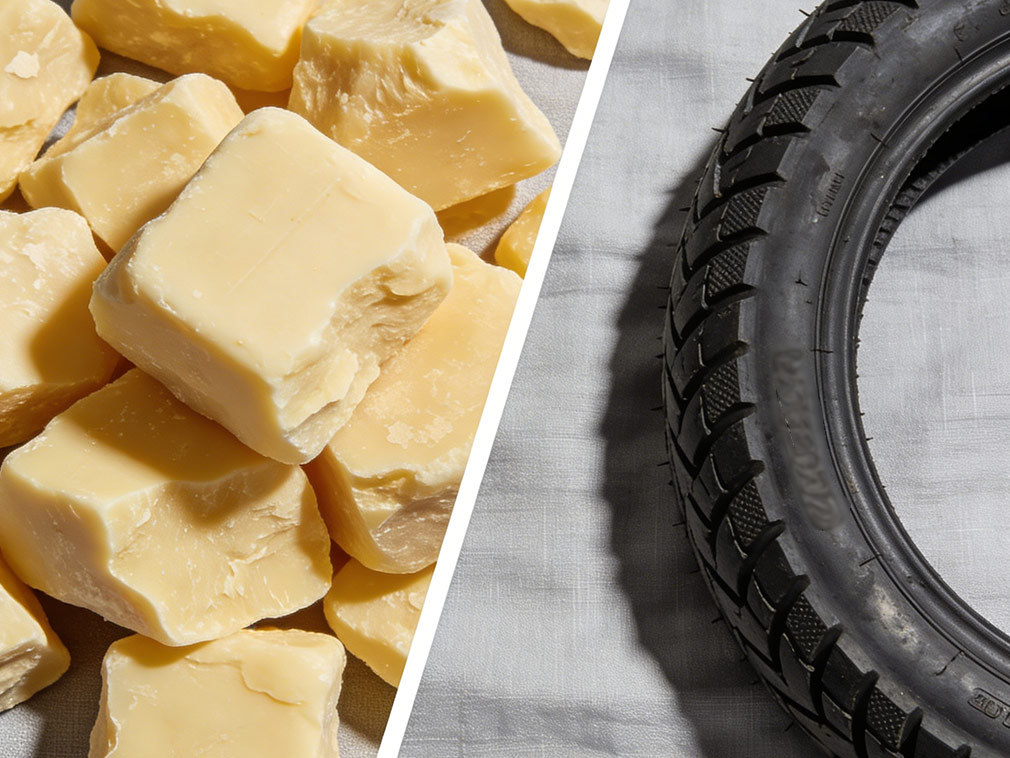
Analyzing the reasons behind this round of price fluctuations reveals a combination of short-term and long-term factors. In the short term, weather disturbances during the monsoon season in major Southeast Asian producing countries and seasonal stockpiling demand from factories before the Chinese New Year have jointly provided price support.
However, from a longer-term perspective, the industry is facing structural changes: the growth rate of planting area in major global rubber-producing regions has been low for a long time, and the aging of tree age structure is becoming increasingly prominent, fundamentally limiting the elasticity of supply. On the demand side, growth drivers are shifting from traditional sectors to new energy vehicle components and high-end industrial products, placing higher demands on rubber quality and the responsiveness of the supply chain.

Cost pressures are directly transmitted to tire companies, which account for approximately 25%-30% of production costs. Industry monitoring shows that in December 2025, the cost of major raw materials for all-steel tires generally increased month-on-month, but due to the traditional off-season for end-user demand, tire prices could not be raised in tandem, severely squeezing profit margins.
This dilemma of "rising costs and stable prices" makes it particularly difficult for companies with limited scale and low product added value. According to institutional observations, currently, only a few leading companies that have completed global capacity layout and breakthroughs in high-end products are able to maintain sustained profit growth.
Just as the industry is busy dealing with cost challenges, a "policy siege" has already been erected in overseas markets. As China's most important export market for tires, the United States officially launched its second anti-dumping and countervailing duty sunset review investigation on January 2, 2026, into Chinese passenger car and light truck tires.
This means that the high tariffs that have been in place for years are likely to continue, and the access to the US market that Chinese tires have gained through their cost-effectiveness is becoming increasingly narrow.
A larger systemic challenge comes from Europe's green trade barriers. The EU's Carbon Border Adjustment Mechanism (CBAM) will officially come into effect on January 1, 2026. This mechanism, known as "carbon tariffs," requires imported products to pay for the carbon emissions generated during their production process.
Although tires are not yet included in the first batch of products subject to direct tariffs, the EU has clearly planned to expand the coverage to approximately 180 steel and aluminum-intensive downstream products from 2028. This means that the tire industry chain, which uses these materials as raw materials, will indirectly bear the pressure of carbon costs.
A more profound impact is that the low-carbon requirements for products in major global markets have changed from voluntary certification to mandatory thresholds. Chinese tire companies must manage the carbon footprint of their entire supply chain meticulously, or they will face the risk of being marginalized by mainstream markets.
Faced with internal and external difficulties, a profound industry transformation is imperative, and the path is already clear.
The primary breakthrough lies in a global "going global" strategy. To directly circumvent trade barriers, leading tire companies are accelerating the construction of overseas production bases, forming a "scattered" production network in Southeast Asia, Europe, and Africa. This layout not only effectively responds to changes in trade policies in specific regions but also allows for closer proximity to local markets, reducing logistics costs and enhancing supply chain resilience.
A more fundamental solution lies in the leap towards "greening" and "high-end" technologies. Faced with green barriers such as carbon tariffs, leading companies have already begun taking action. For example, Linglong Tire pledged at the 2025 UN Climate Change Conference (COP30) to achieve carbon neutrality by 2050, ten years ahead of the global target of the Paris Agreement.
Its path to achieving this includes using bio-based materials to replace petroleum feedstocks, building "near-zero carbon" smart factories, and developing high-performance green tires that can increase the range of electric vehicles by 8%. This is not only a measure to meet environmental requirements but also a "value revolution concerning efficiency," achieving both cost reduction and emission reduction through technological innovation.
Meanwhile, leveraging China's global leading advantage in the new energy vehicle industry, tire companies are accelerating their breakthrough into the high-end OEM market. 2026 is considered the "Year Zero" for high-end tire components by the industry, with leading companies expected to penetrate the supply chains of higher-value vehicle models, thereby driving overall improvements in brand influence and profit margins.
Fluctuations in rubber prices and barriers in overseas markets act as catalysts for the transformation and upgrading of China's tire industry. While the challenges are severe, the opportunities are equally clear: those companies that can first complete global production capacity layout, master green and low-carbon core technologies, and successfully enter the high-end value chain are expected to stand out under the new rules of the game, transforming from passive cost bearers into definers of the new global tire industry landscape.
This breakthrough test not only manufacturing capabilities but also strategic foresight and agility in adapting to change.
-
National Day Highway Charging Hits Record: +60.4% YoY(Oct 8)8264
-
New Energy Vehicle Exports Accelerate: 3.435 Million Units in First 8 Months, Up 120% Year-on-Year(Oct 8)8882
-
Chinese Tire Exports: Volume Up But Revenue Down Nearly RMB 900 Per Ton(Oct 8)5408
-
CNH Industrial: Smart Farming, NE and Local Tech(Sep 30)5575
-
CNHTC Drives Surging NE Heavy Truck Exports(Sep 30)8500




