
A small rust inhibitor can extend the lifespan of industrial equipment.
After factory equipment has been running for a long time, everyone generally agrees that most sudden failures in transmission equipment are not caused by overload operation, but rather by the gradual, unseen corrosion that slowly builds up.
Unexplained noises from speed reducers, pitting on gear surfaces, unexplained production line shutdowns, and increasingly poor transmission precision… During routine inspections, the equipment appears to be operating normally, but the hidden dangers are already lurking inside the gearbox. Frontline maintenance personnel agree that a significant proportion of transmission equipment failures stem from hidden corrosion in the gears, but many haven't truly paid attention to this issue.
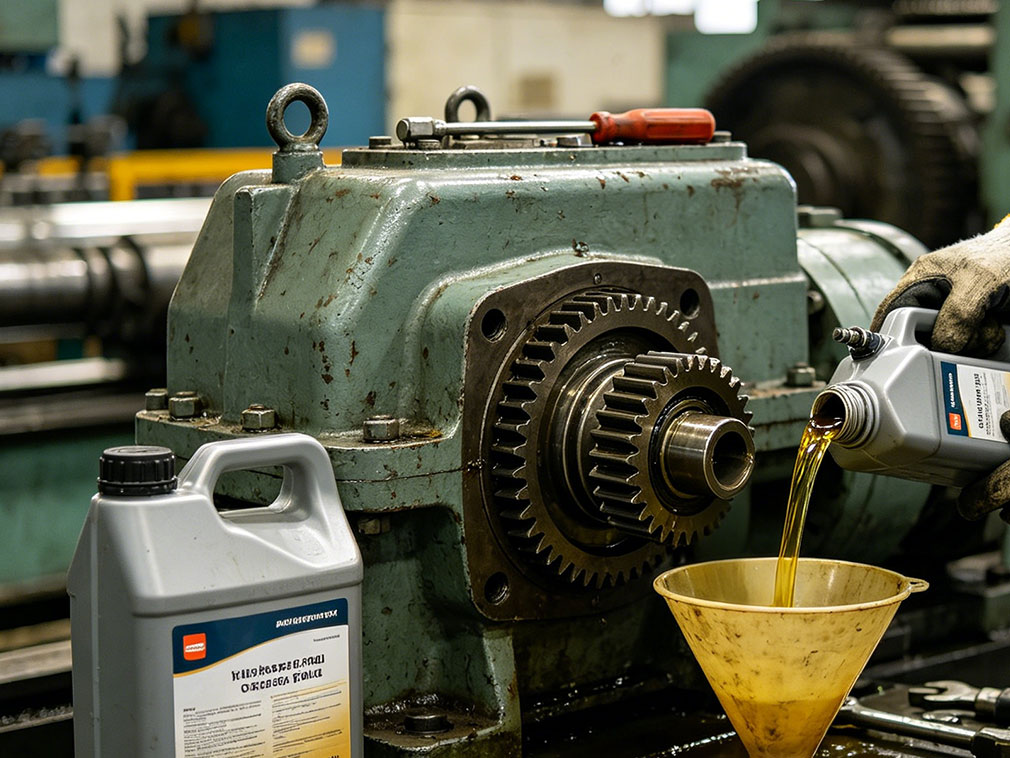
Gears are the most crucial transmission components in speed reducers, conveying equipment, and construction machinery. Their working environment is inherently harsh: enduring high-pressure meshing for extended periods, large temperature differences between day and night in the workshop, and a high susceptibility to condensation inside the gearbox.
Combined with the continuous corrosive effects of dust, moisture, acidic and alkaline exhaust gases, and even coastal salt spray, metal rusting is almost inevitable. Many people think that a little surface rust is insignificant and doesn't require special treatment. However, it is precisely this inconspicuous surface rust that, over time, can develop into tooth surface peeling, gear jamming, and in severe cases, even tooth breakage and machine shutdown.
Ultimately, it requires expensive disassembly, repair, and replacement of parts, resulting in a net loss. Industrial gear rust inhibitors are practical maintenance materials that prevent major failures, extend equipment lifespan, and reduce ineffective maintenance costs through early protection.
According to industry statistics released by the World Corrosion Organization (WCO) in recent years, economic losses caused by metal corrosion in the industrial sector account for approximately 3%-4% of the total industrial output value annually. Among these losses, downtime, repair, and replacement losses due to corrosion of precision moving parts such as gears and bearings account for more than 20% of the overall corrosion losses. Compared to visible mechanical wear, gear rust is more troublesome because it hides inside the gearbox and is difficult to detect in advance.
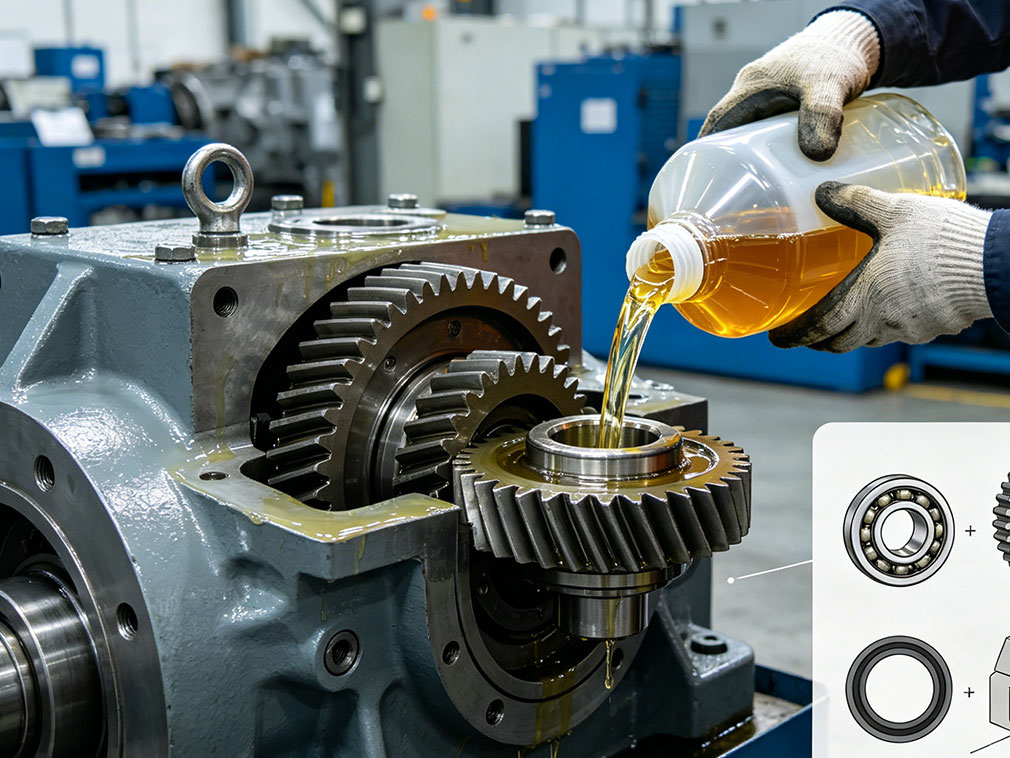
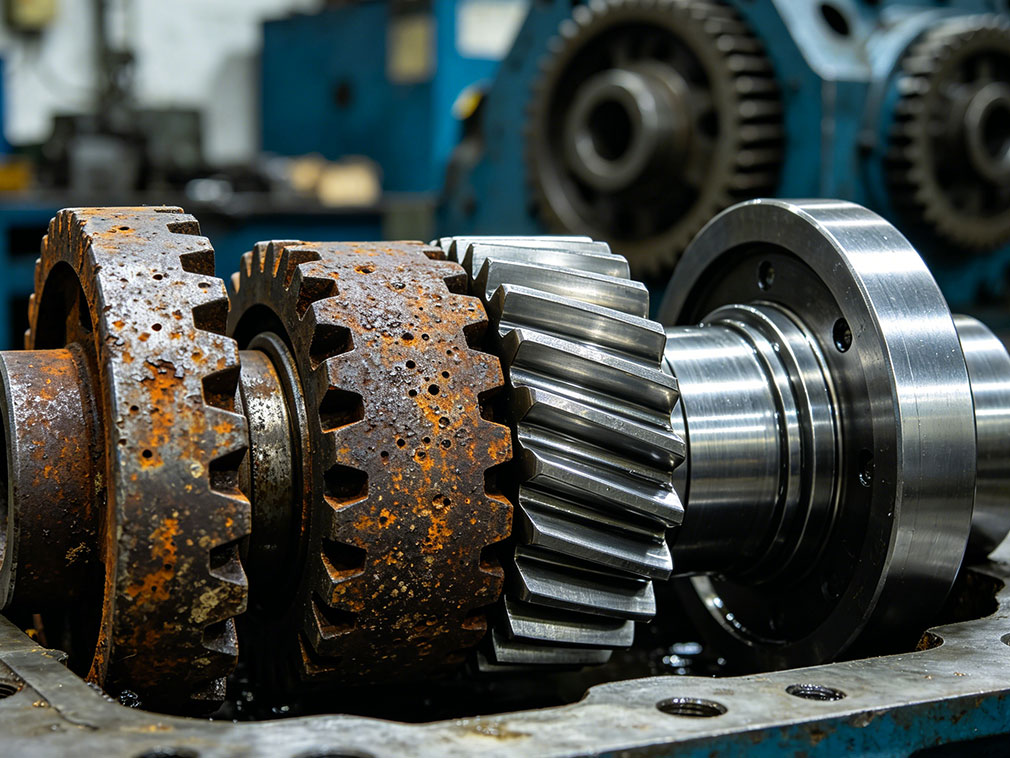
In the early stages of gear rusting, only light yellow spots and surface rust appear on the tooth surface, completely undetectable during routine external inspections. However, rust fragments that detach during operation will directly mix into the gear oil, simultaneously wearing down the gear surfaces and accelerating oil deterioration, creating a double whammy of corrosion and wear. Stress concentration at rust spots leads to pitting, surface peeling, and over time, potentially causing root cracks or even tooth breakage.
Especially in high-humidity, dusty environments such as mines, chemical plants, ports, and outdoor construction machinery, condensation from the temperature difference between day and night in the gearbox, along with moisture seeping in from gaps, rapidly triggers electrochemical corrosion, multiplying the aging rate of the gears. Objectively speaking, ordinary gear oil primarily serves a lubricating function and is unlikely to effectively address rust problems in long-term humid environments.
Three Types of Commonly Used Gear Rust Inhibitors in Daily Workshops: Choosing the Right One for Your Needs is More Reliable
There are many types of gear rust inhibitors on the market. Don't blindly pursue the most expensive; matching the model to the equipment's usage scenario will ensure adequate protection. Currently, the mainstream products used in workshops fall into three categories:
Oil-based rust inhibitors (commonly used for daily maintenance): A staple in most factories, made with refined base oils and specialized corrosion inhibitors. After application or spraying, it forms a thin, dense protective oil film on gear teeth, bearing gaps, and hard-to-reach corners of the gearbox, effectively isolating air and moisture. Suitable for routine maintenance during normal equipment operation, it is highly versatile.
Vacuum Phase Rust Inhibitor (Recommended for Long-Term Shutdowns): Many factories shut down for months or even half a year during the off-season. Ordinary rust inhibitors struggle to cover the corners and blind spots inside the gearbox.
Vacuum phase rust inhibitors rely on volatile corrosion inhibitors to form a gaseous protective film within the sealed gearbox, covering all components without dead angles. In a sealed environment, it provides long-lasting rust protection, specifically addressing the problem of condensation and rust inside equipment that has been stationary for a long time.
Environmentally Friendly Water-Based Rust Inhibitor (For Process Turnover): Meeting the current requirements for green and safe production in factories, it contains no harmful components such as nitrites and chromates. It is easy to clean and leaves no oil residue. Primarily used for short-term rust prevention between processes after gear processing and maintenance disassembly, it leaves no gum-like impurities and does not cause compatibility issues when reassembling and adding gear oil later.
Practical Operation and Maintenance Experience: Rust Prevention Methods Differ Based on Downtime
We often receive feedback that gears still rust despite using rust inhibitors. This is usually not a product quality issue, but rather a problem with the timing and procedure of maintenance. Based on field experience, we have outlined standard practices for three common operating conditions:
During normal continuous operation: Under normal operating conditions, change the gear oil approximately every 2000 hours. In high-humidity and harsh conditions such as mining and outdoor environments, this can be shortened to 1000 hours. Add a dedicated rust inhibitor during oil change to prevent oil emulsification and gear surface rust caused by condensation inside the gearbox.
For short-term downtime (1-3 months): Do not directly disconnect the power and seal the equipment. It is recommended to run the equipment unloaded for 5 minutes to dry any accumulated moisture inside the gearbox. Then, apply a thin layer of rust inhibitor and seal the oil filler and vent holes to prevent condensation from air backflow during standby.
For equipment shut down for more than six months and stored long-term: Be sure to drain the old gear oil from the gearbox, add a preservative-type rust-preventive oil, and circulate it under no-load for a few minutes to ensure the oil fully wets all internal parts. For exposed metal areas such as external shaft ends and flanges, apply an additional layer of rust-preventive grease to achieve double-layer protection and ensure the equipment can safely weather the long-term shutdown period.
What costs can proper gear rust prevention actually save a factory?
Some managers believe that adding rust inhibitors increases consumable costs; the opposite is true. Preventative rust prevention is an extremely economical equipment maintenance method.
Proactive rust prevention firstly prevents gear corrosion damage, significantly extending the lifespan of core components like gears and reduce high-cost spare parts procurement. Secondly, it prevents rust contamination of gear oil, delaying oil oxidation and deterioration, extending oil change intervals, and reducing oil consumable costs.
More importantly, it avoids sudden downtime caused by rust at the source, ensuring continuous production line operation and preventing order losses due to production stoppages. Simultaneously, it reduces the frequency of equipment disassembly and overhaul, saving significant time and labor costs for maintenance and debugging.
Today, industrial equipment maintenance has long since moved beyond the reactive "repair after it breaks" model. Preventative maintenance is the core strategy for cost reduction and efficiency improvement in workshops. A seemingly insignificant gear rust inhibitor can plug hidden corrosion loopholes in equipment, reducing intangible losses of equipment assets.
For manufacturing companies, standardized daily rust prevention maintenance of gears, using lower consumable costs to stabilize equipment operation and extend overall machine lifespan, is a more worry-free and cost-effective equipment maintenance solution.




