
Full Service Used Car Export Solution
In June 2026, the global used car industry was at a critical juncture of structural adjustment and cross-border circulation upgrades, with domestic and international markets showing significantly different trends. Domestically, driven by policy, the supply of vehicles was also iterating, and the supply structure continued to optimize. Overseas markets, while overall demand continued to grow, significant regional differences led to increasingly fragmented transactions.
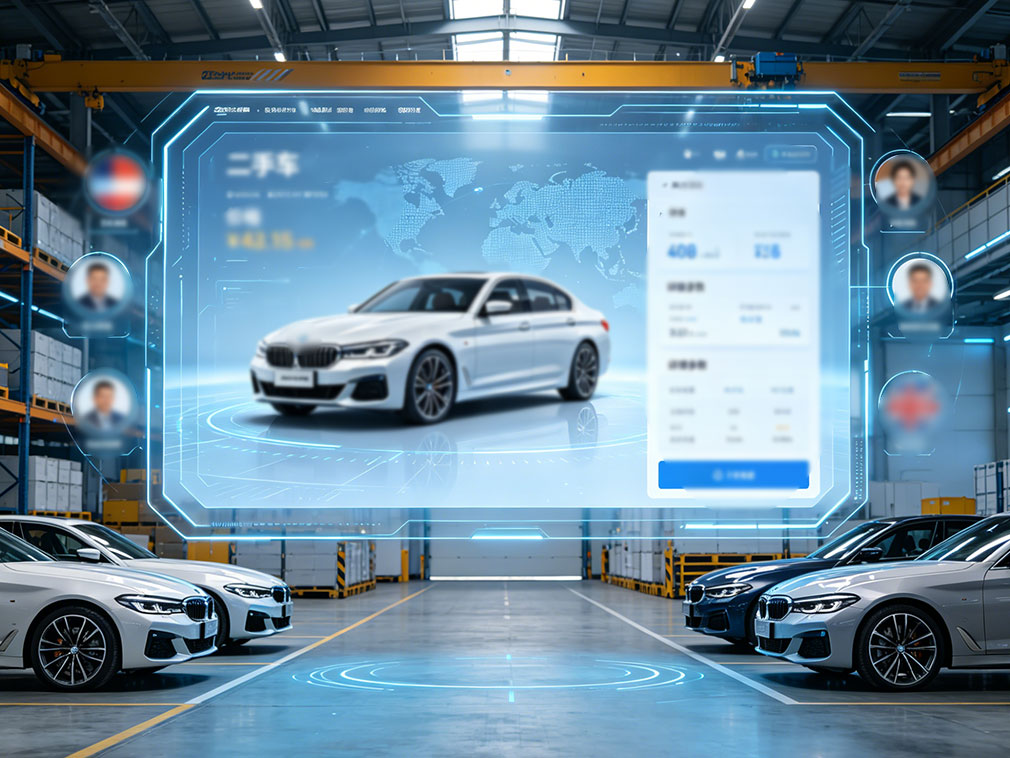
The entire industry was rapidly shifting from its previous extensive circulation model to standardized, professional, and digitalized cross-border operations, bringing new opportunities but also numerous challenges to Chinese used car exports.
Looking at the domestic market first, the used car market is now highly differentiated, with a rapid reshuffling. Intense price wars in the new car market, the rapid increase in new energy vehicle sales, and the implementation of the car trade-in policy have combined to drive down overall market prices and widen the value gap between different models.
As of June 2026, the residual value of traditional gasoline-powered used cars continued to decline, with the average residual value of three-year-old gasoline cars falling significantly compared to the same period last year, and the prices of used luxury gasoline cars plummeting.
Profit margins for end-user car dealers are being squeezed thinner and thinner, with the industry average gross profit margin falling to between 5% and 10%. Many small and medium-sized stores cannot withstand the risks and have had to close down, leading to continued increases in industry concentration.

On the other hand, domestically produced gasoline vehicles and high-quality, cost-effective new energy used cars, thanks to their excellent quality and affordable prices, have maintained stable resale value and become the mainstay of the market.
Furthermore, trade-in subsidies of up to 20,000 yuan have effectively activated the circulation of existing vehicles, and the supply of compliant export-grade vehicles continues to increase, preparing inventory for used cars going overseas.
Looking overseas, the overall size of the used car market is steadily expanding, with the global market expected to continue expanding in 2026. Demand in emerging markets is being released strongly. In regions like Southeast Asia, the Middle East, and Africa, where new cars are expensive and consumer spending is upgrading, demand for high-quality, cost-effective used passenger and commercial vehicles from China is constantly rising.
However, the cross-border used car industry currently faces many challenges. Traditional overseas expansion models are essentially single-vehicle, single-transaction transactions with a fragmented service chain.
Overseas buyers frequently encounter various headaches: opaque information during vehicle selection, inefficient cross-border price inquiries and communication, convoluted export processes, frequent logistical disruptions, and virtually no after-sales support.
Furthermore, different countries have varying import compliance standards, tariff policies, and customs clearance requirements, and most small and medium-sized cross-border car dealers lack the professional capacity for compliant operations, directly leading to long order fulfillment cycles and high transaction risks. These factors severely impact overseas customers' trust in China's used car sourcing and supply chain, hindering the industry's large-scale overseas expansion.

Faced with this domestic and international situation, and addressing the pain points of overseas customers' cross-border procurement, the industry is now shifting its focus from simply selling cars to providing end-to-end services. Unlike the traditional model that only focuses on vehicle procurement, the key now is to build a closed-loop service system that connects the six core links: vehicle selection, price inquiry, order confirmation, export operations, logistics, and after-sales collaboration.
By upgrading its platform, digitalization, and professional capabilities, the company has built a standardized vehicle sourcing and intelligent matching system. This system integrates compliant, high-quality domestic vehicles, providing overseas customers with transparent and accurate information on vehicle condition, price, and qualifications, breaking down information barriers in cross-border vehicle selection.
Simultaneously, the company has streamlined cross-border inquiry and order management processes using a digital system, connecting domestic and international information channels and significantly reducing communication costs caused by time differences, language barriers, and information discrepancies, resulting in faster order fulfillment.
Regarding fulfillment, a professional team familiar with the import policies and customs clearance standards of various countries has been established, standardizing export operations such as customs declaration, inspection, and documentation to avoid compliance pitfalls.
Furthermore, the company integrates high-quality cross-border logistics resources, establishes a stable vehicle transportation channel, and optimizes logistics scheduling and tracking systems to ensure timely delivery and reduce cargo damage.
In addition, the company has addressed its after-sales service weakness by establishing a dedicated after-sales service channel for overseas customers, providing supporting services such as vehicle maintenance consultation, fault assistance, and subsequent trade-ins, ensuring that after-sales support is no longer lacking.
Looking ahead, as the digital system becomes more sophisticated and service models continue to upgrade, empowering the entire process with professional services can gradually untangle various bottlenecks in the cross-border circulation of used cars, making order fulfillment more standardized and efficient, and slowly solidifying the reputation and competitiveness of China's cross-border used car supply chain.
This will help domestic used cars take solid steps in the global market and push the entire industry to upgrade from simply exporting products to exporting brands, services, and supply chains in an all-round way.
-
National Day Highway Charging Hits Record: +60.4% YoY(Oct 8)8264
-
New Energy Vehicle Exports Accelerate: 3.435 Million Units in First 8 Months, Up 120% Year-on-Year(Oct 8)8880
-
Chinese Tire Exports: Volume Up But Revenue Down Nearly RMB 900 Per Ton(Oct 8)5406
-
CNH Industrial: Smart Farming, NE and Local Tech(Sep 30)5571
-
CNHTC Drives Surging NE Heavy Truck Exports(Sep 30)8498




