
Why Non-Pneumatic Tires Struggle to Replace Traditional Ones
Pneumatic tires, also known as airless tires, are essentially a completely new approach to tire design using new materials and structures. Traditional pneumatic tires rely on internal air to support the vehicle and cushion bumps, but they often suffer from minor problems in daily use, such as slow leaks, punctures, blowouts, and fluctuating tire pressure.
Drivers need to check tire pressure and inflate them frequently, which is time-consuming and expensive. A blowout on the highway can easily lead to a serious accident, posing a real safety hazard. Pneumatic tires eliminate the closed inflation structure, relying on porous, convex surfaces and spokes.
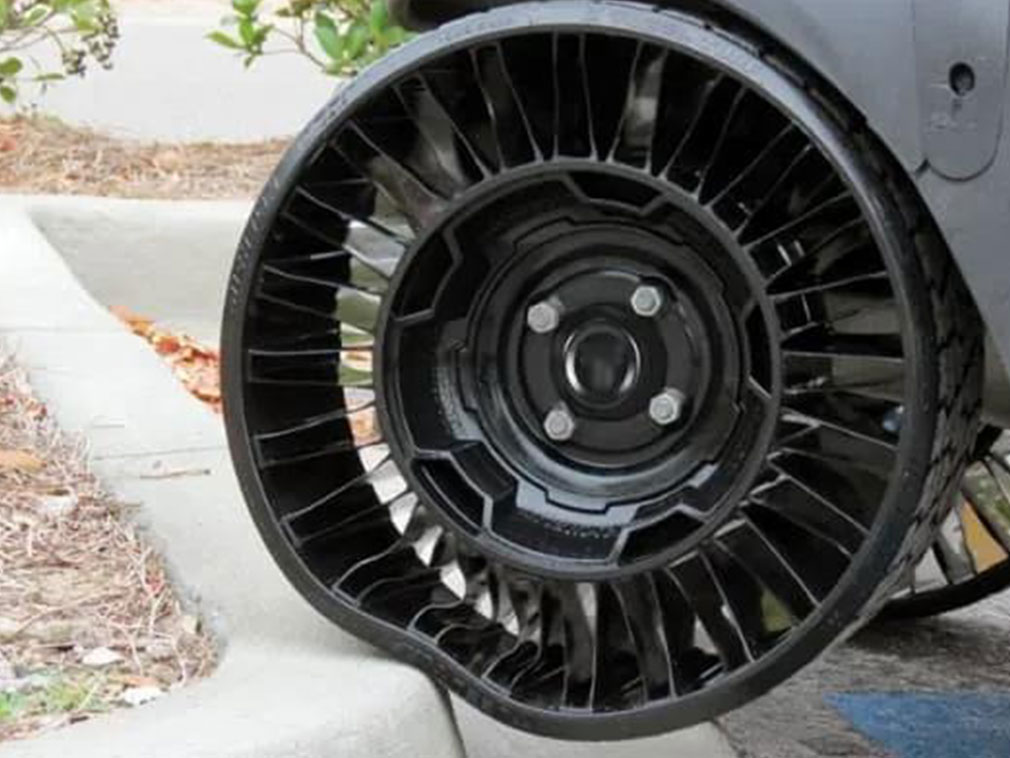
They utilize the stretching, compression, and rebound properties of high-polymer elastic materials and composite spokes to achieve airless operation, minimal maintenance, puncture resistance, and durability. They can handle gravel roads, muddy roads, and potholes, avoiding the common problems of traditional tires, making them a key area of research and development for major tire companies.
However, this type of tire has never made it into the garages of ordinary people, and the reasons are not complicated: the research and development and production barriers are too high, requiring high investment and advanced technology.
The traditional pneumatic tire industry is already mature, with complete large-scale production lines, stable processes, and controllable costs. There is no universal production system to copy for non-pneumatic tires; companies have to figure out the difficult challenges themselves, such as material formulation, structural mechanical balance, and integrated wheel and tire molding.
To improve support strength and structural stability, and to achieve seamless bonding between the rubber and the wheel, companies have to invest heavily in new materials, precision molds, and specialized equipment.
According to publicly available industry data from 2026, the high-performance polymer materials and carbon fiber reinforcement materials used in non-pneumatic tires are significantly more expensive to procure than ordinary rubber, with raw material costs roughly three times that of traditional tires.
Furthermore, its unique spoke and porous structure makes it incompatible with traditional production lines, and the integrated injection molding and overall molding process is more difficult, resulting in a higher defect rate.
Currently, the overall production volume of the industry is still small, making it impossible to amortize upfront investments and costs through economies of scale. As a result, the final selling price of non-pneumatic tires is significantly higher than that of traditional tires of the same specifications, making them difficult for ordinary family car owners to accept.
Price is already a major concern, and the driving experience is also less than ideal. This is the biggest hurdle that non-pneumatic tires struggle to overcome, trapping the product in the awkward position of "higher price, worse experience." Traditional pneumatic tires have an internal air layer for flexible cushioning, filtering out many road bumps and reducing driving vibrations and tire noise, perfectly meeting the needs of comfortable commuting for family cars.
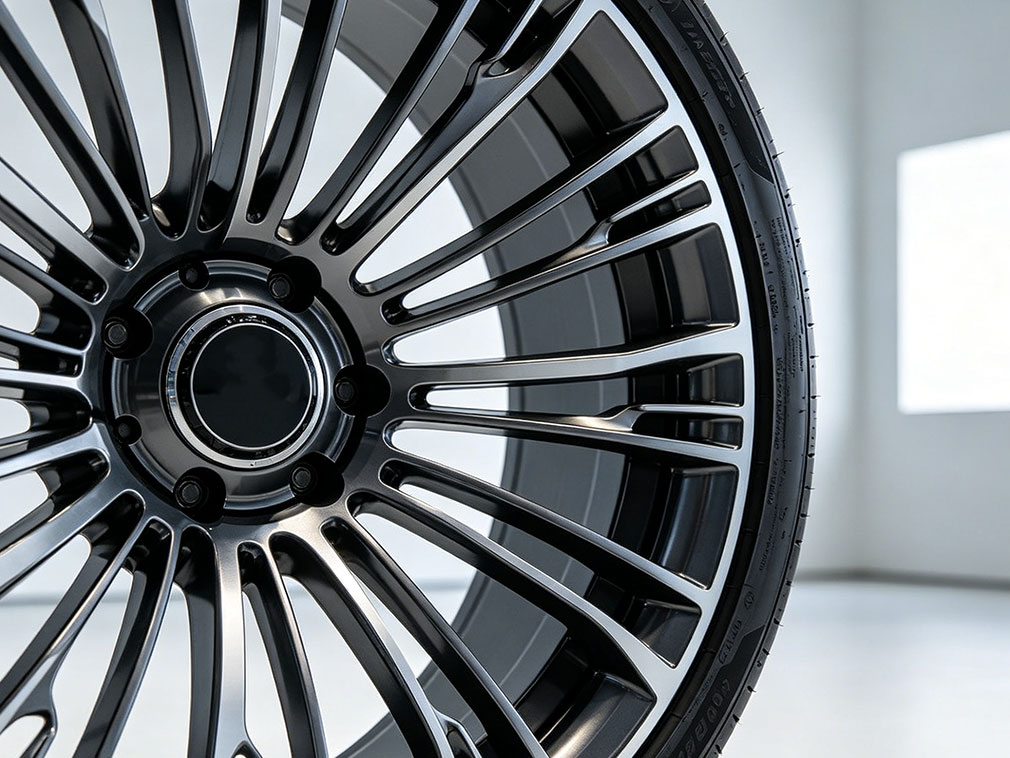
Non-pneumatic tires lack this air cushioning layer, resulting in a stiffer overall structure and insufficient elasticity for cushioning. While the shock absorption and noise reduction issues are not too noticeable on smooth city roads, once you go over potholes or drive on rough roads, the vibrations are directly transmitted along the wheel spokes to the car body, making the bumps very direct and immediately reducing comfort.
Furthermore, the friction between the hard tire body and the ground is different from that of a pneumatic tire, resulting in a higher tire vibration frequency and more noticeable tire noise. As vehicle speed increases, this noise difference widens further, significantly diminishing the driving experience.
Ordinary consumers are very practical when it comes to tires. What family car owners truly value is high cost-effectiveness, comfortable seating, quietness, and durability—enough for daily commutes and short trips. Traditional pneumatic tires have been around for over a century, boasting mature technology, affordable prices, and a generally satisfactory driving experience, perfectly matching the daily driving scenarios of the general public.
On the other hand, non-pneumatic tires only have one real advantage: puncture-resistant and maintenance-free. However, consumers have to pay significantly more for this and accept the obvious drawbacks of poor comfort and higher noise levels. For most car owners who only commute on smooth city roads, the benefits of maintenance-free and puncture-resistant tires simply cannot compensate for the difference in experience and price, making it difficult for them to willingly open their wallets.
Currently, non-pneumatic tires have essentially failed to penetrate the civilian passenger vehicle market, only finding their way into a few specific segments. Due to their high stability, durability, and virtually zero maintenance, pneumatic tires are primarily used in low-speed work equipment, construction machinery, special-purpose vehicles, and small short-distance mobility scooters.
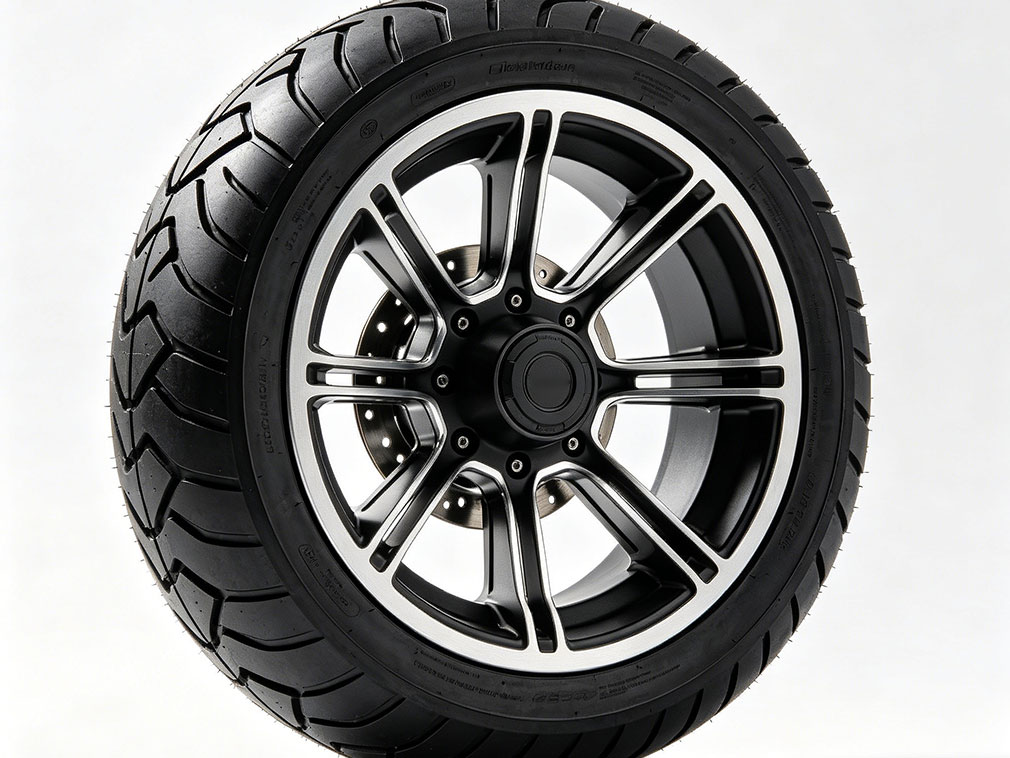
These types of equipment and vehicles have little to do with speed, comfort, or quietness; they prioritize tire durability and reliability, which perfectly aligns with the strengths of pneumatic tires. Industry statistics from 2025 confirm this: while the domestic pneumatic tire market is growing rapidly, demand is concentrated in industrial and special-purpose sectors, with penetration in the passenger car market being negligible.
Overall, weighed down by high costs, inadequate performance optimization, and shortcomings in driving experience, pneumatic tires are unlikely to displace traditional pneumatic tires from their mainstream position in the short term. To truly enter the mass consumer market, the industry needs to continue refining its materials, optimizing processes, and controlling costs, gradually addressing its weaknesses and lowering final prices.




