
Rubber, Carbon Black & Tire Price Trends
As of March 20, 2026, the price trends of the four core sectors—rubber, carbon black, road transportation, and tires—continued to diverge: upstream raw materials experienced short-term fluctuations and corrections, midstream auxiliary materials saw slight adjustments in some areas, logistics freight rates remained stable, and downstream tires saw a slight price increase under cost pressure.
The overall industry chain exhibited a clear supply-demand dynamic, with price fluctuations closely tied to three core factors: raw material costs, market demand, and industry policies. The following is a detailed explanation based on real-time market conditions and authoritative industry data.
I. Natural Rubber and Synthetic Rubber: Futures and spot prices both declined slightly, and the market maintained a low-level fluctuation
On March 20, the Shanghai Futures Exchange's main rubber contract opened at 16,090 yuan/ton and closed at 16,000 yuan/ton, down 250 yuan/ton from the previous trading day's settlement price. The intraday low touched 15,885 yuan/ton, breaking below the 16,000 yuan mark, with a trading volume of 251,600 lots.

Market bullish sentiment was weak, and the overall market maintained a low-level fluctuation pattern. In the spot market, the price of Thai 20# mixed standard rubber in Shandong was 15,150 yuan/ton, down 150 yuan/ton from the previous day, a decrease of 0.98%.
In North China, styrene-butadiene rubber (SBR) and butadiene rubber (BR9000) prices rose slightly, with Qilu 1502E SBR quoted at 15,800 yuan/ton and BR9000 BR at 15,400 yuan/ton, up approximately 0.6% month-on-month. The trends of synthetic rubber and natural rubber showed some divergence.
The current rubber price correction is mainly due to the gradual recovery of raw material supply in overseas producing areas, downstream factories purchasing on demand and maintaining a cautious stockpiling sentiment. Large-scale restocking has not yet occurred in the market. However, there is some cost support around 16,000 yuan/ton, limiting the potential for a significant short-term decline. A narrow range of fluctuations is expected to continue.
II. Carbon Black Prices: Mainstream models slightly lowered, global price increases support cost floor
On March 20th, domestic carbon black spot prices eased slightly. In Shandong, the mainstream N660 carbon black price was 7900 yuan/ton, down 100 yuan/ton from the previous day, a decrease of 1.25%. Other grades saw slight price adjustments, with N550 at 8100 yuan/ton and N375 at 8280 yuan/ton. Downstream tire manufacturers were cautious in their purchases, and vehicle sales slowed, with the market mainly driven by small, immediate orders.

Despite a short-term correction in domestic spot prices, the global carbon black market remains supported by strong costs. In mid-March, two major global carbon black giants announced price increases, with specialty carbon black products seeing increases of up to 20%-25%, along with additional floating surcharges.
Coupled with high crude oil prices, carbon black production costs remain high, limiting the room for price reductions by domestic companies. Prices are expected to stabilize gradually after a slight short-term correction, unlikely to experience a significant drop, and will remain a core cost pressure point for tire production.
III. Road Transportation Prices: Overall Stable with Slight Increases, Narrow Fluctuations Without Significant Changes
In mid-to-late March, domestic road transportation prices remained generally stable. As of March 20th, the national highway logistics freight rate index remained around 1053 points, a slight increase of approximately 0.05% compared to the previous period. The indices for full truckload, less-than-truckload (LTL) light freight, and LTL heavy freight showed little fluctuation, with the full truckload index slightly higher than the LTL index.
By sector, freight rates for industrial raw materials and tire products remained unchanged; the highway freight rate for bulk commodities such as cotton transported out of Xinjiang was 0.1566 yuan/ton·km, a slight decrease of 1.69% compared to the previous period, mainly due to relatively sufficient transport capacity and a temporary decline in demand for bulk raw material transportation.
Currently, the transportation market has not experienced significant price fluctuations. Fuel costs are stable, highway toll discounts continue, and the 5% discount for ETC and nighttime toll discounts are being implemented normally, alleviating the industry's low-price competition. Overall, freight rates remain stable, with limited impact on tire and raw material logistics costs, and have not further pushed up end-user costs in the supply chain.
IV. Tire Prices: Slight Price Increases Driven by Costs, Smooth Transition in Terminal Prices
Supported by high upstream rubber and carbon black costs, several tire companies officially implemented a new round of price increases on March 20th. Leading companies such as Double Coin Tires raised prices across their entire product line by 2%, covering all-steel tires, semi-steel tires, and engineering tires. Companies stated that this price adjustment only partially covers the cost increase, and will be dynamically adjusted based on raw material trends.
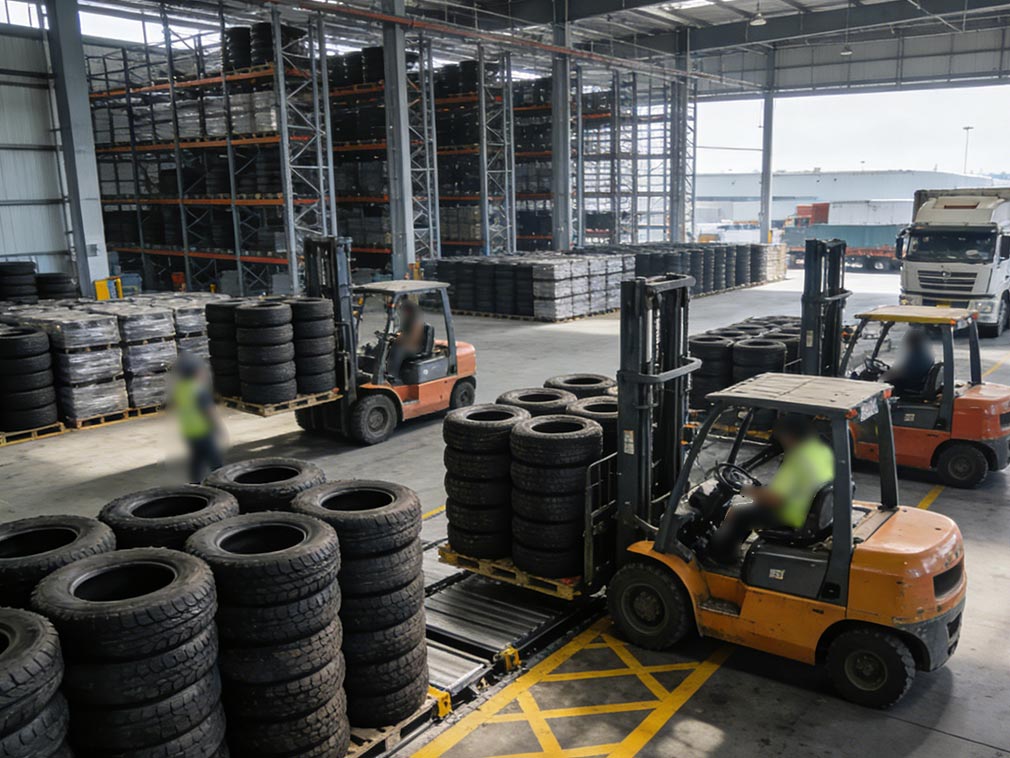
In the spot market, the mainstream price for 12R22.5-16PR all-steel tires in Shandong was 840 yuan/tire, unchanged from the previous period. Terminal dealers have not yet significantly followed suit, focusing instead on digesting previous inventory, resulting in a relatively balanced market supply and demand.
From an industry-wide perspective, the tire industry raw material cost index declined slightly on March 20th. The raw material cost index for semi-steel tires decreased by 0.40% month-on-month, and for all-steel tires by 0.94%, but the cumulative year-on-year figure remains high, indicating that profit margins for companies remain tight.
In the semi-steel tire market, regions like Northeast China and Inner Mongolia have entered the stockpiling phase for all-season tires, with some areas showing reasonable enthusiasm for stockpiling. All-steel tire inventories are ample, and end-user demand remains stable. Overall, prices are showing a pattern of "manufacturers slightly raising prices, while end-users maintain a stable transition."
V. Short-Term Market Outlook
In summary, core prices across the industry chain did not fluctuate drastically on March 20th. Minor adjustments in rubber and carbon black prices do not change the overall high cost level. Transportation prices remain stable, and tire prices have slightly increased to absorb cost pressures. In the short term, upstream raw materials are unlikely to experience significant price drops due to global supply and cost support.
Logistics prices will remain stable, and the tire market will continue to be driven by immediate needs, with prices generally fluctuating within a narrow range. Going forward, key factors to watch include overseas raw material supply, domestic downstream operating rates, and changes in carbon black export trends.
-
National Day Highway Charging Hits Record: +60.4% YoY(Oct 8)8273
-
New Energy Vehicle Exports Accelerate: 3.435 Million Units in First 8 Months, Up 120% Year-on-Year(Oct 8)8891
-
Chinese Tire Exports: Volume Up But Revenue Down Nearly RMB 900 Per Ton(Oct 8)5414
-
CNH Industrial: Smart Farming, NE and Local Tech(Sep 30)5588
-
CNHTC Drives Surging NE Heavy Truck Exports(Sep 30)8507




