
Tire Price Hikes: Carbon Black, Not Strong Sales(Sep 24)
Over 60 Tire Manufacturers Raise Prices Collectively — Not Because Sales Are Booming, But Because Carbon Black Prices Change Daily
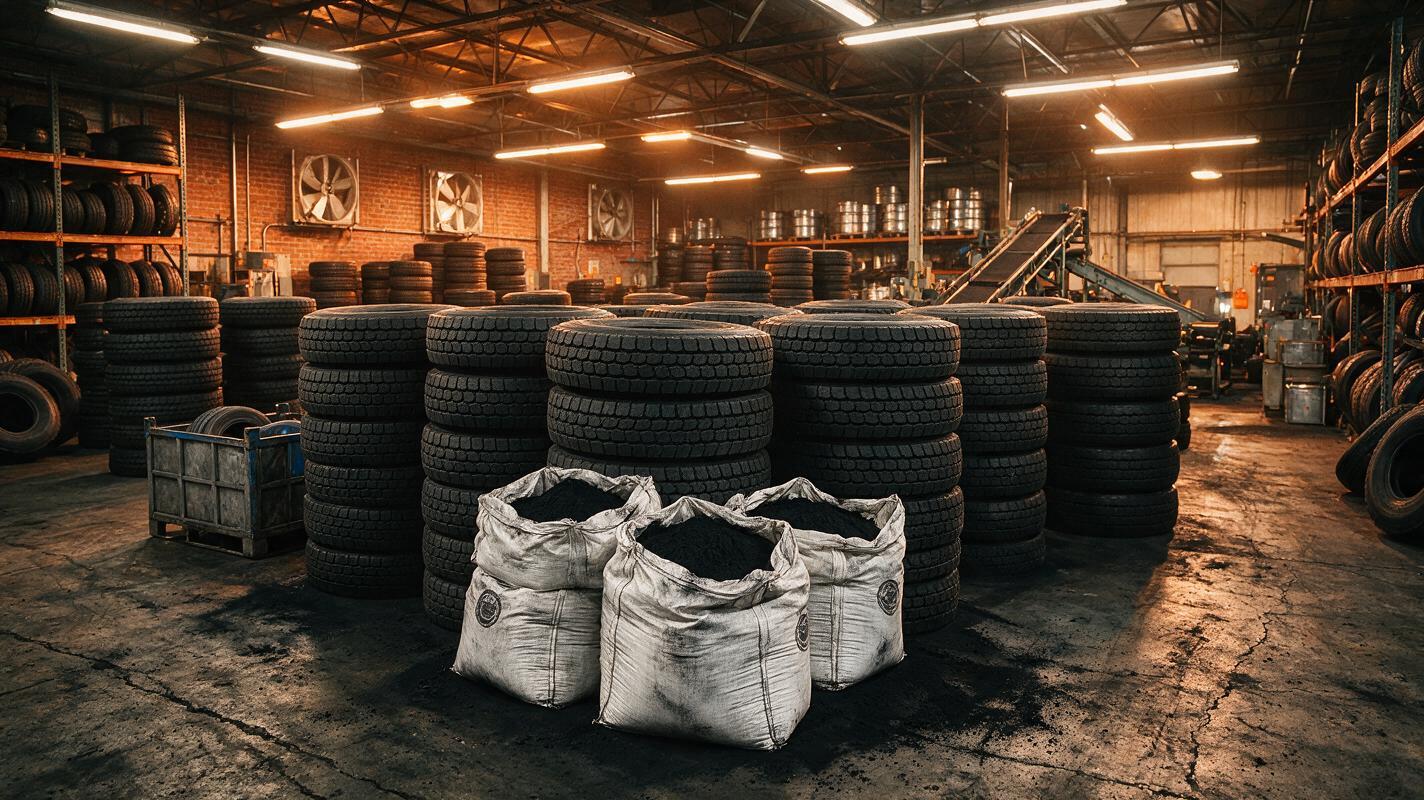
Recently, the tire industry has been flooded with price hike notices.
In just a few days, over 60 tire companies — including Zhongce, Sailun, Linglong, Guizhou Tire, Triangle, Double Star, and Wanli — issued more than 70 price adjustment notices. All-steel tires, semi-steel tires, industrial tires, and inner tubes all saw increases, generally ranging from 2% to 6%, with some inner tube products surging by 10%.
Many people's first reaction: Are car sales booming? Is peak replacement season here?
No. This round of price hikes is not driven by demand — it is driven by cost.
1. Carbon Black "Goes Crazy" — The Last Straw for Tire Manufacturers
Raw materials account for over 70% of tire costs. The most aggressive factor this time is not rubber, but carbon black.
Carbon black is derived from coal tar. Recently, tight coking coal supply and production cuts by coking enterprises have caused coal tar prices to jump in just one week. N330 carbon black in the Shandong market surged from 7,500 yuan/ton in mid-August to 11,500–12,000 yuan/ton by mid-September, hitting a historic high.
On September 15, Cabot China announced a price increase of 5,800 yuan/ton for specialty carbon black — its largest single increase of the year.
Carbon black is the "backbone" of tires, responsible for reinforcement and wear resistance. When it surges, tire manufacturers simply cannot absorb the impact.
2. Rubber, Oil, Freight, and Exchange Rates — All Striking Simultaneously
Carbon black is just the surface. The underlying driver is a "multi-factor squeeze":
Natural rubber: Southeast Asian rainy season plus El Nino expectations have restricted tapping. Domestic spot prices exceeded 17,900 yuan/ton, and the main futures contract once topped 19,800 yuan/ton. Synthetic rubber: Brent crude above $100, butadiene prices rose, pushing up cis-polybutadiene and styrene-butadiene rubber, with cis-polybutadiene up nearly 20% in the current phase. Steel cord/steel: prices remain high, keeping bead wire costs elevated. Ocean freight: Middle East geopolitical disruptions have caused freight rate volatility on European and Middle Eastern routes, squeezing export-oriented tire companies.
The production cost of a single all-steel tire has risen by approximately 9%, while manufacturers only dare to raise prices by 2%–5%.
An industry saying goes: "Sell one tire, lose tens of yuan."
3. Why "No Prepayment Accepted" Is the Most Alarming Signal
In previous years, savvy distributors would pay in advance to lock in prices and stockpile low-cost inventory.
This time is different — Wanda Baotong, Yuelong, Huaxing Wanda, and other companies explicitly stated in their notices: no prepayment for price locking.
Manufacturers are also worried: if they accept payment today and carbon black rises another 5,000 yuan tomorrow, the order becomes a loss.
So factories are taking back "price-locking rights" and letting prices roll with costs.
For distributors, repair shops, and fleet owners, this is a clear signal:
The low-price inventory dividend is over. The question is no longer "will prices rise," but "can you still get goods at today's price."
4. Top-tier and Small Manufacturers — A Life-and-Divide Is Opening
This round of industry consolidation will be brutal:
Sailun, Zhongce, Guizhou Tire: With overseas bases (Vietnam, Cambodia, Serbia, etc.), they can bypass some trade barriers, have strong brand premiums, and can pass on some costs. Linglong and others: Revenue is still growing, but profits are squeezed by exchange rates and raw materials — price hikes are about survival. Small tire companies: No scale, no overseas factories, no premium products, and end customers refuse high prices — not raising prices means waiting to die; raising prices means losing orders, which is also fatal.
Industry consensus: If coal tar, natural rubber, and crude oil do not come down in Q4, a second wave of price hike notices will arrive in October. EU anti-dumping and US countervailing duties continue to escalate, and export-oriented companies will only face tighter margins.
5. What About Regular Car Owners?
Don't panic, but there will be impact:
Replacement market: A passenger car tire may cost 20–80 yuan more, with high-end and large-size new energy vehicle tires seeing more pronounced increases. Truck tires: All-steel tire price hikes will land first, directly raising costs for long-haul fleets. 4S shops / Tuhu / repair shops: As previous inventory is depleted, listed prices will follow suit. Car purchases: OEMs have large-volume annual contracts, so new car prices will not rise due to tire costs in the short term, but automakers will also pressure suppliers to cut prices.
6. In One Sentence
Over 60 tire companies raising prices collectively is not because the industry is booming — it is because upstream costs have devoured all profits.
Tire manufacturers used to survive on "scale + channels"; now they must rely on "overseas capacity + premium products + brand premium" to stay alive.
In the past: sell one more tire, earn a little more. Now: sell one more tire, first check if carbon black has risen.
This wave of price hikes is superficially about price, but fundamentally it marks a watershed for China's tire industry — transitioning from "competing on capacity" to "competing on cost-pass-through capability."
This platform focuses on the import and export of Chinese automotive equipment, gathering hundreds of certified Chinese automotive suppliers and connecting with global buyers. The platform achieves full transaction transparency, expands diverse cooperation opportunities, and helps both domestic and foreign parties build deep and stable cooperation bonds. Whether you are looking for vehicle manufacturers, purchasing automotive parts, or need customized procurement solutions, CNAUTO is your trusted first choice for cooperation.




