
Tire Waste Circular Resource Utilization
Every year, over 1 billion tires are discarded globally. What does that mean? If all this "black waste" were piled up, it would form a mountain that's incredibly difficult to manage. Everyone's talking about a circular economy in the tire industry, with many focusing on upstream aspects like developing recyclable materials, tire retreading, or finding new sources of rubber alternatives. These attempts are valuable, but they're slow and don't address the immediate problem.
The most realistic and pressing issue facing the entire industry remains: how do we dispose of those used tires already removed from vehicles and piling up in recycling centers and landfills?
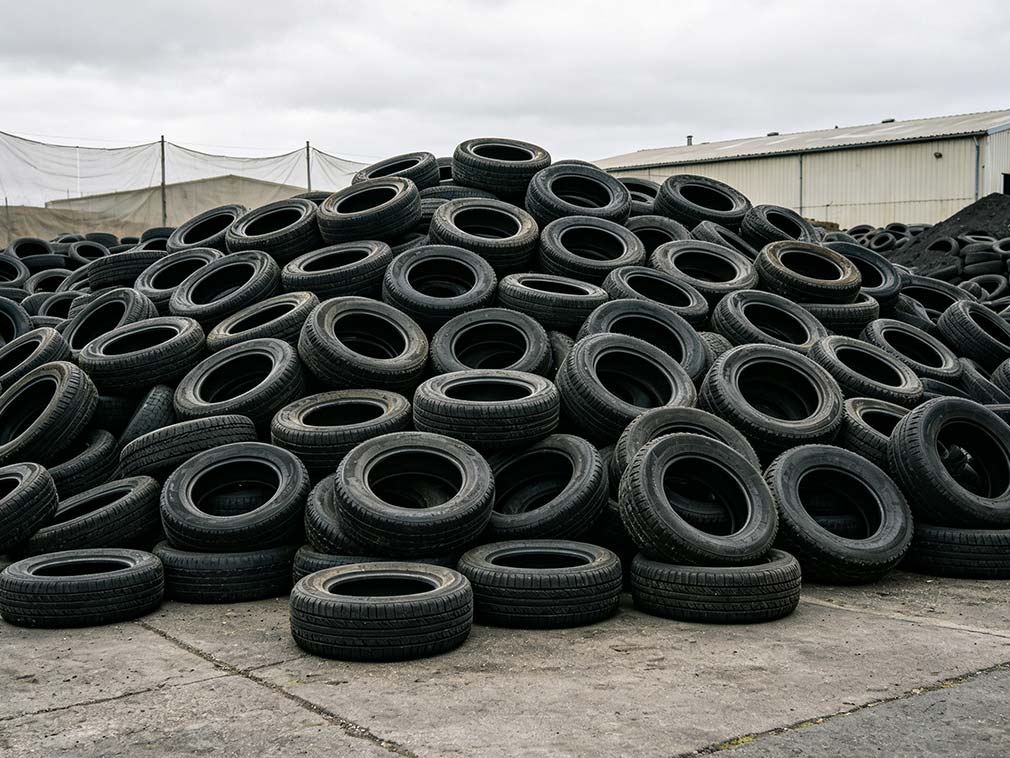
Why are used tires so difficult to dispose of?
Tires, while seemingly sturdy and durable, are incredibly difficult to dispose of. A typical tire contains a mixture of natural rubber, synthetic rubber, carbon black, and various added vulcanizing agents and antioxidants—over 400 different chemical components combined.
Even more troublesome is the "vulcanization" process, which tightly binds rubber molecules together like a web, forming a stable three-dimensional structure. Do you want to reheat and reshape waste tires like you would melt down a plastic bottle? No way. Do you want to burn them directly as waste? The complex components inside would produce large amounts of toxic gases upon combustion, making it environmentally unfeasible.
Because of the lack of economically viable disposal methods, large quantities of waste tires end up in landfills or are simply dumped in wastelands. Over time, heavy metals and toxic substances from the tires seep into the ground with rainwater, spreading through the soil and rivers, even causing microplastic pollution. This hidden "black pollution" poses a long-term threat to the ecosystem and health.
How does pyrolysis turn waste into raw materials?
Physical crushing to make rubber powder was the conventional method in the past, but it had low added value and struggled to find a market. In recent years, what has truly revitalized the waste tire recycling industry is the technological advancement of pyrolysis.
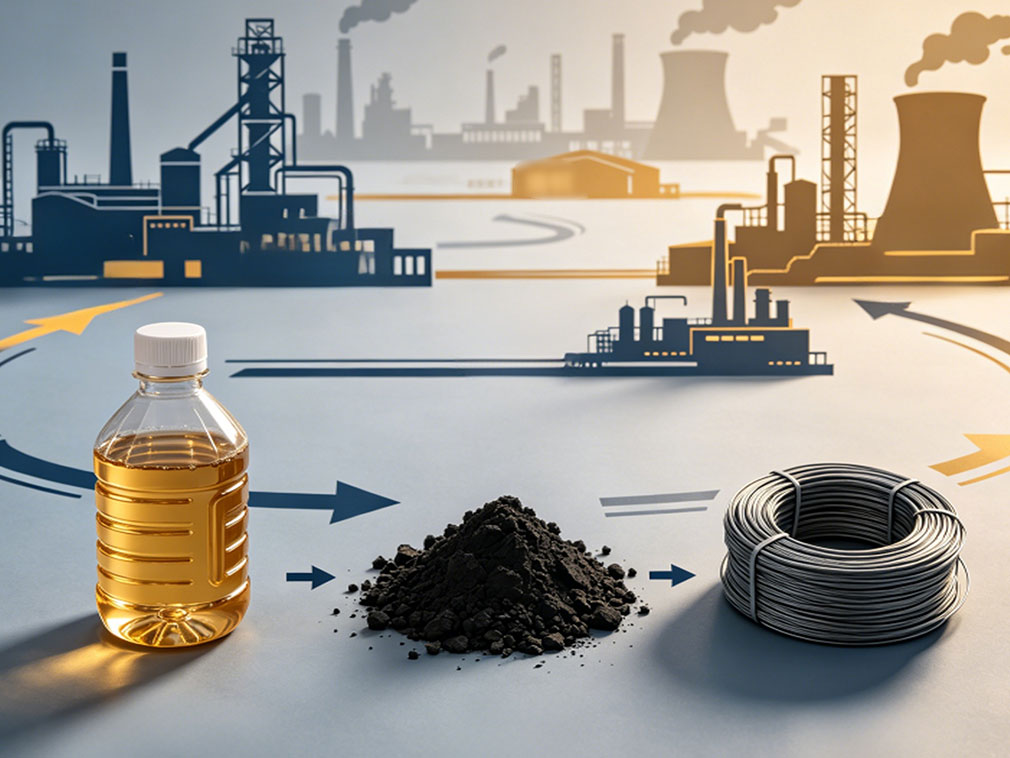
Simply put, it involves sending waste tires into a sealed reactor and heating them at high temperatures in an air-isolated environment. Under these oxygen-deficient conditions, the large molecular chains inside the tire break down, ultimately reducing them to smaller molecules. The resulting substances are quite substantial, mainly three: liquid pyrolysis oil, solid carbon black, and the steel wire originally embedded in the tire.
These three substances are not waste residue, but raw materials that can be directly fed into the plant. The pyrolysis oil has a high calorific value and can be directly used as fuel in steel mills and cement plants, or supplied to fuel oil plants for further processing; the carbon black produced through pyrolysis can be recycled back into rubber and plastics factories, replacing some of the more expensive virgin carbon black; and the steel wire, needless to say, can be directly sorted and sold to steel mills for remelting.
A waste tire, which was previously a headache for everyone, has been transformed into industrial raw materials that meet the needs of real economy enterprises, forming a small-scale closed-loop industrial chain.
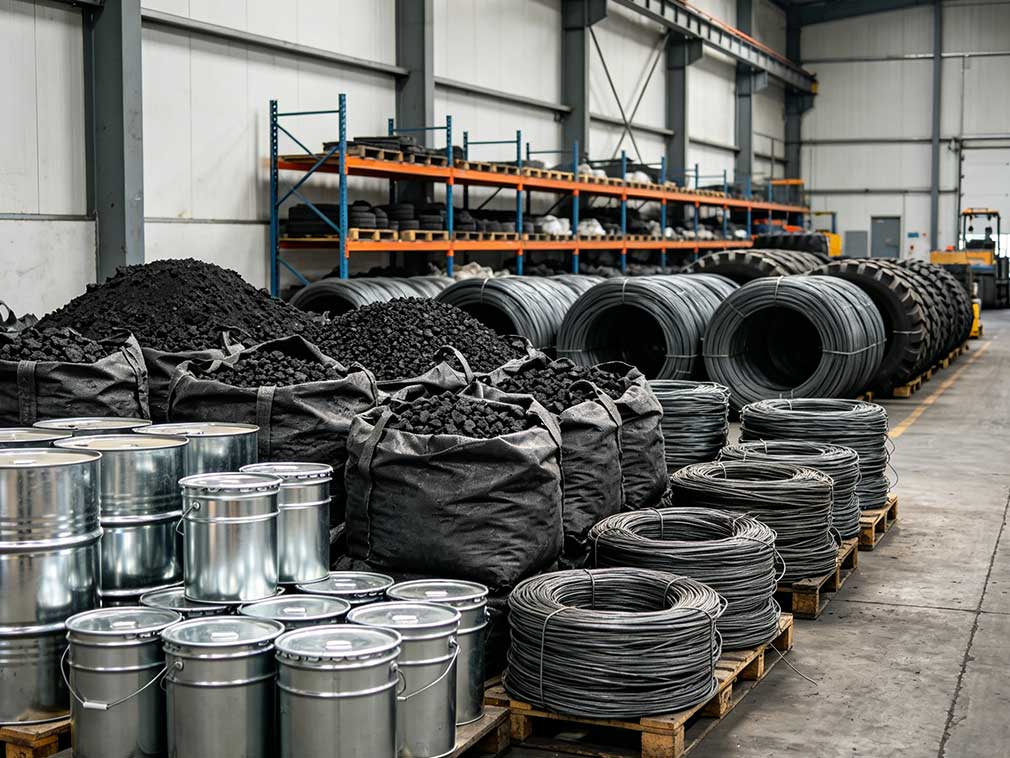
Let's calculate the economic benefits behind this
Environmental protection without a sound business logic cannot go far. Previously, companies processing waste tires basically relied on government subsidies to survive; now, pyrolysis technology has completely reversed the cost logic.
Let's do the math: Based on past industry data, a waste tire pyrolysis plant with an annual processing capacity of less than 100,000 tons can achieve annual sales of around 100 million yuan just by selling pyrolysis oil, carbon black, and steel wire. As long as the plant can stably control its receiving costs and production energy consumption, the profit margin is considerable.
The current trend in this industry is clearly towards large-scale and diversified operations. Once the processing capacity of a single production line is increased, and the produced carbon black is further processed and purified to meet higher industry standards, the profit margin can be further increased.
At the current pace of development in the industry, it's highly likely that several large-scale waste tire recycling projects will soon exceed 10 billion yuan in annual output value.
The management of waste tires cannot rely solely on environmental protection concepts; ultimately, it must be driven by tangible commercial transformation. The maturity of pyrolysis technology has perfectly timed this. It transforms industrial waste that previously required costly disposal into assets that generate stable cash flow. For companies focusing on the automotive aftermarket and the recycled resources sector, this is no longer just a concept, but a viable business that is already taking off.




