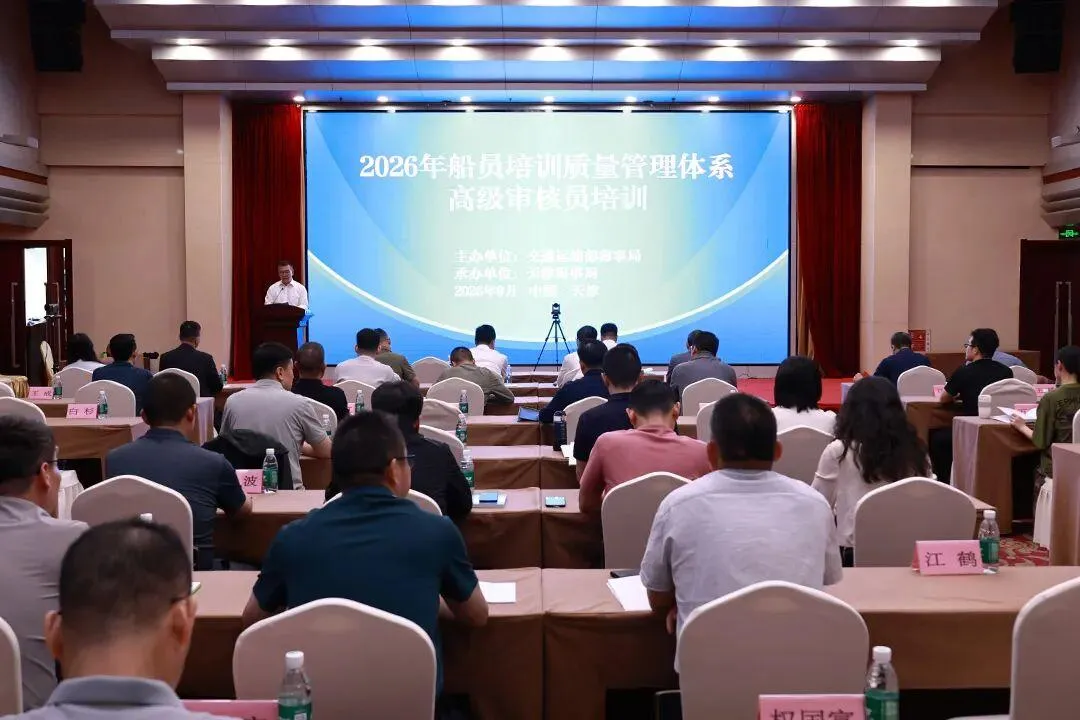
The International Seminar on Autonomous Ship Sailing Technology Standards was held in Fuzhou.
On October 16, the 2026 World Marine Equipment Conference opened in Fuzhou. In the afternoon, one of the supporting events of the conference—the International Seminar on Ship Autonomous Navigation Technology Standards—was held.
The seminar, with the theme "Technical Standards—Key to Promoting the Global Application and Development of MASS," was organized by the International Association of Institutes of Navigation (IAIN) and the Chinese Institute of Navigation, hosted by the Fujian Institute of Navigation, and supported by Shanghai Ship and Shipping Research Institute, Fujian Port Association, and Fujian Provincial Harbor and Waterway Engineering Development Co., Ltd. Experts from the International Maritime Organization (IMO), International Organization for Standardization (ISO), and various countries including China, Norway, Italy, Egypt, and Japan gathered to discuss the development of autonomous ship navigation technology standards.
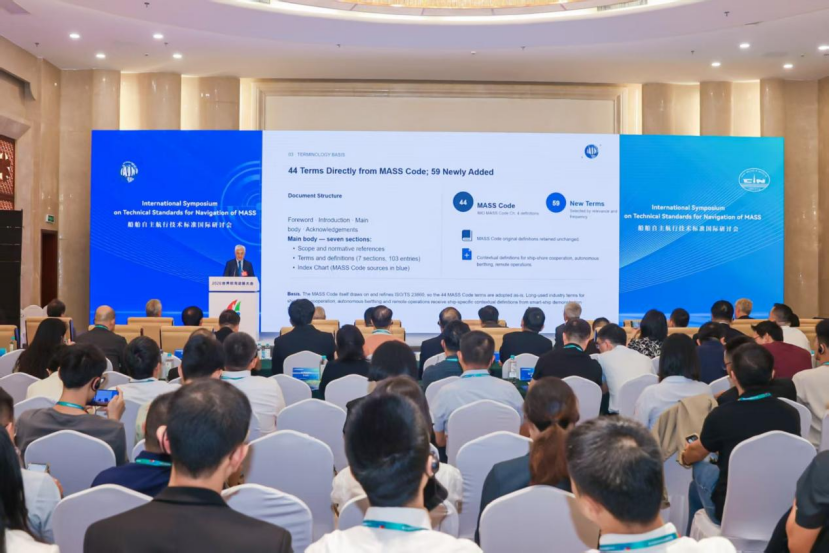
At the conference, Yan Xinpeng, President of the Chinese Institute of Navigation and Professor at Wuhan University of Technology; Salvatore Gaglione, Senior Vice President of IAIN; Lu Weiqun, Vice President of the Fujian Association for Science and Technology; and Wu Zhongdai, Deputy General Manager of Shanghai Ship and Shipping Research Institute, attended the seminar and delivered speeches.
Zhang Baochen, President of IAIN and Vice President of the Chinese Institute of Navigation, presided over the speech session of the seminar and delivered a keynote speech. Li Shixin, Executive Vice President of the Chinese Institute of Navigation, chaired the keynote speech session.
Currently, the global shipping industry is accelerating intelligence, and Maritime Autonomous Surface Ships (MASS) are moving from the experimental and demonstration phase to commercial application. As the relevant regulations of the International Maritime Organization (IMO) regarding MASS gradually come into effect, the industry's need for relevant technical terminology standards has become more urgent. To respond to industry demands, IAIN initiated the preparation of autonomous navigation technology terminology standards. This seminar focused on discussions and exchanges regarding the formulation of these standards.
Implementation of MASS Rules: Technical Standards Still Need Unification
Yan Xinpeng stated that autonomous navigation is a key direction for intelligent shipping development, and technical standards are crucial for promoting the research, application, and operational safety of global maritime autonomous surface ships. This conference provides a timely opportunity for in-depth discussions on topics such as terminology, standards, regulation, and commercial applications. The Chinese Institute of Navigation is willing to uphold an open, inclusive, cooperative, and win-win attitude to strengthen exchanges, mutual learning, and collaboration with international organizations like IAIN and colleagues from various countries in technical discussions, standards preparation, talent development, and information sharing.
Salvatore Gaglione pointed out that though maritime autonomous navigation technology is developing rapidly, reliance on technology alone cannot achieve safe and reliable large-scale applications. Technical standards are key to constructing unified technical terminology, defining performance indicators, ensuring operations and certification, and building shared confidence among stakeholders. Hence, IAIN has established a technical committee to create a collaborative platform for global autonomous navigation technology.
Lu Weiqun emphasized that standards are the "weather vane" of technological innovation and the "passport" for industrial collaboration. This seminar brought together leading global experts and industry elites in the field of autonomous ship navigation, providing both authoritative interpretations of international rule frameworks and the experience sharing of countries regarding technical implementations and standard practices. It is hoped that all experts will reach a consensus on development and jointly promote the continuous improvement of autonomous ship navigation technology standard systems.
Wu Zhongdai pointed out that unified technical standards are the foundational premise for cross-entity collaboration, cross-regional applications, and the industrialization of autonomous navigation, as well as the "common language" for global shipping intelligence. Currently, standards for autonomous ships, such as terminology definitions and test verifications, remain not fully standardized. The International Maritime Organization is accelerating the development of rules for maritime autonomous surface ships, and IAIN has also initiated a standardization project for autonomous ship terminology to promote standard alignment, which has become a common concern for the global industry.
Release of the "IAIN Maritime Autonomous Navigation Technology Terminology"
At the conference, Zhang Duo, an invited expert from the IAIN Technical Committee, released the "IAIN Maritime Autonomous Navigation Technology Terminology." This achievement, as the world's first systematic terminology standard in the field of autonomous ship navigation, has unified industry core concept definitions, laying the linguistic foundation for subsequent technical research and exchanges. It also marks a milestone for IAIN in advancing the standardization and internationalization of MASS development.
As IAIN's first standard, this document aims to unify concept definitions in the field of autonomous navigation, reduce ambiguities in international technical exchanges, and provide a uniform technical description basis for real-ship testing, certification, and international regulatory coordination.
During the implementation of automation technologies in the shipping industry, research institutions, ship enterprises, classification societies, and regulatory authorities in various countries lack consistent understanding of emerging technical concepts. Different interpretations of the same terminology among researchers, operators, and regulators create communication barriers, impacting the drafting of technical documents, system interconnection, test verifications, and compliance evaluations. The industry urgently needs a unified terminology system that encompasses technical research, engineering practices, and industrial collaboration to eliminate conceptual ambiguities, improve collaboration efficiency, and form global consensus. Thus, IAIN commissioned the Chinese Institute of Navigation to lead the research and preparation of this standard, with collaborative contributions from multiple member institutions.
From Real-Ship Practices to Classification Inspection: Improving the Technical Support System
As the IMO's non-mandatory "International Code for Maritime Autonomous Surface Ships" (MASS Code) is set to take effect in July 2026, converting the high-level regulatory framework into testable, verifiable, and certifiable technical requirements has become a critical issue for advancing maritime autonomous surface ships.
Zhang Baochen stated that the global technology for maritime autonomous surface ships is advancing quickly, with real-ship demonstrations and commercial trial operations emerging continuously. However, the shortage of technical standards has become a significant bottleneck constraining industry development. He emphasized three key areas of standardization needs: first, the qualitative collision avoidance principles from the "International Regulations for Preventing Collisions at Sea" (such as "early, large, wide, clear") need further transformation into technical criteria applicable to autonomous navigation algorithms; second, maritime sensing equipment lacks unified performance indicators adaptable to complex marine environments; and third, there is still an absence of general quantitative evaluation standards for cross-comparison of autonomous navigation systems.
Sasha Pristrom, Head of the Ship Systems and GBS Division of IMO’s Maritime Safety Department, introduced the regulatory framework of the non-mandatory MASS rules in her speech. The rules adopt a goal-based and technology-neutral approach, with human supervision as the core regulatory principle. The mandatory version is planned for formal implementation by 2032, with the current accumulation phase of experience providing practical evidence for future rule enhancements and implementations during this transition.
Li Yanqing, Vice President and Secretary-General of the China Association of The National Shipbuilding Industry, as well as the Chairman of the International Organization for Standardization's Ships and Marine Technology Committee, stated that the Intelligent Shipping Sub-Committee of this committee will break down the MASS rules chapter by chapter, transforming them into testable and certifiable international standards, thereby promoting the integration of regulatory rules with real-ship inspection and certification.
Nanami Ishikawa, captain and senior researcher at MTI Corporation, shared practical results related to the design alliance for fully autonomous ships. According to her, four autonomous ships are already in commercial operation in Japan, and efforts are underway to develop an international standard for a "General System Architecture for Autonomous Ships," exploring an open and generalized system architecture for autonomous ships.
Norwegian University of Science and Technology Professor Torleiv H. Braina highlighted projects such as the "Yara Birkeland," noting that highly reliable multi-source sensing, redundant communication links, and ensuring minimum risk conditions for ship safety in abnormal situations are critical to the commercial viability of maritime autonomous surface ships.
In addition to system design and real-ship applications, classification society standards also play an essential role in connecting technical requirements with ship inspection and certification.
He Ci, a senior engineer at China Classification Society’s Shanghai Rules and Regulations Research Institute, introduced the developments in autonomous ship standards by organizations such as the American Bureau of Shipping, China Classification Society, Norwegian Classification Society, Korean Classification Society, and Japanese Classification Society based on the "Classification Society Standards and Practices for Autonomous Ships." These classification societies continuously refine technical standards for autonomous navigation and remote control functions, progressively aligning standard requirements with the IMO MASS Code, thereby providing technical support for rule implementation, ship inspection and certification, and the commercial application of autonomous ships.
Shen Hao, Deputy Director of the China Maritime Safety Administration, outlined the progress of China’s intelligent shipping development. He stated that the country has gradually established a coordinated development layout that integrates policies, pilot demonstrations, and technical standards, actively participated in the drafting of IMO MASS rules, and steadily advanced real-ship pilot projects. He urged global parties to further strengthen multilateral collaboration, share real-ship operation data during the experience accumulation phase, bridge the gap between regulatory rules and industry practices, and jointly build a safe and inclusive global governance system for maritime autonomous surface ships.
Strengthening International Collaboration to Promote Alignment of Standard Systems with Industry Practice
During the interactive discussion session, experts from IAIN, the International Maritime Organization, and specialists in maritime-related fields from China and abroad focused on the forefront of autonomous navigation technology standards, discussing ways to accelerate the development of autonomous navigation technology.
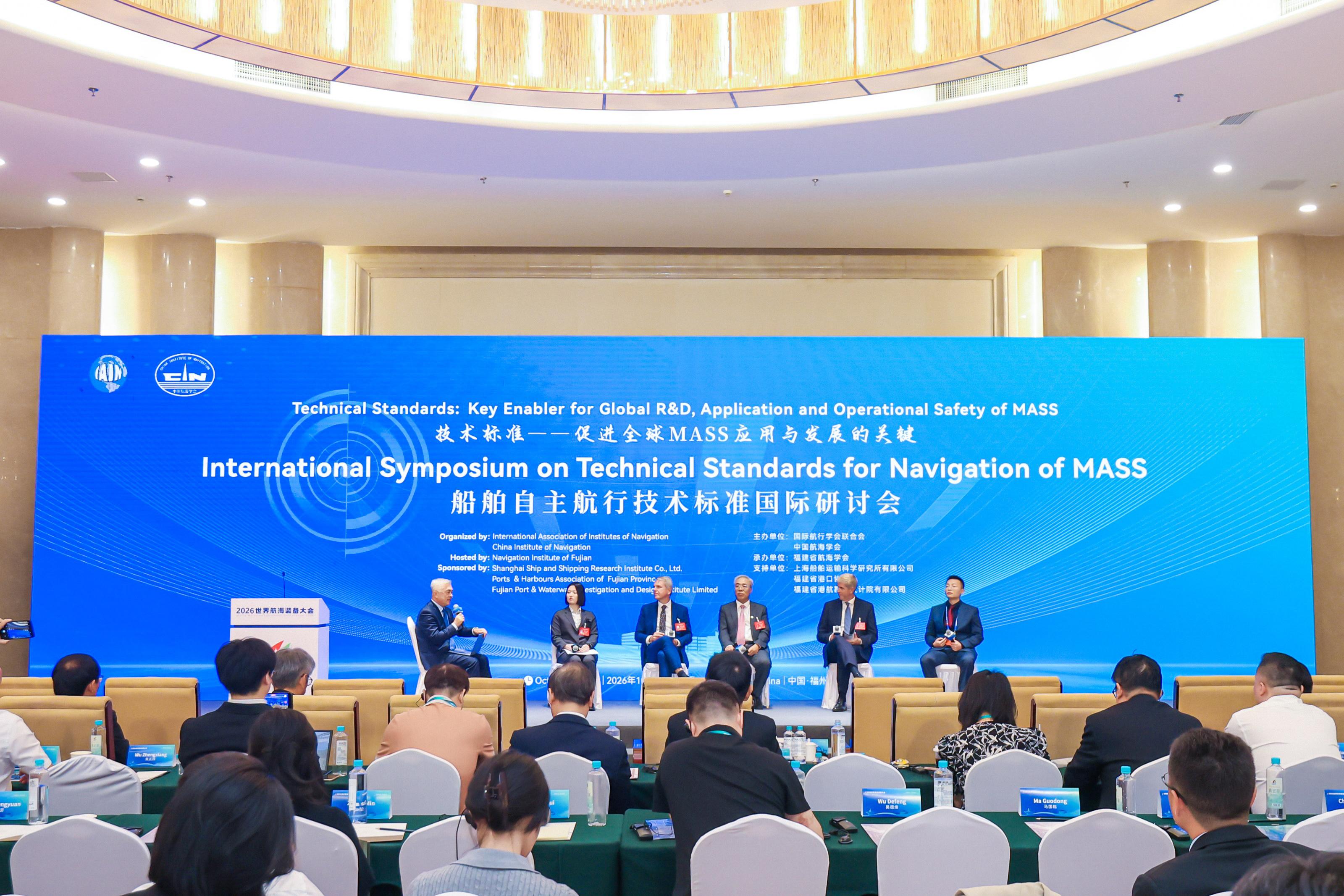
The existing rules have established a top-level regulatory framework for the global development of maritime autonomous surface ships, but additional technical specifications are needed for further improvement. In the future, all parties should focus on building related standards in areas such as test verification, remote control, and personnel training and support the continuous optimization of rules and standards with real-world operational data.
As autonomous ships transition from demonstration trials to commercial operations, gaps in lifecycle operation and maintenance and ancillary industry chains are becoming increasingly apparent. While the demonstration stage primarily verifies whether systems can safely achieve their designed functions, system lifecycle availability and maintainability will become new challenges post-commercialization. Experts have proposed that promoting the implementation of mandatory MASS rules requires not only the legislative work led by IMO but also the development of a technical platform by international technical organizations like IAIN, focusing on the unification of terminology systems, the creation of performance-oriented technical standards, and mechanisms for testing, verification, and experience sharing. This collaborative effort will empower efficient and green intelligent shipping development on a global scale.
On October 15, the IAIN held the second Executive Committee meeting of 2026 and the first Technical Committee meeting in Fuzhou. One of the core achievements of the meeting was the review and approval of IAIN's first technical standard, the "Maritime Autonomous Navigation Technology Terminology." This standard, focused on maritime autonomous surface ships, is organized into seven modules and includes 103 terms, incorporating 44 related terms from the IMO MASS rules and adding 59 new terms based on industry practices. The meeting also marked the first operational implementation of the IAIN Technical Committee and the first time a Chinese expert presided over the development of its standard system as IAIN President, demonstrating China's active role in deepening open collaboration and global maritime governance in the field of maritime autonomous surface ships.
IAIN is a non-profit international scientific organization jointly established by national-level and multinational navigational societies. The Chinese Institute of Navigation became a formal member of IAIN in February 1988 as the representative body for China. At present, Zhang Baochen, Vice President of the Chinese Institute of Navigation, serves as President of IAIN. On April 27, 2026, the IAIN Executive Committee decided to establish a Technical Committee, chaired by Zhang Baochen. The first secretariat is set in China and is managed by the Shanghai Ship and Shipping Research Institute.
-
The International Seminar on Autonomous Ship Sailing Technology Standards was held in Fuzhou.4660
-
The world's first ammonia fuel-dedicated bunkering ship completes fueling operations for an ammonia-powered bulk carrier.3938
-
The export of automobiles from the Taicang Port area of Suzhou Port grew by more than 80% year-on-year in the first nine months of this year.4419
-
Shanghai Maritime Surveying and Mapping Center Provides Precise Services to Energize Enterprise and Industry Development4998
-
The main project for the Gezhouba shipping capacity expansion has commenced.4986