
Controlled Temperature Prevents Tire Aging Risks
Temperature management in tire warehouses is crucial. In daily warehouse management, most managers focus on basic tasks such as tire sorting, stacking layers, and moisture and dust prevention, often neglecting the critical detail of temperature. In fact, the warehouse temperature and temperature fluctuations directly affect the storage life and performance of tires.
An unsuitable temperature environment won't immediately cause tire damage, but it will cause the rubber to age slowly and its performance to deteriorate continuously. This not only increases inventory losses but also poses safety hazards to tires entering the market and being used on vehicles—a hidden risk easily overlooked in tire storage.
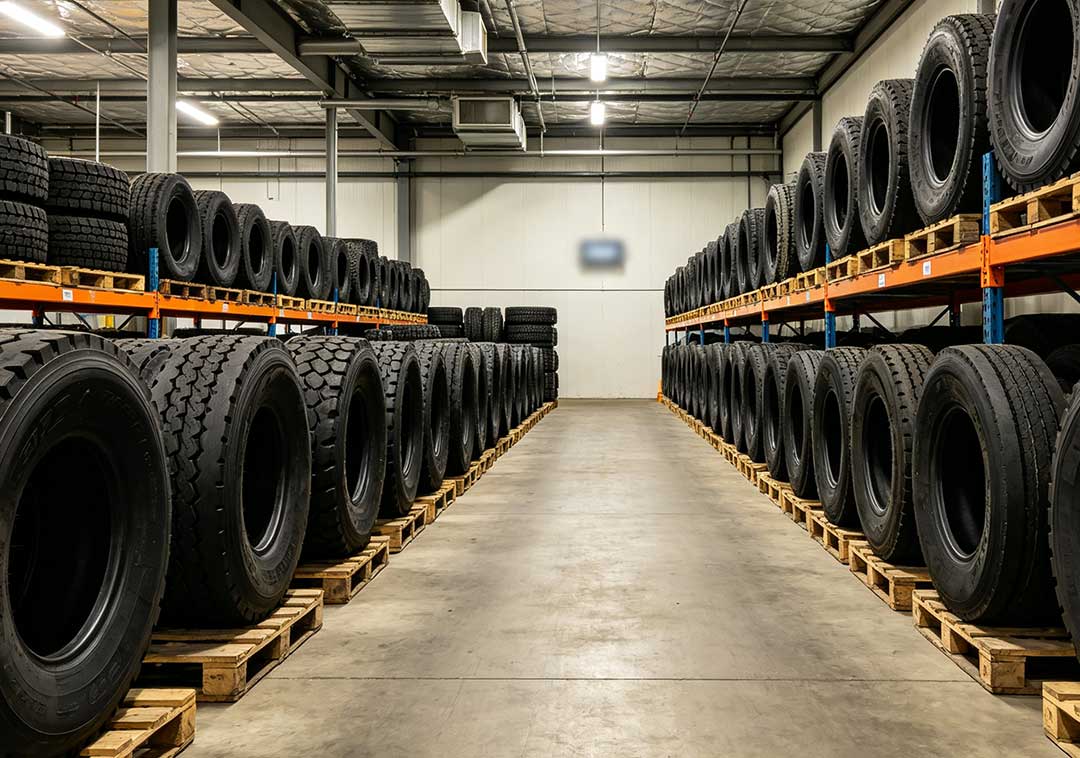
Tires are made primarily of rubber, combined with various additives and ply layers. Rubber aging and deterioration are closely related to temperature. Long-term industry practice and relevant material testing data show that the higher the ambient temperature, the faster the rubber oxidizes and ages. When the warehouse is in a high-temperature environment, antioxidants and plasticizers inside the tires will rapidly evaporate and be lost.
The originally flexible rubber gradually hardens and becomes brittle, with a significant decrease in elasticity and tensile strength. Many people have noticed that tires stored for more than half a year, appearing intact, often develop cracks and reduced wear resistance after being installed on vehicles. The main reason behind this is often the hidden aging caused by excessive storage temperatures.
According to current national standards for tire storage, the suitable temperature range for tire storage is -10℃ to 30℃. Based on years of practical experience in warehousing, a constant temperature environment of 10℃ to 25℃ is more conducive to long-term tire storage. Summer is a critical and challenging time for temperature control in tire storage.
Many simple warehouses, street-front storage areas, and storage areas near equipment rooms easily exceed the critical value of 30℃ in summer. Sustained high temperatures not only accelerate rubber aging but can also cause problems with the tire's multi-layered structure: the tread, sidewall, and ply layers have different coefficients of thermal expansion and contraction. Prolonged high temperatures weaken the interlayer adhesion, making tires prone to delamination and bulges when vehicles are driven at high speeds or under heavy loads.
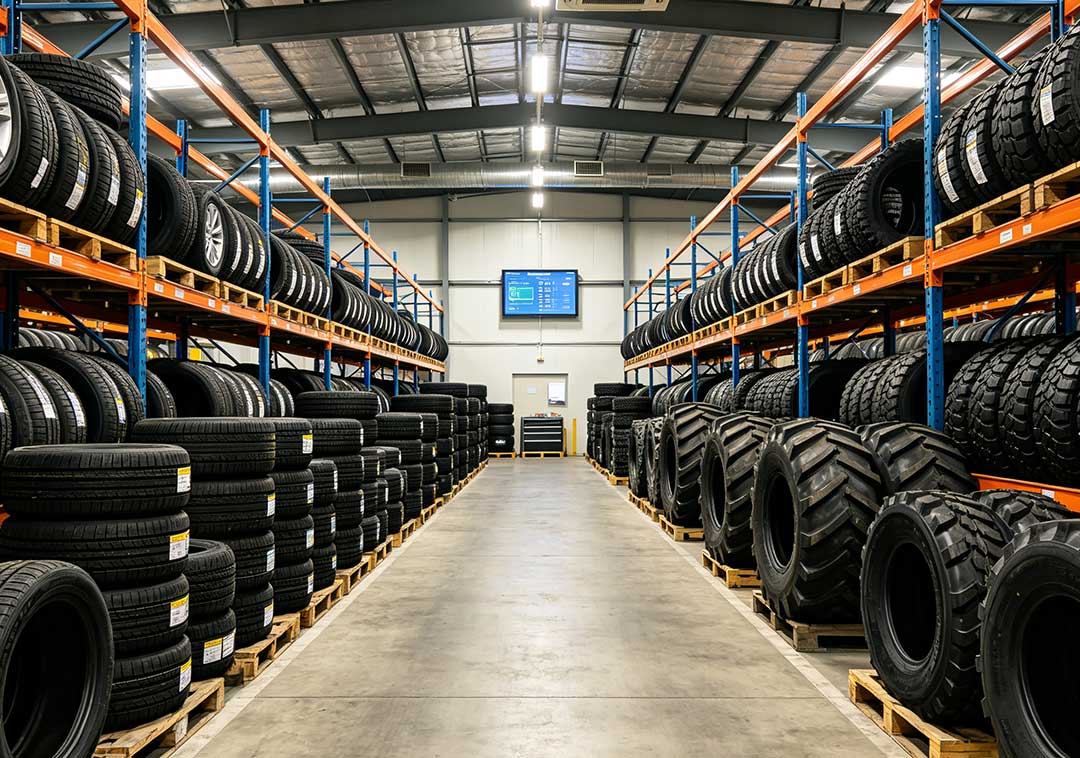
Simultaneously, ozone generated by surrounding equipment combines with the high temperatures, further accelerating tire aging. In daily management, all tires must be kept away from heating pipes, generator sets, cooling equipment, and other heat sources, with sufficient clearance for heat dissipation.
Not only high temperatures damage tires, but low temperatures can also harm stored tires, a common blind spot in tire warehouse management in northern regions. In winter, warehouses without insulation often experience nighttime temperatures below 0°C.
Excessively low temperatures cause rubber molecules to solidify and crystallize, leading to increased tire hardness and significantly reduced elasticity. Tires in this state may appear undamaged, but microscopic cracks invisible to the naked eye will develop inside. If handled and loaded directly at this time, these microcracks will rapidly expand during vehicle operation, directly impacting tire lifespan and driving safety.
Therefore, tires stored at low temperatures in winter must be transferred to a normal temperature environment and left to stand for at least 24 hours before being taken out of storage, allowing the tire body to fully recover its normal elasticity before use. In addition, warehouses must avoid excessive day-night temperature differences. Repeated hot and cold cycles continuously strain the tire structure, causing material damage far more severe than constant low temperatures.
Temperature control is never an isolated management aspect; it needs to be coordinated with humidity, light, and environmental cleanliness. The relative humidity for normal tire storage should ideally be maintained between 50% and 80%. High temperature combined with high humidity can easily lead to blooming and mold growth on the tire surface, damaging the rubber's surface structure. Direct sunlight through warehouse doors and windows, combined with ultraviolet radiation and high temperatures, significantly accelerates rubber aging.
Standardized warehouses typically have a well-planned layout of temperature and humidity monitoring points, regularly recording data and adjusting the storage environment according to seasonal changes: opening windows for ventilation, turning on cooling equipment, and providing shading in summer; and ensuring proper insulation in winter to stabilize the overall warehouse temperature. Smaller storage stores can also improve localized heat accumulation and excessive temperature differences by installing simple equipment such as insulated roller blinds and ventilation fans.
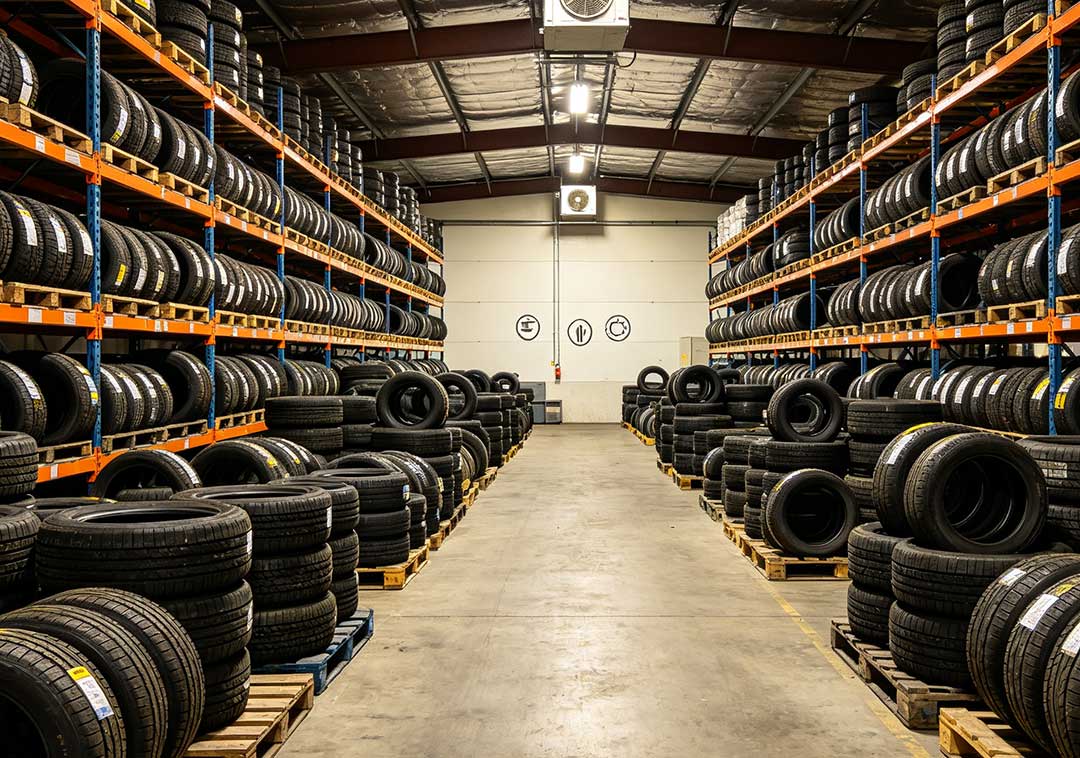
Different types of tires also have different temperature tolerances. High-performance tires for passenger cars and tires for construction machinery have more sophisticated formulas and more functional additives, making them more sensitive to temperature changes. Long-term storage should be strictly controlled below 25℃.
Ordinary agricultural vehicle tires and conventional bias-ply tires have a relatively wider tolerance range, but they should still not be stored in environments above 35℃ for extended periods. In daily inventory management, besides controlling warehouse temperature, it's crucial to implement the first-in, first-out (FIFO) principle based on temperature control. For tires stored for more than six months, if the storage environment temperature is too high, each tire must be inspected before being released to check for hidden aging, minor cracks, and other issues.
While the tire warehousing industry is becoming increasingly standardized, many small and medium-sized warehouses and auto parts stores still lack proper temperature control management. Careless storage leading to hidden tire damage and premature tire failure is not uncommon. In fact, the core of tire storage temperature control lies in maintaining constant temperature, isolating hot and cold sources, 24/7 monitoring, and differentiated management.
Stable and suitable storage temperatures better preserve the tire's factory quality, delay rubber aging, reduce inventory losses, and ensure tire safety from the source of storage. This is a highly cost-effective and indispensable basic warehouse management task.




