
How EVs Shift Noise Focus to Tires
With the rapid popularization of electric vehicles, a frequently mentioned yet often misunderstood phenomenon deserves the attention of the industry chain: when driving at medium to high speeds, the most significant noise source inside the electric vehicle has shifted from the powertrain to the tires.
Numerous user feedback reports indicate that, on the same road surface and at the same speed, the road and tire noise transmitted by electric vehicles is significantly more pronounced than that of gasoline-powered vehicles. This is not simply a matter of sound insulation engineering, but rather a reconstruction of the acoustic environment brought about by the powertrain system revolution.
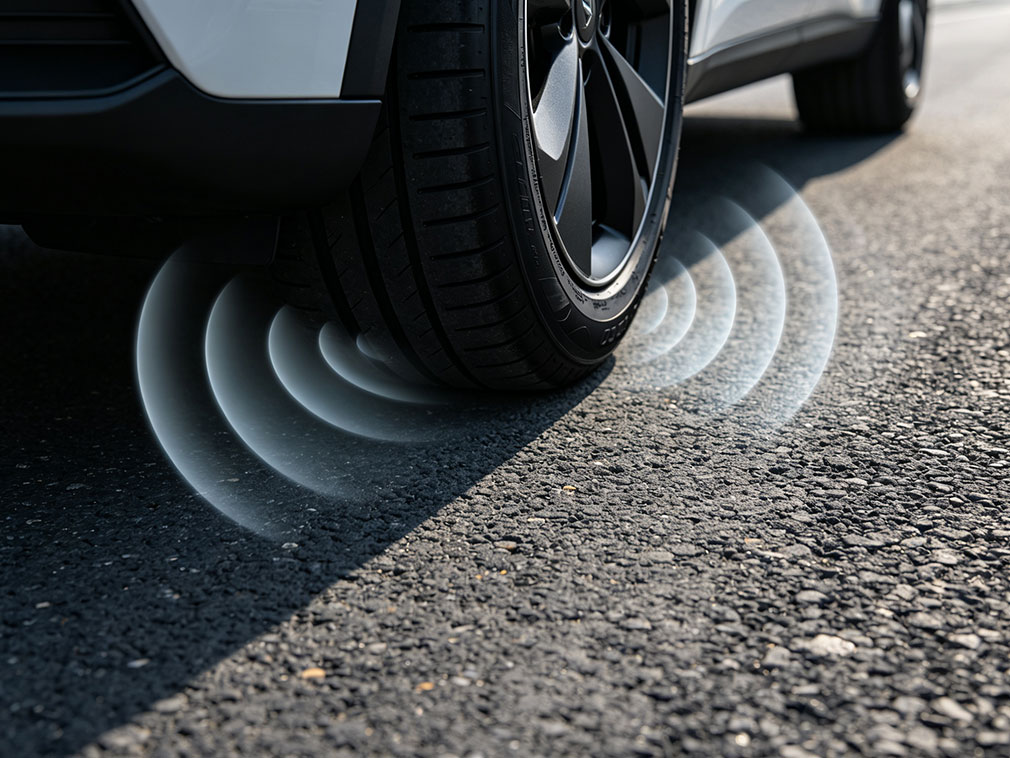
The Disappearance of the Masking Effect: From Background Noise to Auditory Focus
In the era of gasoline-powered vehicles, the operating noise of the engine and exhaust system provided a continuous auditory background for the cabin. This background sound objectively masked the noise of tire friction, gravel impact, and chassis vibration. After long-term adaptation, the human ear finds it difficult to isolate tire noise separately.
Electric vehicles fundamentally disrupt this balance. The electric motor operates extremely quietly, drastically reducing the cabin's background noise, and the previously masked tire and road noise instantly become the focus of sensory attention.
This is a classic example of the auditory highlighting effect in acoustics: the noise source doesn't become stronger, but rather the reference point is significantly reduced. Understanding this is a prerequisite for accurately assessing the NVH performance of electric vehicles.
Physical Amplification: The Game Between Vehicle Weight and Tires
The structural characteristics of electric vehicles further amplify tire noise at the physical level. To ensure range, the chassis needs to accommodate a large-capacity battery pack, making the overall vehicle weight generally more than 20% higher than that of a similarly sized gasoline vehicle.
The greater sprung mass results in higher tire contact pressure, and the tread pattern exerts stronger pressure on the air and engages more intensely with the road surface micro-textures during rolling, thus increasing the vibration energy and structural noise. This low-frequency rumble is transmitted into the cabin through the suspension and body, forming the unique continuous background noise of electric vehicles.
Meanwhile, range anxiety profoundly influences the choice of tire specifications. Most electric vehicles are equipped with low rolling resistance tires from the factory, with tread pattern and rubber compound formulation prioritizing energy reduction, while noise reduction is often secondary. On rough asphalt, grooved concrete, or gravel roads, low rolling resistance tires exhibit significantly higher mid-to-high frequency friction noise compared to comfort-oriented products, a recognized pain point in the mid-range electric vehicle market.

Road Condition Sensitivity and High-Speed Challenges
The contrast is even more pronounced under different road conditions. On newly paved, smooth asphalt, electric vehicles still offer an excellent quiet experience. However, once entering aging concrete roads, gritty sidewalks, or sections with loose gravel, the low-frequency noise generated by tire cavity resonance and the high-frequency hissing sound produced by tire tread friction increase dramatically. During high-speed cruising, wind noise growth is relatively gradual, and tire noise easily becomes the dominant noise source inside the vehicle. Prolonged exposure accelerates auditory fatigue, directly impacting the evaluation of ride comfort.
Differentiated Response: The Cost and Value of Acoustic Engineering
High-end electric vehicles have responded through systematic acoustic design, such as embedding sound-absorbing cotton inside tires, reinforcing wheel arch sound-absorbing materials, and introducing active noise cancellation systems to counteract low-frequency tire noise with reverse sound waves, striving for more refined sound quality control at the vehicle level.
However, for mainstream electric vehicles that dominate the market, due to cost constraints, original equipment manufacturer (OEM) acoustic packages are mostly designed with basic quietness as the goal, making it difficult to effectively suppress prominent tire noise. This gap directly leads to a significant differentiation in perceived long-distance comfort across different price ranges.
The Practical Path and Supply Chain Opportunities in the Aftermarket
From the user's perspective, some simple adjustments can bring perceptible improvements. Proper tire pressure management is often underestimated: deliberately increasing tire pressure to pursue longer range significantly increases tread stiffness and vibration transmission. Setting standard tire pressure according to the technical manual often achieves a better balance between energy consumption and quietness. Regularly removing stones from tire treads can also eliminate unnecessary localized noises.
For customers seeking superior quietness, switching to quiet tires specifically developed for electric vehicles is the most direct approach. These products, through optimized rubber compound formulation and tread design, effectively suppress resonance caused by road surface excitation. Simultaneously, upgrades to vibration damping and sound absorption in the wheel arch area offer high cost-effectiveness, blocking structural noise from the chassis with relatively low investment, creating a clear growth point for aftermarket acoustic material suppliers.
The increased tire noise in electric vehicles is not a manufacturing defect, but rather a reshaping of sensory experience brought about by powertrain changes. While gasoline vehicles passively mask road noise with engine noise, electric vehicles bring this previously hidden noise source to the forefront. For OEMs, achieving more balanced sound quality at an acceptable cost is key to enhancing product competitiveness.
For tire, acoustic material, and NVH solution suppliers, this change signifies new R&D directions and stable market growth. As electric vehicles increasingly become mainstream, those who can better manage "audible" noise within a "silent" world will gain an advantage in the next phase of user experience competition.




