Sulfur Surge Impacts Tire Costs
In June 2026, the Chinese domestic sulfur powder market experienced a significant price surge, with market quotations breaking through the 10,000 yuan per ton mark, setting a new industry record. As of June 7th, the reserve price for solid sulfur auctions at Shandong local refineries reached 9,800 yuan/ton, with actual transaction prices successfully exceeding 10,000 yuan/ton.
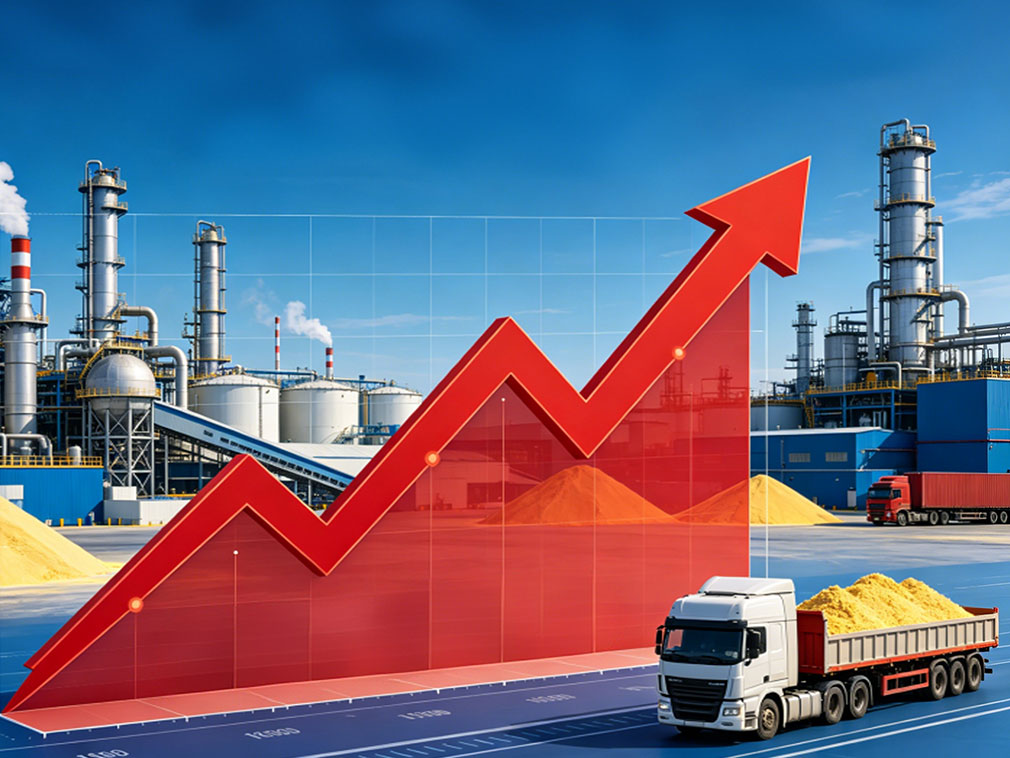
In contrast, at the beginning of 2026, the price of sulfur powder in the same region was only 3,850 yuan/ton, representing an increase of over 150% in six months, far surpassing the historical high of 5,980 yuan/ton set in 2008, completely shattering the industry's price ceiling.
Sulfur powder is a core raw material in the vulcanization process of tire manufacturing, playing an irreplaceable role in the rubber vulcanization reaction. During tire production, sulfur powder forms stable sulfur bonds between rubber molecular chains, transforming soft, easily deformable raw rubber into highly elastic, high-strength, wear-resistant, and heat-resistant cured rubber, directly determining the tire's durability, grip, and lifespan.
Data shows that sulfur accounts for approximately 1.5%-2.0% of ordinary tire rubber compounds. Although this proportion is low, its role in the vulcanization process is irreplaceable. If sulfur supply becomes tight or prices fluctuate drastically, tire companies not only face the risk of supply disruptions but also incur significant cost increases.
The core reason for the recent surge in sulfur powder prices lies in the imbalance between supply and demand, compounded by multiple external factors. From the supply side, my country's sulfur import dependence exceeds 50%, with approximately 56% originating from the Middle East. Following the outbreak of geopolitical conflicts in the Middle East at the end of February 2026, shipping through the Strait of Hormuz, a major sulfur-producing region globally, was disrupted. This waterway handles 44%-50% of global seaborne sulfur shipments, leading to a sharp decline in Middle Eastern sulfur exports.
From January to April, the number of sulfur shipments imported into my country from the Middle East decreased by 67%, and the volume decreased by 75%. Export contract prices from countries such as Qatar and Kuwait have continued to rise, with the June contract price reaching $805 per ton.
Meanwhile, domestic port inventories continue to decline, currently standing at only about 900,000 tons, a significant decrease from 2 million tons in the same period last year. This is only enough for 19 days of nationwide consumption, further exacerbating the market's "shortage of goods" situation.
From the demand side, rigid support remains strong, and market sentiment has further amplified the price increase effect. In the agricultural sector, phosphate fertilizer production accounts for 60% of sulfur demand, and the peak spring planting season keeps demand stable. In the industrial sector, industries such as tires, titanium dioxide, and sulfuric acid continue to have rigid demand, especially the tire industry, which maintains a high operating rate.
Furthermore, major domestic refineries prioritize supplying phosphate fertilizer companies, forcing chemical and tire companies to purchase at high prices. Holders of goods are reluctant to sell, creating a panic-driven purchasing cycle of "the higher the price, the more they buy," pushing prices up continuously.
It is worth noting that sulfur, as a byproduct of oil and gas production, is highly correlated with international oil price trends. Since 2026, international oil prices have fluctuated upwards, leading to a decrease in sulfur by-product production from oil and gas companies. Coupled with refinery maintenance and production cuts in the Middle East, the limited new global sulfur supply has failed to match the increased demand, providing long-term support for rising prices.
Currently, sulfur powder prices remain at historically high levels, putting significant pressure on the tire industry chain. Leading tire companies, thanks to long-term cooperation agreements and inventory reserves, are able to maintain stable production, but their profit margins have been significantly compressed.
Small and medium-sized tire companies face the dual pressures of soaring procurement costs and tight supply, forcing some to reduce production or adjust production plans, accelerating industry consolidation. At the same time, the downstream end-market is experiencing poor transmission, making it difficult to raise tire prices, and the profit distribution pattern of the industry chain is being restructured.
In the short term, with the geopolitical conflict in the Middle East unresolved, port inventories remaining low, and imports recovering slowly, sulfur powder prices are likely to remain high and volatile, with the possibility of further increases.
In the long term, domestic enterprises need to accelerate the expansion of diversified import channels, improve the utilization rate of alternative raw materials such as pyrite, optimize production processes to reduce sulfur consumption, and strengthen supply chain risk management to cope with the challenges brought about by sharp fluctuations in raw material prices.
This historic surge in sulfur powder prices has not only reshaped the industry's supply and demand landscape but also forced the tire and related chemical industries to accelerate their transformation towards low-cost, high-resilience production.