The noise reduction logic of silent cotton tires
Compared to regular silent tires, sound-absorbing cotton tires offer a tangible noise reduction advantage: relying on custom-developed polyurethane sound-absorbing cotton, they actively absorb the rolling noise generated by the tires during vehicle operation.
The two types of tires employ fundamentally different noise reduction strategies. Ordinary silent tires primarily rely on optimized tread design and adjusted rubber materials to reduce noise at its source, a passive approach.
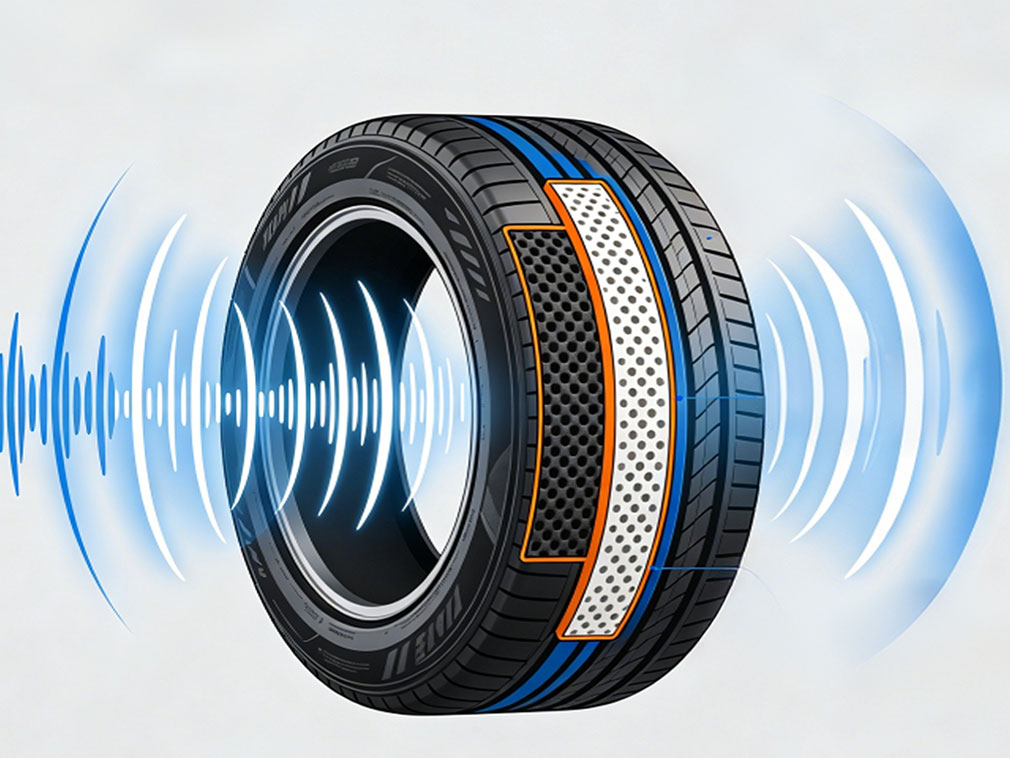
Sound-absorbing cotton tires, on the other hand, go beyond source control, directly absorbing existing noise within the tire itself, achieving active noise reduction. Reputable sound-absorbing cotton tires on the market don't rely solely on the sound-absorbing cotton; they combine tread optimization, tire structure tuning, and internal sound-absorbing materials in a multi-pronged approach to suppress tire noise.
Many car owners mistakenly believe that tire noise is simply the sound of tires rubbing against the road surface. In fact, the most annoying tire noise during daily driving comes from the low-frequency resonance of the tire's internal cavities. During driving, the tire constantly contacts the ground and deforms, causing the air inside the tire cavity to repeatedly contract and expand, continuously producing a low-frequency humming sound. This muffled sound becomes more pronounced at higher speeds.
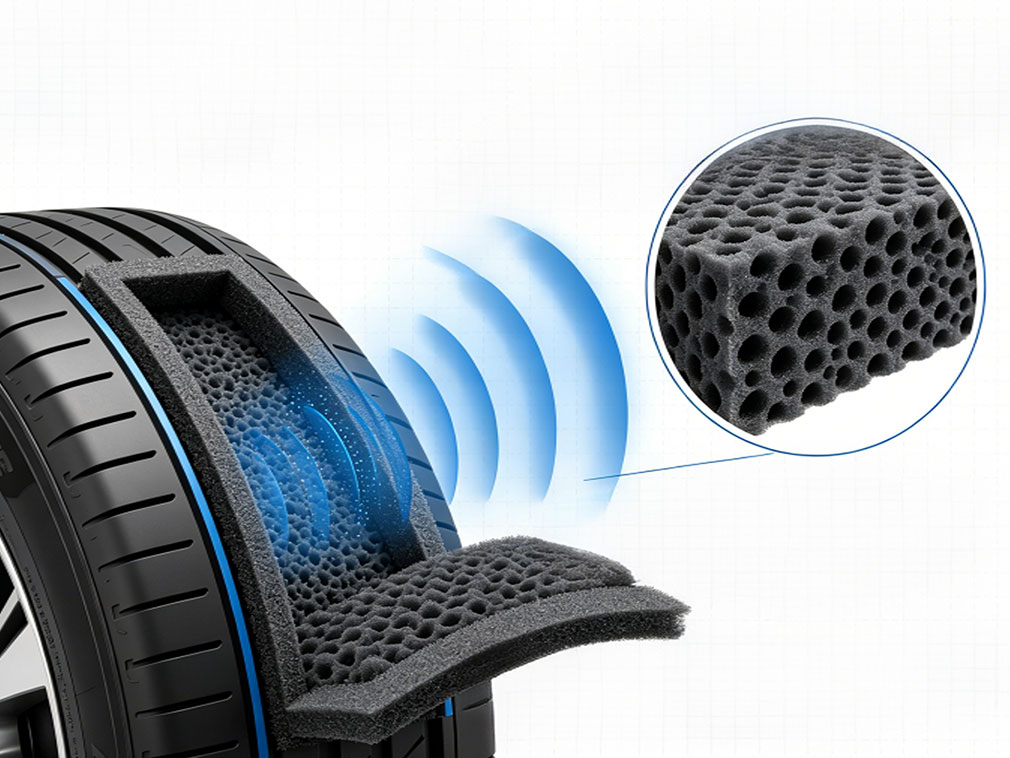
The polyurethane sound-absorbing cotton pasted inside tires is not a generic sound-absorbing sponge. Manufacturers adjust the sponge's thickness, pore size, and placement specifically based on different tire sizes and noise frequencies at typical driving speeds, precisely matching the noise frequency band of tire cavity resonance.
This sound-absorbing cotton has a dense microporous structure that converts sound wave vibrations into heat, dissipating them. Its sound absorption effect is far superior to ordinary sound-absorbing materials, especially significantly reducing the impact noise from tire bounce when the vehicle drives over potholes or gravel roads.
It is precisely because of this targeted frequency optimization design that the sound-absorbing cotton tires consistently deliver noise reduction on smooth asphalt roads, hard concrete roads, and rough, bumpy unpaved roads. For daily city commuting and long-distance highway travel, the interior remains remarkably quiet. According to data from the China Automotive Technology and Research Center (CATARC) in 2025, for the same model and specification tires, adding specialized polyurethane sound-absorbing cotton can reduce overall tire noise by 3-8 decibels.
The improvement in the most annoying low-frequency resonance noise at high speeds is most noticeable, and the enhanced driving comfort is easily perceived. Today, car owners increasingly value tire quietness, a natural consequence of advancements in vehicle manufacturing technology. In the past, most cars were gasoline-powered, and the engine, exhaust, and transmission generated significant mechanical noise, completely masking the subtle noise of tire rolling.
Most people couldn't perceive this tire noise. At that time, tire development focused on wear resistance, grip, and fuel efficiency; quietness was merely an added attribute, not a primary focus for manufacturers.
In recent years, sound insulation technology in gasoline-powered vehicles has continuously improved, significantly reducing mechanical noise. Furthermore, the widespread adoption of new energy vehicles, which lack engines and transmissions, results in virtually no power source noise during driving. With the overall background noise greatly reduced, previously masked tire noise has become prominent, becoming a major source of noise affecting cabin quietness.
Compared to gasoline-powered vehicles, electric vehicles have a lower tolerance for tire noise. Electric vehicle motors operate very quietly, and during long drives, even slight tire noise is amplified, directly impacting the passenger experience. Simultaneously, tire vibrations are transmitted to the chassis, further affecting the overall driving and riding quality.
The real demands of the market are forcing major tire brands to upgrade their noise reduction technologies. Noise-reducing tires, once only found on high-end luxury cars, are now gradually being adopted by family gasoline vehicles and mainstream new energy vehicles, becoming a standard feature in the tire industry.
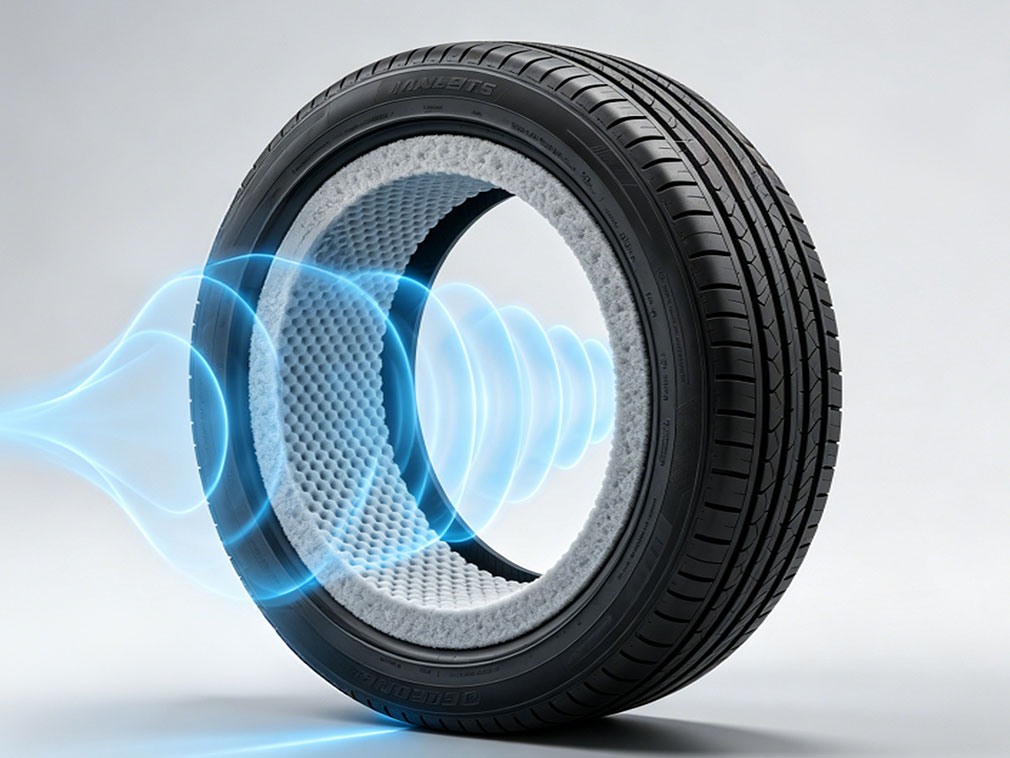
Currently, manufacturers are continuously iterating on noise-reducing tire technology, optimizing the weight and bonding process of the noise-reducing material without compromising noise reduction capabilities. This addresses the shortcomings of early noise-reducing tires, such as increased weight and impact on vehicle range and fuel consumption, allowing the tires to simultaneously achieve the three core performance characteristics of quietness, comfort, and low energy consumption, perfectly matching the current trend of automotive electrification and high cabin quietness.