Shanghai’s import and export volumes hit new monthly records for two consecutive months in the first quarter, with a year-on-year increase of 21.9%.
In the first quarter of this year, Shanghai's foreign trade saw simultaneous growth in volume and quality. In terms of scale, from January to March, Shanghai's total import and export value reached 1.23 trillion yuan, a significant year-on-year increase of 21.9%. In March alone, the import and export value climbed to 431.04 billion yuan, setting both quarterly and monthly records. Structurally, imports and exports showed balanced improvement, with imports totaling 690.03 billion yuan and exports 537.37 billion yuan, up 26.6% and 16.3% year-on-year, respectively.
Specifically, Shanghai's foreign trade first demonstrated the "strength" of high-end leadership. Among them, the "new three" products—electric passenger vehicles, lithium batteries, and solar cells—continued to lead, with exports more than doubling in the first quarter. Other equipment and smart hardware also showed strong growth momentum, such as ships and marine engineering equipment, as well as ship-to-shore cranes, which seized the global delivery peak opportunities, surging by 54.7% and 98.5%, respectively. In March this year, Hudong-Zhonghua Shipbuilding exported the world's largest dual-fuel-powered container ship with a capacity of 24,000 TEU, the "CMA CGM Palais Royal," valued at over 1.7 billion yuan, marking the highest value for similar export products from China. Additionally, exports of intelligent equipment such as industrial robots, surgical robots, and intelligent bionic robots from Shanghai also doubled.
Secondly, Shanghai's foreign trade continues to expand in "breadth." Shanghai maintained its import and export advantages with the EU, Japan, and South Korea, with total trade with these developed markets reaching 463.36 billion yuan in the first quarter, growing by over 30%. Meanwhile, Shanghai demonstrated adaptability to emerging global markets, with imports and exports to ASEAN, Latin America, and Africa increasing by 16.4%, 16.9%, and 23.5%, respectively. Overall, in the first quarter, Shanghai achieved import and export growth with 126 countries and regions. Four new partners with foreign trade volumes exceeding 10 billion yuan were added, namely South Africa, Belgium, Spain, and Canada, bringing the total number of members in Shanghai's "10 Billion Club" to 29.
Thirdly, Shanghai's foreign trade also exhibits the "depth" of services. In the first quarter, Shanghai's import growth rate exceeded its export growth rate, reflecting the city's commitment to "selecting the best globally" for a better life. One major contributor to this is the "facilitation measures for the inspection of first-import consumer goods" first introduced nationwide by Shanghai Customs last year.
Under these measures, Shanghai's commerce authorities recommend key first-launch enterprises and new product lists. Shanghai Customs implements "qualified assurance and rapid clearance" for first-exhibition and first-show items as well as small-batch new products that do not enter circulation. For large-batch imports, products can clear customs quickly with test reports, without the need for repeated testing. Launched at the end of April last year, the measures have so far included 32,000 first-launch new products in the "white list," benefiting 34 multinational brand headquarters and 62 internationally renowned brands in Shanghai. A total of 20,000 batches of first-launch new products from 28 countries, valued at over 460 million yuan, have cleared customs smoothly. This year, the initiative has been further upgraded, moving the application, recognition, and evaluation of first-launch new products online, and accelerating the recognition frequency from "quarterly" to "monthly."
Leveraging the advantages of its international shipping hub, Shanghai continues to deeply serve the Yangtze River Delta and the Yangtze River Economic Belt. On January 27, Shanghai achieved two-way connectivity in its pilot business using a multimodal transport supervision model. This pilot business ensures simpler cargo data reporting, more convenient customs procedures, and more flexible logistics operations. Additionally, the "linked unloading" supervision model implemented by Shanghai Customs in Jiangsu, Zhejiang, Anhui, and Jiangxi is becoming increasingly mature, now covering 15 inland feeder ports across four provinces, including Taicang in Jiangsu, Wuhu in Anhui, Anji in Zhejiang, and Jiujiang in Jiangxi.
Qu Huili, Director of the Statistics and Analysis Department of Shanghai Customs, told reporters that in March, Shanghai's imports and exports to the Middle East declined, with the year-on-year growth rate for the first quarter turning negative compared to the positive growth in the first two months. However, the total value of Shanghai's imports and exports to the Middle East accounts for less than 10% of the overall figure, so the direct impact of the war is relatively limited.
Shanghai has keenly grasped the global trends of crude oil shortages and significant gaps in new energy, driving a dual leap in the scale and quality of green product exports.
Shanghai's new energy exports have formed a "chain-based overseas expansion" pattern, covering power generation, transmission, distribution, and storage. In the first quarter, Shanghai's lithium battery exports reached 15.26 billion yuan, nearly doubling. During the same period, Shanghai's exports of energy storage equipment to the Middle East surged from over 10 million yuan to over 1.3 billion yuan, exports of photovoltaic products to Africa grew 2.8 times, and exports of wind power generation equipment to Central Asia increased by 5.4 times.
(Source: Jiefang Daily, Reporter Li Ye)
-
Bohai Bay Port strives to become a benchmark for the transformation of small and medium-sized ports.4111
-
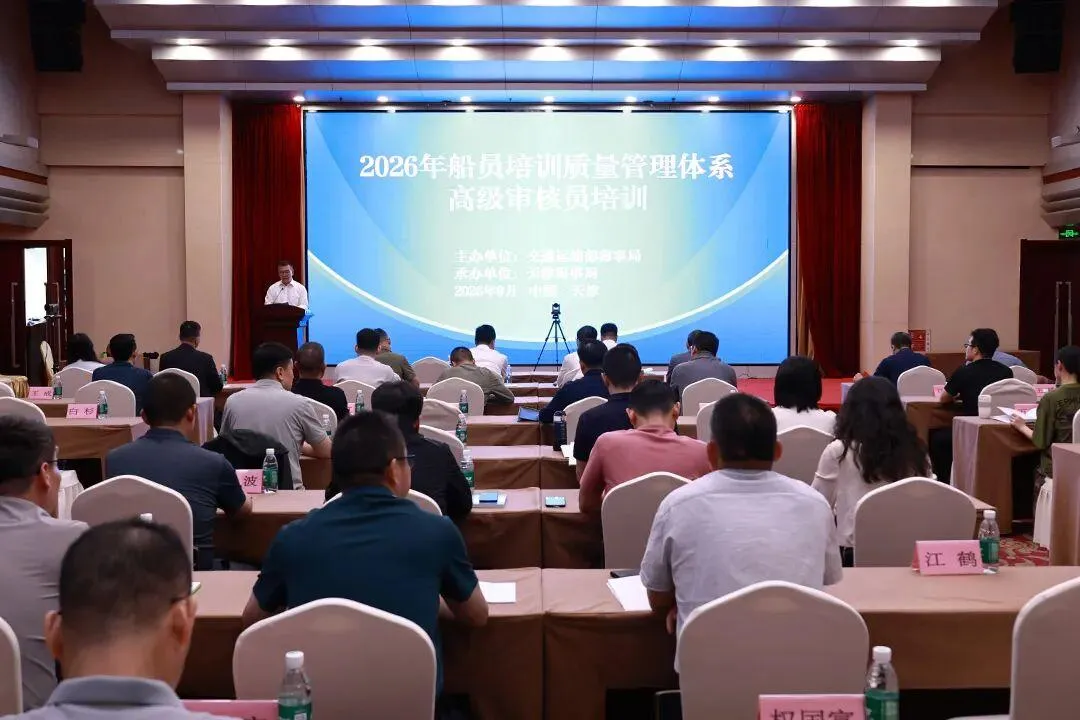
The 2026 Advanced Auditor Training Course for Crew Training Quality Management System Opens in Tianjin.4975
-
Maritime navigation and protection join forces to establish a "safety line" for fishing in the East China Sea.4636
-
The rotating duty of the light buoy in the Dalian sea area has been completed.3143
-
Chipolbrok's vessel "NOWOWIEJSKI" Set Sail Carrying the Second Shipment of TBM Equipment for Serbia's First Metro Construction Project4356