The dream of connecting rivers to the sea becomes reality with this monumental project.
On September 7, the Guangxi Zhuang Autonomous Region Government Information Office held a press conference to announce that the Pinglu Canal will be completed and open to navigation on September 16, bringing a century-old dream closer to reality. After four years of hard work, the Pinglu Canal is now ready for navigation. The integrated smart dispatch platform for Guangxi's water transportation across rivers, seas, and oceans is fully operational, and work on emergency support, cargo organization, and operational preparations has been completed. All operational procedures are in place.
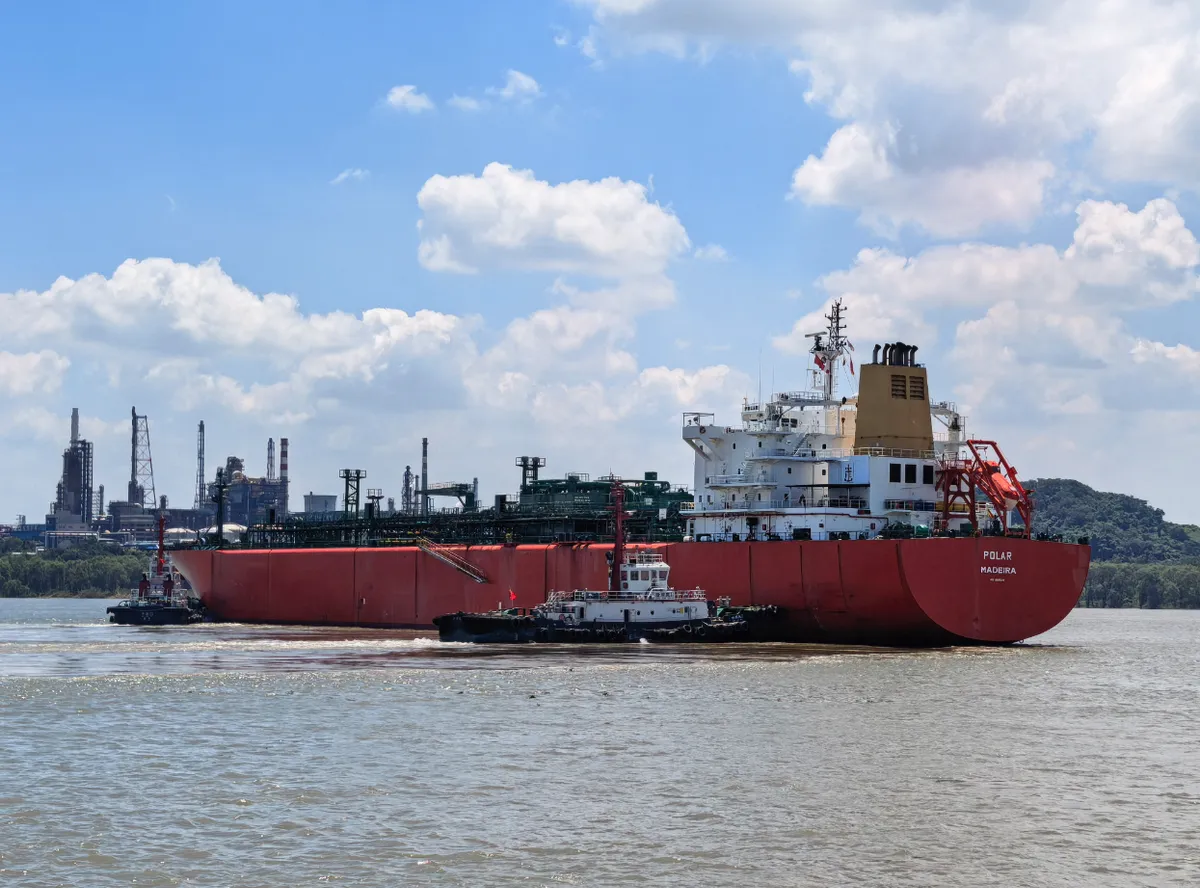
As the first national-level canal project connecting rivers and seas since the founding of the People's Republic of China, the Pinglu Canal has a total investment of approximately 72.7 billion yuan and a total length of 134.2 kilometers. It starts from the Pingtang River Estuary in the Xijin Reservoir area of Hengzhou City, Nanning, in the north, passes through Luwu Town in Lingshan County, Qinzhou, and directly connects to the Beibu Gulf along the Qin River in the south. Built to inland waterway Class I standards, it can accommodate ships of up to 5,000 tons.
The entire canal features three major cascade hubs: Madao, Qishi, and Qingnian. From start to finish, the water level drops by 65 meters, equivalent to the height of a 20-story building. Among them, the Madao hub has set two world records: the largest water level drop for a provincial water lock and the largest inland provincial water lock in scale.
Zhang Zhiwen, Deputy Secretary-General of the Guangxi Zhuang Autonomous Region Government and spokesperson for the regional government, introduced that since the project began, Guangxi has adhered to high standards and high quality. The project has been built with "four first-class" standards: first-class technical standards, first-class construction quality, first-class schedule control, and first-class site management. It has also been developed as a green project with "four optimals": optimal ecological protection, optimal soil erosion control, optimal resource conservation, and optimal green and low-carbon development. Additionally, it has been constructed as a clean project with "three strengths": strong responsibility implementation, strong internal control mechanisms, and strong external supervision. The goal is to make the Pinglu Canal a model for major projects in the new era.
One river opens, and hundreds of industries thrive; one lock opens, and thousands of ships flow. After the Pinglu Canal opens to navigation, goods from the southwest region will have their inland waterway journey to the sea shortened by more than 560 kilometers compared to traditional routes. The distance to major ASEAN ports will also be significantly reduced, and comprehensive logistics costs will decrease by 18% to 30%. This will save society over 5 billion yuan in transportation costs annually. These tangible benefits will effectively reduce business operating costs, facilitate domestic and international trade flows, boost income and prosperity for the people, and comprehensively reshape the logistics corridor and economic geography of the southwest region, injecting strong momentum into high-quality regional development.
The Pinglu Canal is divided by the vertical projection line on the southern edge of the Qinjing Bridge deck on the Lanhai Expressway. The northern side is inland water, while the southern side is maritime territory. In the past, inland ships could not directly enter the sea and had to transfer at ports to unload cargo. Now, this section of water has been designated as the nation's first "equivalent to Class A navigation zone," allowing inland ships to enter the seaport terminals of the Qinzhou Port area via the Pinglu Canal for legal berthing and loading/unloading without the need for an additional transfer. The Maowei Sea anchorage near the estuary is gradually being improved, enabling sea vessels and international ships meeting regulatory requirements to directly enter the Pinglu Canal from the Beibu Gulf.
Navigation is not the end but a brand-new starting point for development. Guangxi will make every effort to ensure the smooth operation of navigation, continuously optimize the inland waterway network, upgrade and expand the Xijiang shipping trunk line, open up interprovincial waterway channels between Yunnan, Guizhou, and Guangxi, and focus on the coordinated linkage between inland ports and Beibu Gulf ports. It will also continue to improve the infrastructure and system for river-sea intermodal transport, accelerating the construction of a green, efficient, and seamlessly connected comprehensive three-dimensional transportation network.
Based on the overall layout of "one axis leading, two wings coordinating, land-sea integration, and full-region orientation towards the sea," Guangxi will focus on creating a "vein-like" maritime industrial layout with the Pinglu Canal economic belt as the main axis and other areas of the region as branches. This will smooth internal and external logistics circulation, activate new momentum for maritime development, proactively align with major strategies such as the Guangdong-Hong Kong-Macao Greater Bay Area, the Yangtze River Economic Belt, and the Hainan Free Trade Port, deepen cross-regional coordinated development, and better serve the construction of a new development pattern through land-sea integration and internal-external linkage.
-
Bohai Bay Port strives to become a benchmark for the transformation of small and medium-sized ports.4113
-
The 2026 Advanced Auditor Training Course for Crew Training Quality Management System Opens in Tianjin.4980
-
Maritime navigation and protection join forces to establish a "safety line" for fishing in the East China Sea.4640
-
The rotating duty of the light buoy in the Dalian sea area has been completed.3146
-
Chipolbrok's vessel "NOWOWIEJSKI" Set Sail Carrying the Second Shipment of TBM Equipment for Serbia's First Metro Construction Project4360