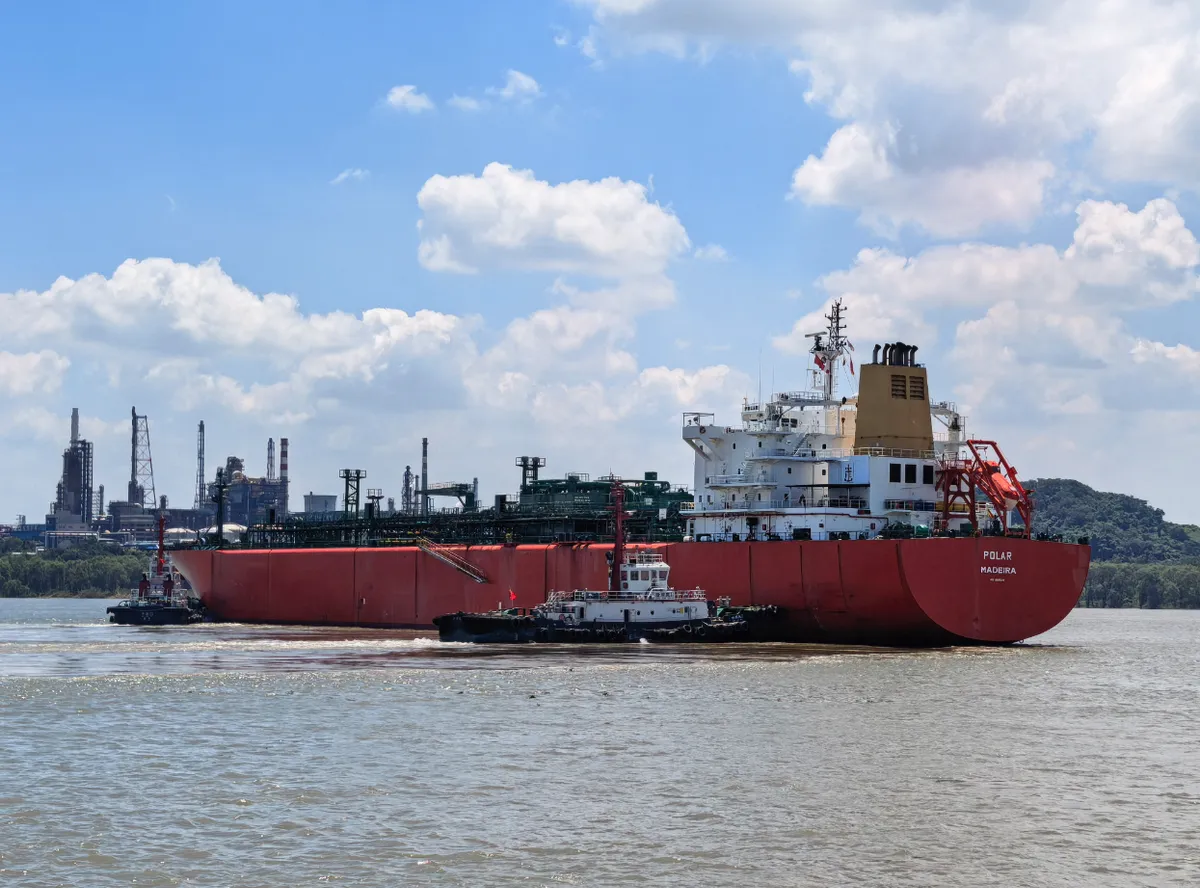
Tianjin Maritime Bureau solidly ensures safety supervision for oilfield shuttle ships over the National Day holiday.
During the National Day holiday, the Tianjin Maritime Safety Administration adhered to the principle of "safety first, prevention-oriented, and comprehensive governance," proactively planning and deploying measures. Leveraging pre-holiday hazard inspections, full-process onboard supervision, coordinated escort support, accountability implementation, and emergency duty as core actions, it strengthened regulatory measures, enforced accountability, and solidified the safety regulatory defenses for offshore oilfield rotation vessels. This effectively prevented and mitigated maritime traffic safety risks and ensured the safe travel of personnel engaged in offshore oil and gas production operations.
Focus on pre-holiday hazard inspections to strengthen source control
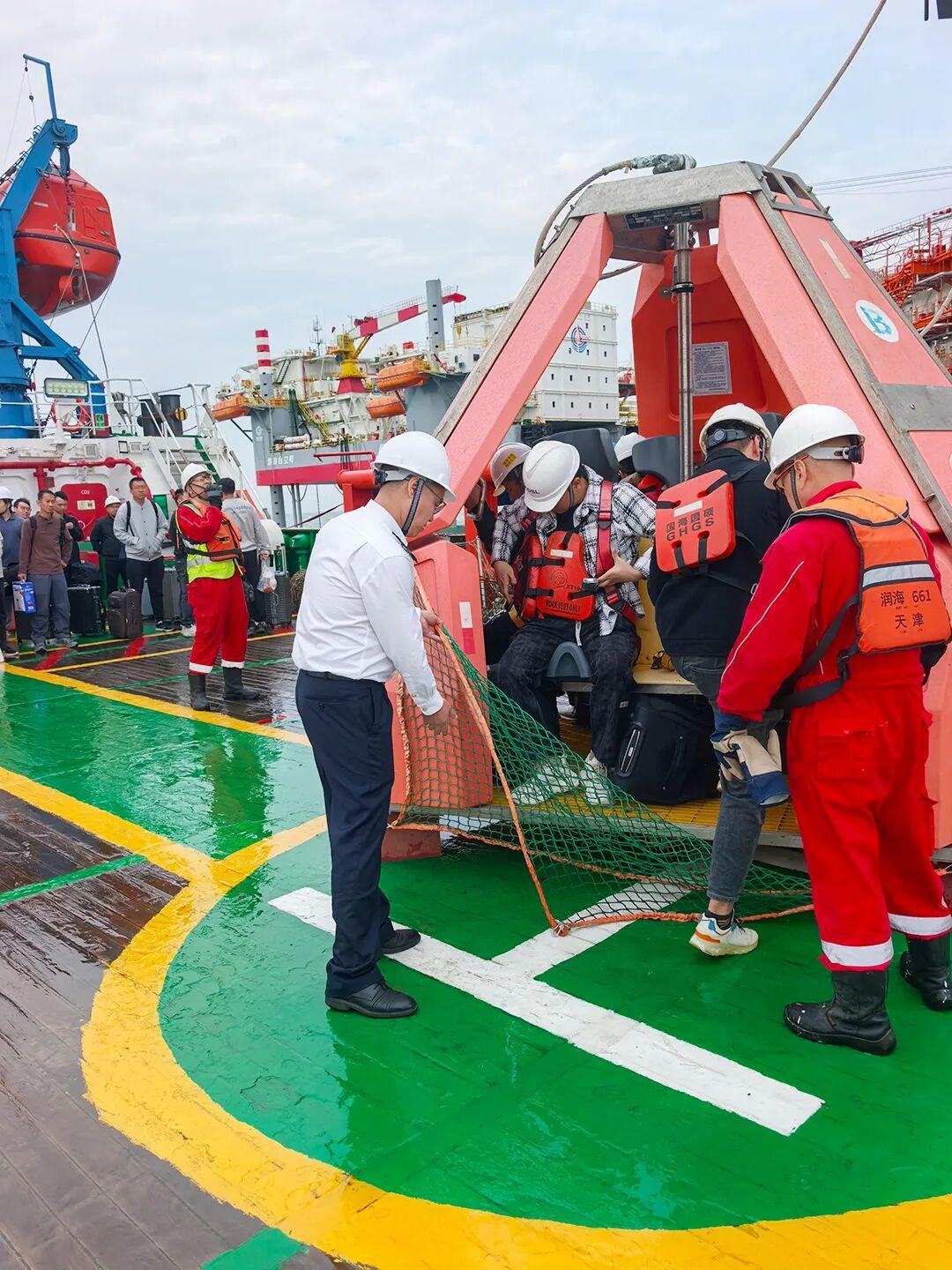
Prior to the holiday, the Tianjin Maritime Safety Administration proactively established communication mechanisms with oilfield rotation vessel management companies to obtain expected holiday schedules in advance. It gathered 39 holiday rotation plans involving an estimated transport of 2,057 people, conducted in-depth risk assessments, and implemented proactive prevention measures. Additionally, the administration completed pre-holiday inspections on four operating rotation vessels in the jurisdiction, achieving full inspection coverage and identifying and rectifying over 20 potential hazards. This ensured that vessels operated without technical defects.
Focus on full-process onboard supervision to strengthen control
Given the concentrated personnel and frequent trips of rotation vessels during the holiday, the Tianjin Maritime Safety Administration organized enforcement personnel to implement onboard supervision measures. As of October 5, the administration carried out onboard supervision across 8 trips, ensuring the safe travel of more than 440 personnel with accumulated onboard supervision exceeding 620 hours. Enforcement personnel monitored vessel navigation, docking and departure, and the boarding and disembarkation processes. Emphasis was placed on inspecting crew operational competencies, compliance with navigation rules, passenger safety management, and emergency response implementation during adverse weather conditions, ensuring the safety and controllability of rotation vessel operations throughout the duration.
Focus on coordinated escort support to strengthen collaborative handling
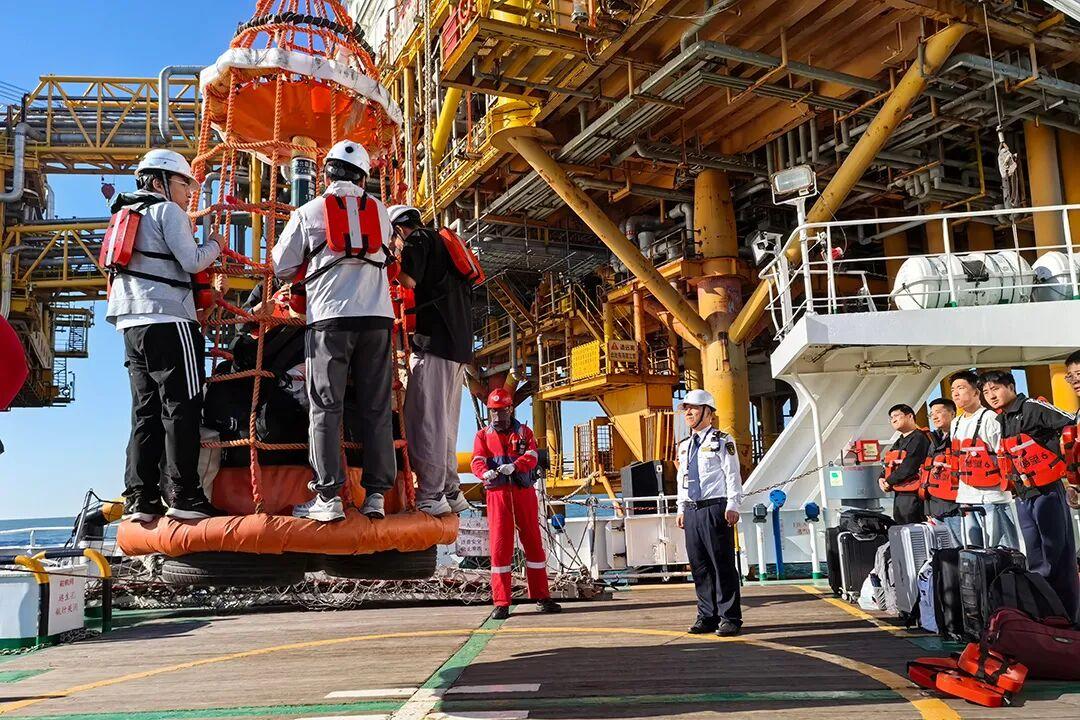
In terms of escort support, the Tianjin Maritime Safety Administration urged relevant units to coordinate and pre-allocate escort vessels for each rotation trip, establishing a coordination mechanism between rotation vessels and escort vessels. As of October 5, a total of 21 escort vessel trips were coordinated, ensuring full escort protection for each rotation vessel’s every trip. Responsibilities for escort vessels were clarified, requiring them to maintain smooth communication, monitor rotation vessels’ navigation status, and promptly handle any emergencies. This significantly enhanced the safety assurance capacity for rotation vessel navigation and effectively reduced maritime navigation risks.
Focus on accountability implementation to strengthen risk prevention
The Tianjin Maritime Safety Administration also urged rotation vessel operators to strictly implement a 24-hour holiday key-period duty system, clearly defining duty personnel and job responsibilities. This ensured uninterrupted duty phone service and accurate, timely information transfer. Operators were required to establish daily hazard inspection mechanisms and conduct comprehensive self-checks on systems like propulsion, steering, firefighting and lifesaving equipment, and mooring equipment before departure each day. As of October 5, operators conducted 20 self-inspections, identified over 70 potential hazards, established hazard inspection records, and ensured thorough inspection without omissions and closed-loop management for issue rectifications, effectively fulfilling their safety accountability.
Focus on emergency duty to strengthen rapid response
Regarding emergency duty, the Tianjin Maritime Safety Administration strictly implemented holiday duty requirements. The command center was staffed with a 24-hour duty station, with leadership overseeing duty shifts and designated personnel on duty. As of October 5, 15 duty personnel were arranged, closely monitoring changes in local maritime weather conditions, issuing 9 special weather reports and severe weather warnings, and fully tracking vessel dynamics in the jurisdiction. This enabled quick response and effective handling of emergencies, ensuring sustained maritime traffic safety in the jurisdiction.
Next, the Tianjin Maritime Safety Administration will continue to prioritize safety production, deepen communication and collaboration with oilfield enterprises and rotation vessel management companies, improve the long-term safety regulatory mechanism, intensify on-site enforcement inspections, strengthen emergency duty and early warning measures, and urge companies to fulfill their safety production responsibilities. The administration aims to shift safety management from "passive response" to "proactive prevention," fully ensuring the safe operation of territorial oilfield rotation vessels and providing robust maritime safety guarantees for offshore oil and gas production operations.
-
Tianjin Maritime Bureau solidly ensures safety supervision for oilfield shuttle ships over the National Day holiday.4490
-
Lianyungang Maritime Safety conducts waterborne joint patrol enforcement on the first day of National Day holiday4926
-
On the first day of the National Day holiday, Zhenjiang Maritime Bureau ensured the safe crossing of 33,500 passengers on the Zhenjiang section of the Yangtze River.4463
-
The first provincial-level crew industry party committee in northern China was established in Tianjin.4857
-
A shipbuilder's craftsmanship brings safety across thousands of miles | The story behind the construction of "Beihai Rescue 151"3901